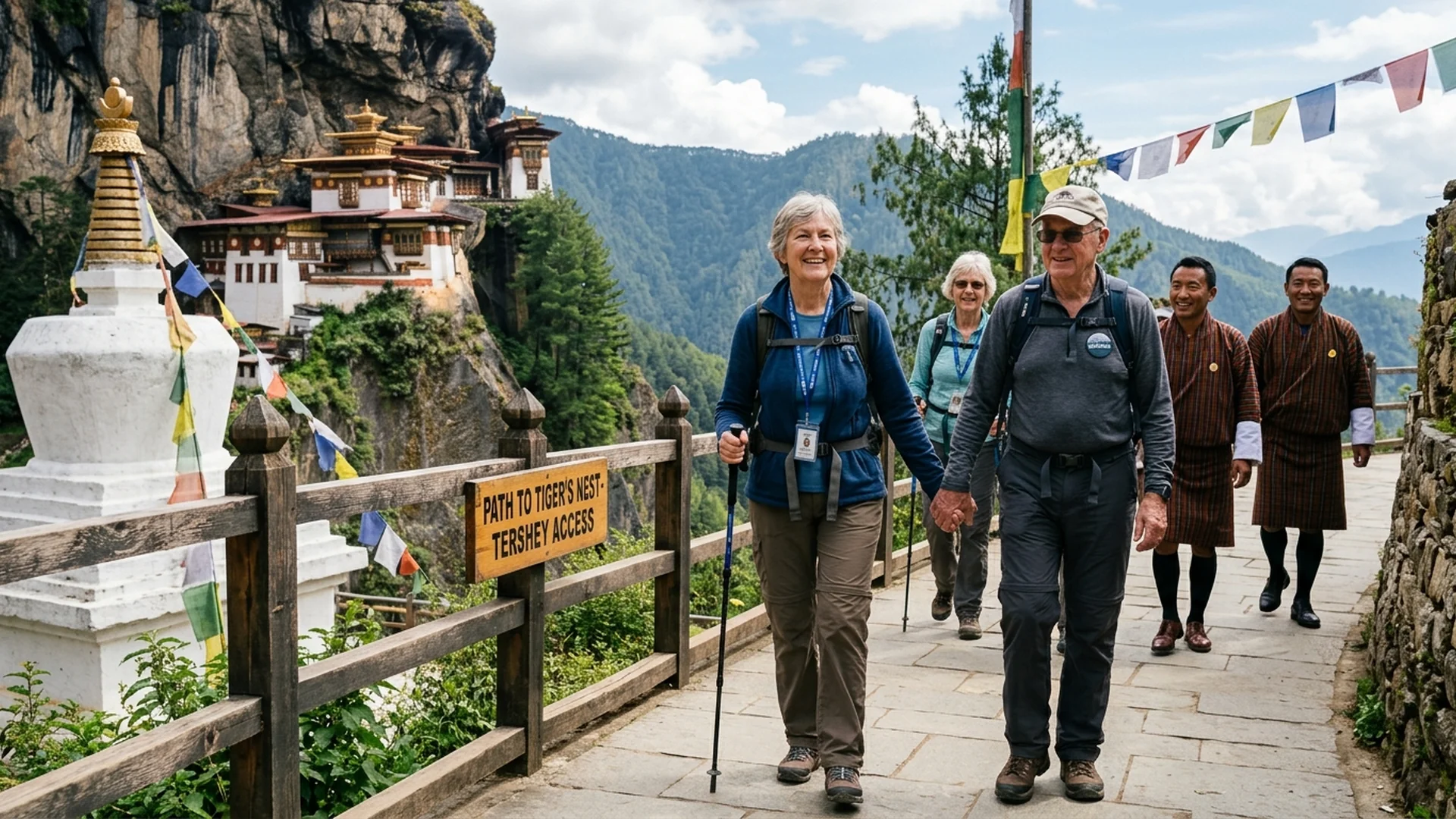
The enduring perception that Bhutan remains an intimidating frontier reserved solely for hardy mountaineers often deters discerning travelers from introducing their aging parents to the kingdom’s profound grace. Images of endless stone staircases ascending to Tiger’s Nest or dizzying alpine switchbacks can easily cause families to hesitate. Yet, in reality, the Land of the Thunder Dragon offers a remarkably tender, nurturing facet that warmly embraces elder travelers with deep spiritual resonance and sublime tranquility.
Designing an expedition for seasoned travelers is no longer about conquering summits through sheer physical exertion. Instead, it is an art of unhurried pacing, selecting forgiving terrain, and embracing uncompromising hospitality that honors both physical comfort and emotional fulfillment. Experiencing Bhutan with elders opens the gateway to an inner sanctuary where luxury and sacred culture harmonize effortlessly, far removed from the grueling demands of steep inclines and endless stairs.
The Art of Route Selection: Flat Terrain and Unburdened Journeys
Crafting a rejuvenating Bhutanese journey for older travelers hinges upon the deliberate curation of valleys and sanctuaries that honor physical ease. In the capital of Thimphu, nestled at a moderate elevation, monumental sites such as the towering Buddha Dordenma rest upon expansive stone courtyards. Here, travelers may stroll leisurely to admire sweeping valley vistas and offer quiet reverence without negotiating grueling inclines. Similarly, Punakha Dzong, gracefully situated at the confluence of two rivers, invites exploration across a traditional cantilever bridge into shaded, magnificent courtyards where Tibetan Buddhist architecture unfolds among blooming gardens and coursing waters.
For the legendary Taktsang Goempa (Tiger’s Nest), which often instills apprehension, travelers can savor the breathtaking majesty of the cliffside sanctuary from a peaceful lower viewpoint equipped with comfortable seating and high-magnification optics, perfectly framing the pristine pine forests without requiring a single step of the arduous 800-step climb.
Professional Wellness Management and Altitude Mastery
A primary consideration when visiting the high-altitude landscapes of the Himalayas is physiological adjustment, given that most valleys rest between 2,000 and 3,000 meters above sea level. Preparation begins with a personalized medical consultation to evaluate physical readiness and secure appropriate prophylactic measures. A thoughtful itinerary initiates descents or lower valleys first—such as Punakha at roughly 1,200 meters—before ascending gradually to Thimphu and Paro, allowing the body to acclimate organically.
Additional comforts include hydrating generously with warm botanical infusions, opting for easily digestible culinary creations upon arrival, and maintaining a measured pace. The presence of an expert local guide trained to monitor vital rhythms and seamlessly adjust daily programs in real time ensures that the journey remains entirely secure, fluid, and serene.
Uncompromising Luxury: Refined Transit and Empathetic Hospitality
The hallmark of a premier Bhutanese expedition tailored for esteemed elders lies in superior logistical support. Transfers are conducted in late-model, luxury SUV or van configurations featuring advanced suspension systems designed to glide smoothly over winding mountain corridors, minimizing motion fatigue and impact. Behind the wheel, seasoned professional chauffeurs master the kingdom’s countless curves with practiced elegance.
Accompanying private guides and dedicated attendants act as attentive family members, vigilantly watching for uneven flagstones, extending a steady arm, managing umbrellas, and curating spontaneous tea pauses every few hours. This thoughtful attentiveness ensures that elder guests feel cherished and entirely unburdened, leaving them free to absorb the genuine warmth and luminous smiles of the local hosts.