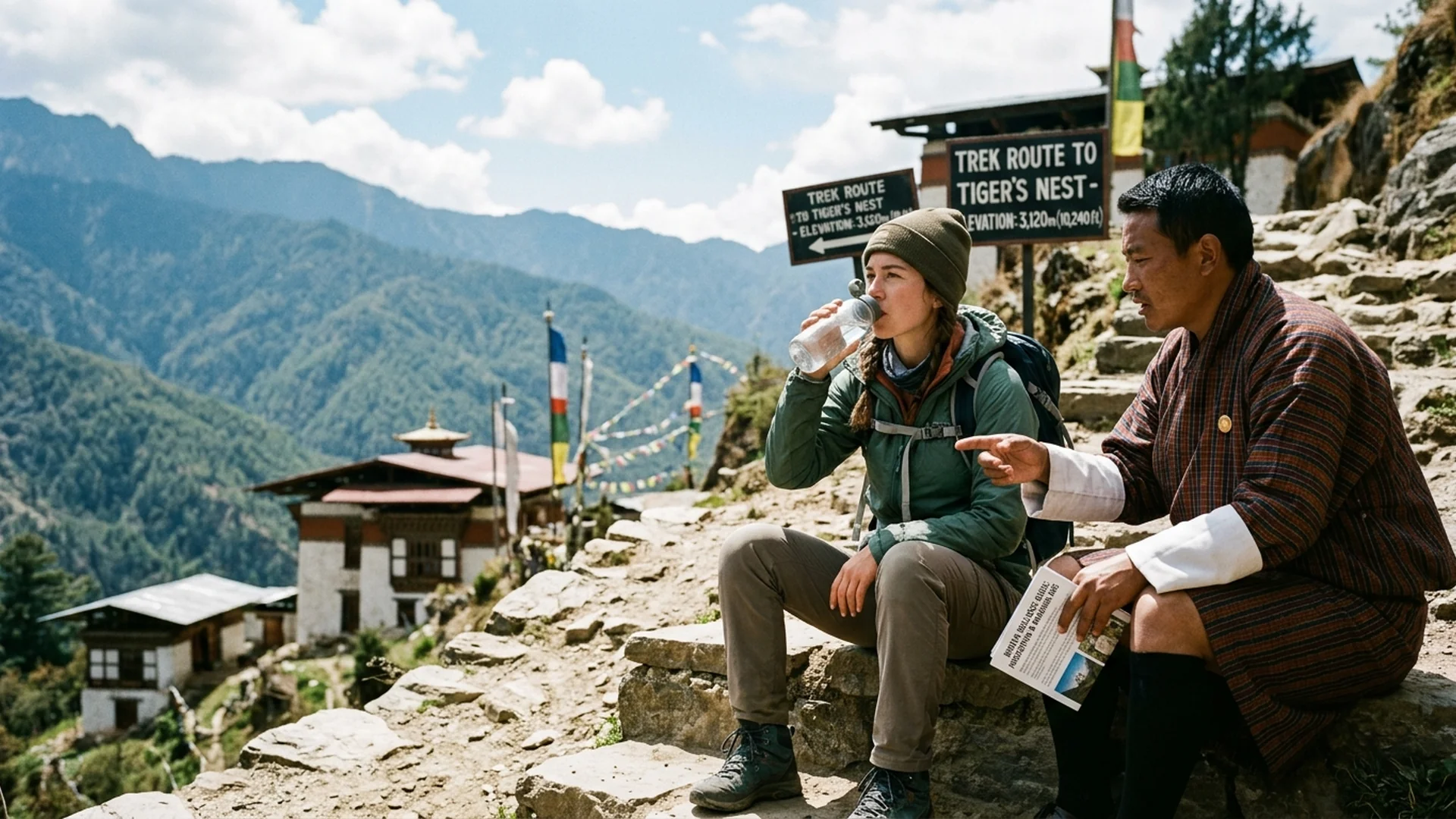
When conjuring Bhutan, the mind naturally wanders to mist-shrouded Himalayan valleys, ancient dzongs echoing with centuries of prayer, and pristine forests untouched by the frenetic pace of modern life. Yet for discerning global travelers, seniors, and families planning a passage into the Land of the Thunder Dragon, the quiet reality of high-altitude geography demands mindful preparation.
Transforming potential altitude concerns into a seamless, harmonious experience is never a matter of chance. It requires a philosophy of proactive altitude wellness: understanding the topographical rhythm of each valley, utilizing preventive measures under medical guidance, and, above all, curating an unhurried travel pace that respects the body’s natural adaptation. In doing so, every footstep across this sacred realm unfolds in absolute comfort and vitality.
Deciphering Mountain Geography: Elevations Across Bhutan’s Valleys
One of the most persistent misconceptions regarding Acute Mountain Sickness (AMS) is that it exclusively plagues intrepid mountaineers scaling remote peaks. In the context of refined cultural travel through Bhutan, however, highways frequently wind across dramatic mountain passes exceeding 3,000 meters, even when traversing the country in the comfort of a private luxury vehicle.
Upon landing at Paro International Airport, situated at approximately 2,235 meters, travelers immediately encounter a thinner atmosphere. The capital, Thimphu, rests at roughly 2,320 meters, while the lush valley of Punakha drops gracefully to 1,200 meters, offering a natural sanctuary for physiological recovery. Yet, traversing iconic waypoints such as Dochula Pass at 3,100 meters or ascending to Chele La Pass—the highest motorable road in Bhutan at an astonishing 3,988 meters—requires deliberate pacing. Familiarity with these elevations allows discerning travelers to allocate their energy and sequence their itineraries with absolute precision.
The Science of Preparation: Diamox and Seven-Day Physiological Readiness
For travelers seeking supreme assurance, consulting a travel medicine specialist regarding preventive medications such as Diamox (Acetazolamide) represents the global gold standard. Physicians typically recommend initiating a low dosage—such as 125 milligrams twice daily, morning and evening—approximately 24 to 48 hours prior to ascending into high-altitude regions. This encourages deeper respiration and accelerates the body’s natural acclimatization to diminished oxygen levels.
Beyond pharmacology, cultivating physical readiness one week prior to departure is equally paramount. Travelers are advised to moderate alcohol consumption and high-sodium diets, prioritize restorative sleep, and practice diaphragmatic breathing to condition pulmonary health. Upon arrival in Bhutan, maintaining elevated hydration levels is crucial; the crisp, arid mountain air rapidly depletes bodily moisture, a primary catalyst for altitude-related headaches.
Silent Signals: Early Indicators of AMS and Professional Management
Initial manifestations of altitude discomfort are rarely alarming, typically presenting as a mild, dull headache, transient dizziness, occasional insomnia, unusual fatigue, or a fleeting sense of nausea during the first evening at elevation. The key lies in mindful self-awareness and addressing these sensations before they escalate into more pronounced distress.
At the first sign of vulnerability, travelers should immediately pause strenuous exertion, inform their private guide or attendant to recalibrate the day’s tempo, sip warm water infused with electrolytes, and rest within a temperature-controlled sanctuary. Fine hotels throughout Bhutan are exceptionally well-equipped with supplementary canned oxygen or dedicated oxygen concentrators, ensuring that the vast majority of mild symptoms dissipate swiftly once the body is granted time to adjust.
Designing the Slow Travel Journey: Graceful Movement Without Physical Strain
Ensuring an effortless and secure journey through Bhutan is best achieved through the philosophy of slow travel. Rather than crowding daily itineraries with excessive sightseeing, travelers benefit from carefully balanced overnight stays across fluctuating elevations—alternating between high-altitude sanctuaries and lower valleys to maintain smooth circulatory rhythm.
Traveling with bespoke, private services fundamentally eliminates physical stress. Dedicated chauffeurs intimately familiar with mountain topography meticulously manage road gradients and strategic rest stops, while expert guides monitor personal well-being with discretion. This elevated level of care allows the sublime beauty and spiritual depth of Bhutan to unfold gently, leaving the physical form relaxed and the spirit fully attuned to the tranquility of the valleys.