The sound of footsteps striking dry leaves along a narrow footpath winding through pine forests and ancient rhododendron groves echoes the rhythm of centuries past. In an era long before modern infrastructure, the Garps—the legendary royal messengers of Bhutan—ran across these high mountain passes to connect distant valleys and fortresses. Stretching 403 kilometers from Haa in the west to Trashigang in the east, the Trans Bhutan Trail (TBT) is far more than a wilderness trekking route; it is the historic backbone that nourished the culture, spirituality, and unification of the Land of the Thunder Dragon.
After falling into disuse with the arrival of the national highway system in the 1960s, this ancient path underwent a meticulous restoration under the royal vision of His Majesty King Jigme Khesar Namgyel Wangchuck. While traversing the entire length of the trail requires over a month, discerning travelers with limited time can capture its absolute essence through carefully selected half-day segments.
A luxury journey along the Trans Bhutan Trail is never about testing physical endurance; rather, it is about savoring a living history. It is experienced through perfectly paced walks, panoramic Himalayan vistas, bespoke gourmet forest picnics, and serene evenings spent in high-end boutique retreats after a day on the path.
Footprints of Antiquity: Reviving the Path of the Thunder Dragon
Before modern transportation reshaped the kingdom, the Trans Bhutan Trail was the sole artery weaving Bhutan together. Monks used these tracks for sacred pilgrimages, merchants transported salt and yak caravans along them, and monarchs traveled them to forge diplomatic alliances. Among the most romantic historical figures associated with the route are the Garps—swift royal couriers renowned for crossing soaring mountain passes with extraordinary speed, carrying minimal provisions to deliver vital missives between regional dzongs (fortified monastery-fortresses).
The 2022 restoration of this 403-kilometer path was achieved through the collaborative dedication of hundreds of Bhutanese artisans and laborers, who painstakingly rebuilt wooden suspension bridges, laid tens of thousands of stone steps, and installed discreet waymarkers to preserve the pristine ecosystem. Walking the TBT is akin to visiting an open-air museum where sacred chortens (stupas), ancient stone carvings, and wind-whipped prayer flags quietly narrate centuries of devotion at every turn.
Mastering Premium Half-Day Segments: High Highlights Without Fatigue
For travelers wishing to experience the majesty of the Trans Bhutan Trail without committing to weeks of rigorous trekking, two half-day segments stand out as exceptionally suited for luxury itineraries:
1. Dochula Pass to Thinleygang or Lumitsawa (The Scenic Alpine Descent): Beginning at the dramatic Dochula Pass at an elevation of 3,100 meters—famed for its 108 memorial chortens (Druk Wangyal Chortens)—this route guides travelers downward through tranquil evergreen and rhododendron forests. Crisp mountain air, subtle signs of wildlife, and sweeping vistas of the eastern Himalayas transform this 9 to 11-kilometer descent into a deeply restorative journey that remains gentle on the body.
2. Punakha Valley and Toeb Chandana (Following Legends and Golden Terraces): Weaving through the heart of the Punakha Valley, this segment meanders past rammed-earth farmhouses, shimmering golden rice terraces, and the historic Toeb Chandana village. According to local lore, this is the very spot where an arrow shot by the Divine Madman (Drukpa Kuenley) landed. The terrain is predominantly gentle and undulating, offering an unhurried window into traditional agrarian life before concluding near the turquoise waters of the Mo Chhu river and the architectural masterpiece of Punakha Dzong.
Wilderness Refinement: Gourmet Picnics and Therapeutic Dotsho Baths
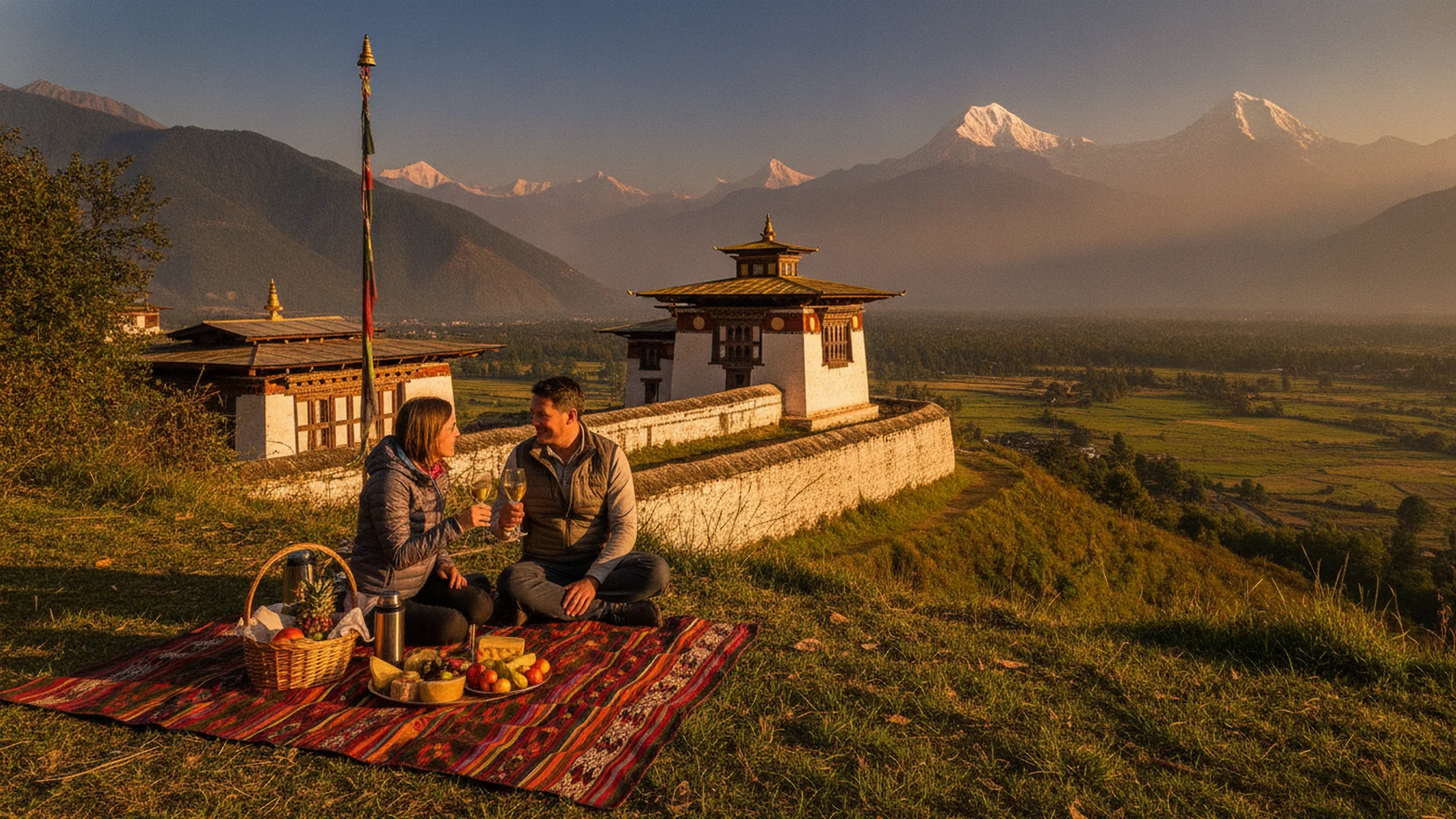
What elevates a trek along the Trans Bhutan Trail into a masterpiece of luxury travel is the integration of bespoke hospitality moments. At a secluded midpoint overlooking boundless valleys, a private support team conjures a refined wilderness picnic. Local hand-woven textiles drape rustic dining tables set with comfortable campaign chairs, while steaming gourmet dishes crafted from organic regional ingredients—such as fresh butter tea, mountain herbal infusions, artisanal breads, and delicate local delicacies—are served with polished grace.
As afternoon transitions toward evening, the ideal Bhutanese recovery ritual awaits: the traditional Dotsho (hot stone bath). River stones, superheated over fragrant pine and juniper fires, are submerged into wooden tubs infused with wild harvested artemisia herbs. The mineral-rich heat and soothing botanical aromas dissolve lingering muscle tension, harmonizing the body’s energy and preparing travelers for a deeply restorative night of sleep.