The Land of the Thunder Dragon is not driven by the relentless, unyielding cadence of the modern world. Instead, time in Bhutan is woven according to the rhythms of nature, sunlight, and quiet devotion. For the discerning traveler accustomed to unbridled convenience, stepping into this pristine Himalayan sanctuary requires a deeper understanding than standard flight schedules and concierge apps can provide. Here, time and currency are the two master keys that unlock true tranquility.
Against a backdrop of glittering snow-capped peaks and monumental fortress-monasteries known as dzongs, subtle details—such as seasonal operating hours, Tuesday shop closures, and the technological limitations of the local financial infrastructure—serve as the dividing line between ordinary tourists and insider travelers. This essay decodes Bhutan’s temporal and monetary frameworks for 2026, ensuring every step of your journey unfolds with seamless grace.
The Rhythm of the Valleys: Seasonal Variations in Operating Hours
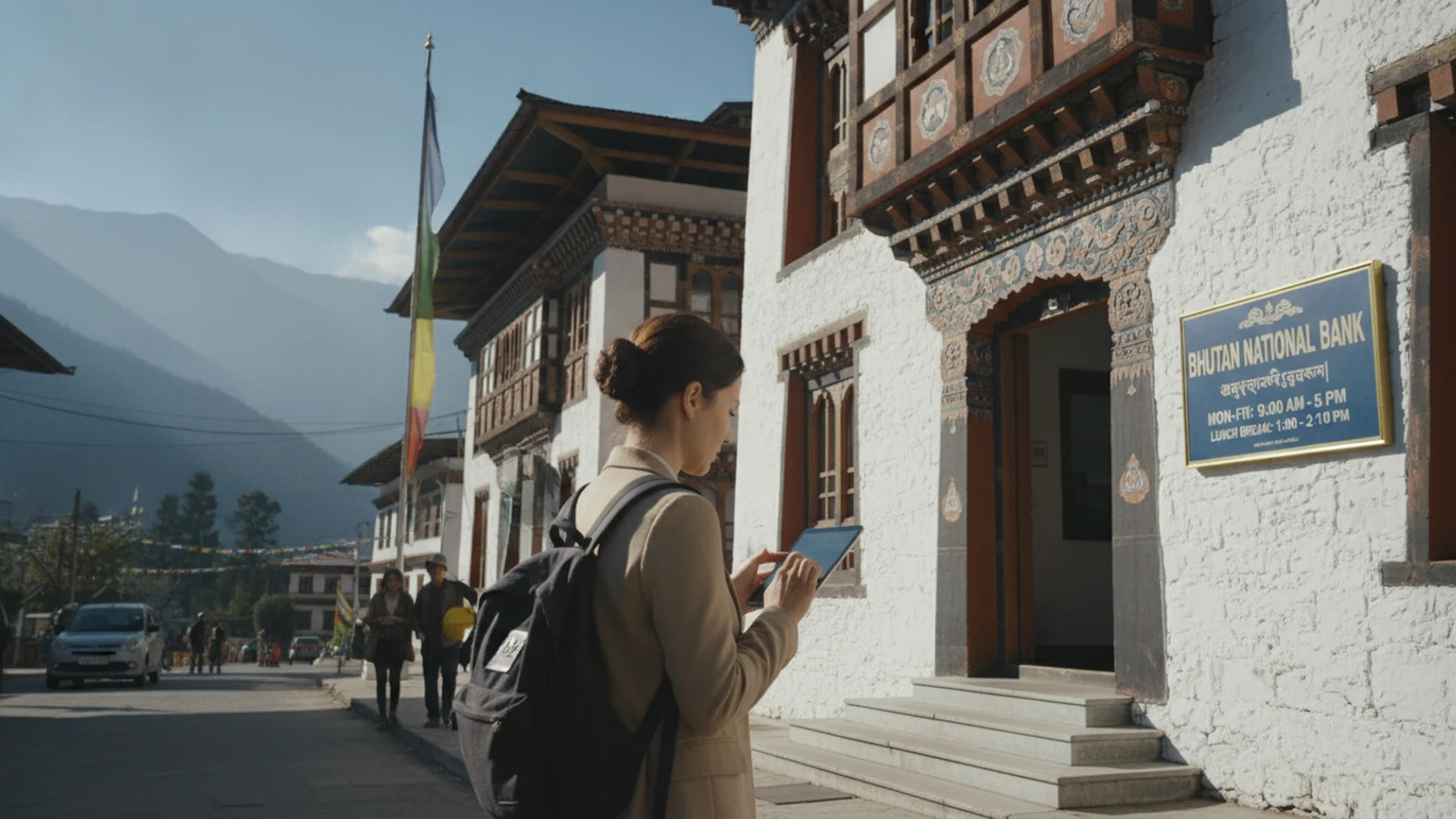
While global metropolises pulse to the beat of digital clocks, Bhutan preserves a biological clock closely attuned to ambient temperatures and daylight. Government directorates and commercial banking institutions formally divide their operational calendar into two distinct seasons. From the vernal warmth of March through the golden light of October, banking doors remain welcoming from 09:00 to 17:00. However, as the crisp alpine winds sweep down from the northern peaks in November, operating hours shift to close at 16:00, allowing staff and patrons to return to their hearths before the sudden mountain darkness descends. Furthermore, commercial banking networks remain universally closed on Saturdays and Sundays. Anticipating these closures is the hallmark of sophisticated travel planning.
The Tuesday Enigma: Unlocking Local Markets and Artisanal Outlets
A nuanced detail frequently overlooked by casual visitors is Tuesday, which functions as a quiet day of rest and community reflection across Bhutanese commercial districts. Traditional craft merchants, weavers, and weekend market stallholders often observe closures on this day, dedicating their hours to domestic duties, family gatherings, or spiritual observances. For high-net-worth connoisseurs seeking rare hand-woven textiles, antique woodcarvings, or bespoke silver adornments, aligning your cultural excursions with this local rhythm prevents disappointment, leaving Tuesdays open for meditative walks through ancient sanctuaries or contemplative forest hikes.
The Philosophy of Currency: Why Cash Remains King Outside the Sanctuary
While ultra-luxury properties like Aman, Six Senses, and COMO handle international transactions with flawless electronic precision, the world beyond their manicured gates operates on a more tangible philosophy. Independent cafes, boutique galleries, and fine curio shops in Thimphu and Paro continue to rely heavily on physical currency. Establishments that do accept foreign credit cards frequently apply a 3 to 5 percent merchant surcharge. Combined with occasional alpine internet connectivity fluctuations, keeping a curated wallet of local currency remains the most prudent and respectful approach.