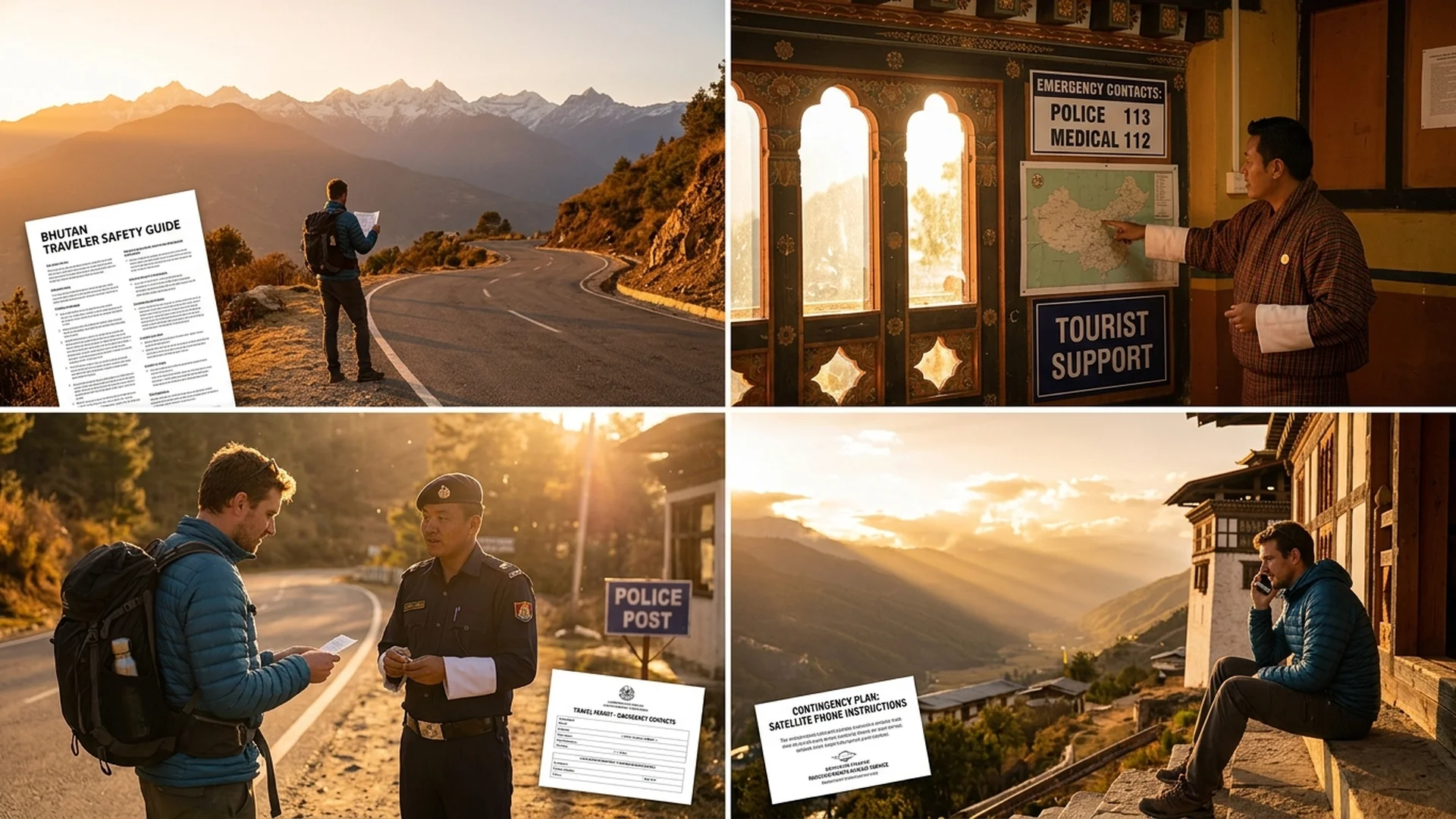
When the pristine majesty of the Himalayan valleys unfolds before you, Bhutan often casts a spell of profound stillness. Yet beneath this picturesque tranquility lies a demanding high-altitude geography that discerning travelers approach with mindful awareness. True security in the Land of the Thunder Dragon is measured not by an absence of challenges, but by the sophistication of one’s preparedness and the depth of emergency healthcare protocols.
For travelers who prioritize refined living and absolute peace of mind, understanding environmental adaptations at elevation is paramount. Awareness paired with a robust contingency plan transforms the unexpected into a seamless journey, supported by a sophisticated safety infrastructure designed to protect your every step.
Anticipating Acute Mountain Sickness (AMS) on the Roof of the World
Much of Bhutan’s dramatic terrain rests at significant elevations above sea level. Capital city Thimphu sits comfortably above 2,300 meters, while mountain passes routinely soar past 3,000 to 4,000 meters. Thinning air and lower atmospheric pressure can occasionally trigger acute mountain sickness (AMS), typically heralded by mild headaches, dizziness, or unusual fatigue.
The most effective defense is the golden rule of balance: allowing the body 24 to 48 hours of gentle acclimatization upon arrival at moderate altitudes. Strenuous exertion should be avoided initially, coupled with abundant hydration and the complete avoidance of alcohol. Professional local guides routinely carry pulse oximeters and essential remedies, monitoring the well-being of their guests each morning and evening with quiet vigilance.
Medical Infrastructure and Emergency Evacuation Protocols
Though Bhutan is renowned for its serene isolation, its public health infrastructure has developed thoughtfully over decades. The premier Jigme Dorji Wangchuck National Referral Hospital (JDWNRH) in Thimphu is fully equipped with specialist physicians and modern diagnostics. Meanwhile, regional hubs such as Paro and Punakha maintain well-appointed community hospitals capable of immediate stabilization and first-line trauma care.
Should an emergency surpass local medical capabilities, a structured evacuation protocol is swiftly activated through close coordination between your licensed tour operator, diplomatic missions, and insurance providers. Ground transport transfers stabilize patients to advanced facilities, while critical situations prompt specialized air coordination to international standard hospitals in neighboring countries.
Coordinated Support Through Professional Local Networks
Safety in Bhutan possesses a uniquely reassuring character, governed by rigorous national tourism standards that prohibit independent wandering without licensed guides and drivers. These professionals act as your front-line guardians, intimately familiar with local terrain, weather shifts, and the precise locations of nearby health outposts.
In the rare event of an unexpected contingency, your dedicated guide assumes a vital coordinating role with governmental authorities, tourist police, and medical centers. Their fluent English and deeply established local networks ensure that assistance is mobilized with extraordinary swiftness, minimizing bureaucratic friction and offering profound reassurance to travelers and their families abroad.