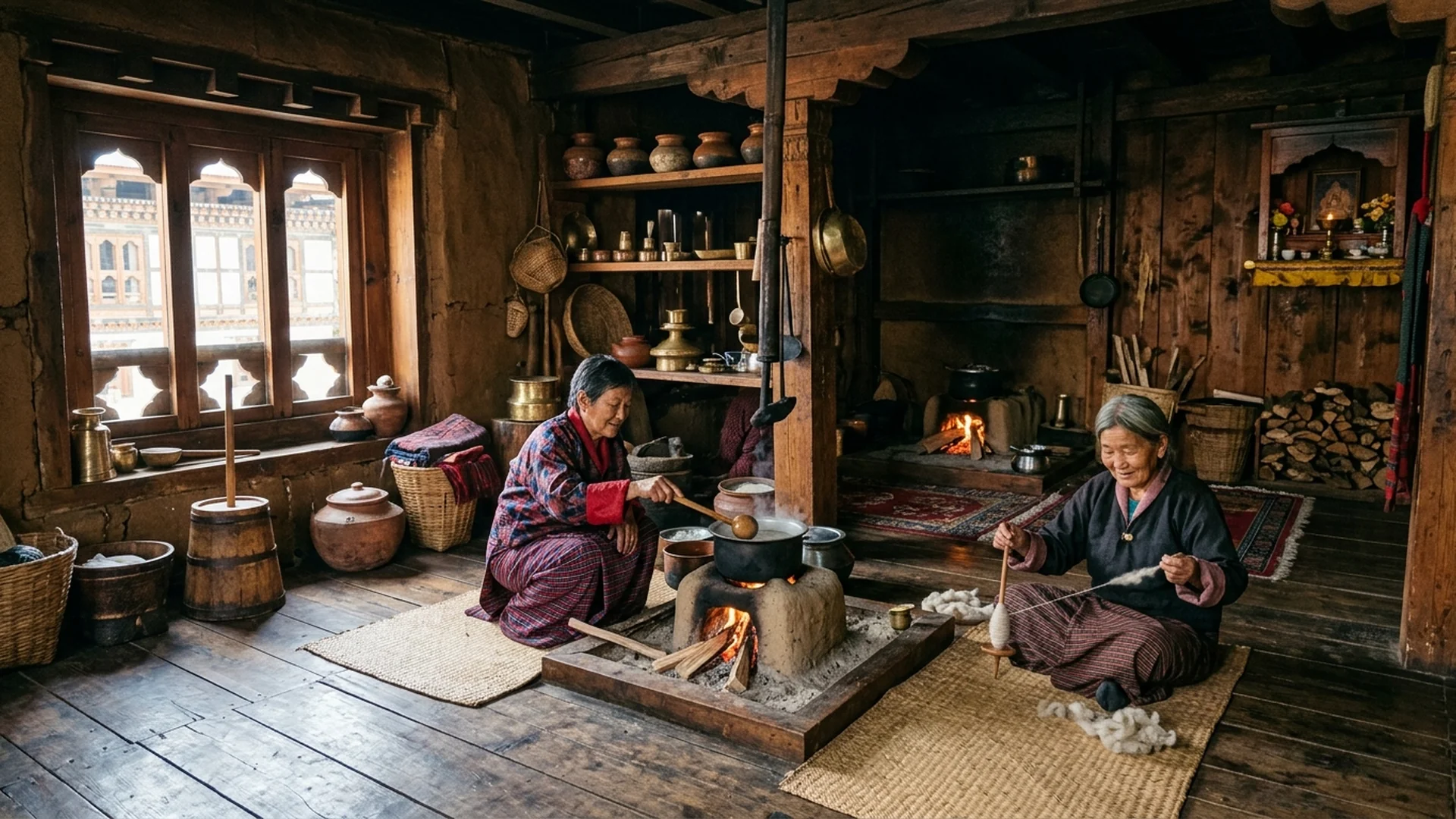
Amidst the tranquil valleys of the Bhutanese kingdom, the Himalayan breeze carries centuries of quiet history rather than mere alpine chill. While most travelers associate this small nation with the imposing grandeur of fortress-monasteries (Dzong) or cliffside sanctuaries, crossing the threshold of the Folk Heritage Museum—known in Dzongkha as Phelchey Toenkhyim—reveals an entirely different realm: the authentic, unhurried daily life of traditional Bhutanese commoners.
Visiting this sanctuary is not merely an exercise in viewing artifacts behind glass; it is an invitation to step back in time into an agricultural existence rooted in self-reliance, nature, and profound philosophical contentment. The three-story traditional timber and rammed-earth dwelling, standing for over a century and a half, rises humbly amidst heirloom vegetable patches, centuries-old farm plots, and ancient water mills. It serves as a poignant reminder that true Himalayan wellbeing begins not with monumental architecture, but with a humble home that warmly embraces family life.
Royal Vision: Breathing Life Back into the Valley’s Soul
The Folk Heritage Museum was officially established in July 2001 under the royal patronage and vision of Her Majesty Queen Mother Ashi Dorji Wangmo Wangchuck, who recognized the urgent need to protect indigenous knowledge, rural wisdom, and traditional lifestyles from the swift currents of modernization.
The museum building itself was originally the ancestral home of a local noble family dating back to the mid-19th century. Meticulously restored using traditional construction techniques without modern concrete or steel reinforcements, every square inch preserves the beliefs and daily routines of rural Bhutan. Today, it stands as a vibrant living museum for both younger generations of Bhutanese and international travelers seeking genuine cultural resonance.
A Three-Story Architectural Blueprint of Natural Harmony
Stepping inside the traditional rammed-earth (Rammed Mud) and timber structure reveals an architectural layout that reflects complete ecological symbiosis:
- Ground Floor (Okhang): Reserved for livestock and agricultural implements. Historically, the ambient body heat generated by the animals would rise, naturally warming the upper living quarters during harsh mountain winters.
- Middle Floor (Barthog): Serving as the granary and secure storage area (Phuna) for harvested grains, seeds, dried meats, and metal utensils, this level formed the literal lifeline of the household throughout the year.
- Top Floor (Thabtshang): The emotional and social core of the home, featuring an ancestral kitchen with a clay hearth, traditional wooden ventilation panels, and the sacred family shrine room (Choesham). Adorned with delicate wood carvings and Mahayana Buddhist murals, this space radiates quiet devotion.
Rural Craft: Hot Stone Baths and Sustainable Agriculture
The charm of the Folk Heritage Museum extends far beyond its historical walls into surrounding landscapes that recreate traditional Himalayan farming ecosystems. The adjacent plots cultivate heritage crops such as barley, buckwheat, and heirloom kitchen vegetables nurtured for generations.
Visitors can also observe functional water-powered flour mills and explore the demonstration area for the traditional Bhutanese Hot Stone Bath (Dotsho). This ancient wellness ritual involves plunging river stones heated over a wood fire into a tall wooden tub infused with wild medicinal herbs (Khem Pa), designed to soothe physical fatigue according to traditional Bhutanese medicine.
Aesthetic Tastes: Savoring Heritage Fare in a Verdant Garden
After immersing oneself in centuries of architectural history, the museum offers a sensory conclusion through its traditional courtyard dining space. Here, authentic Bhutanese dishes are prepared using fresh organic ingredients, including Ema Datshi (chili and local cheese stew), Phaksha Paa (pork belly simmered with dried chilies and radishes), and organic Himalayan red rice.
Sipping traditional butter tea (Suja) or locally brewed grain spirit (Ara) amidst the rustling leaves and prayer flags in the quiet garden provides a deeply satisfying finale to an enriching cultural journey.