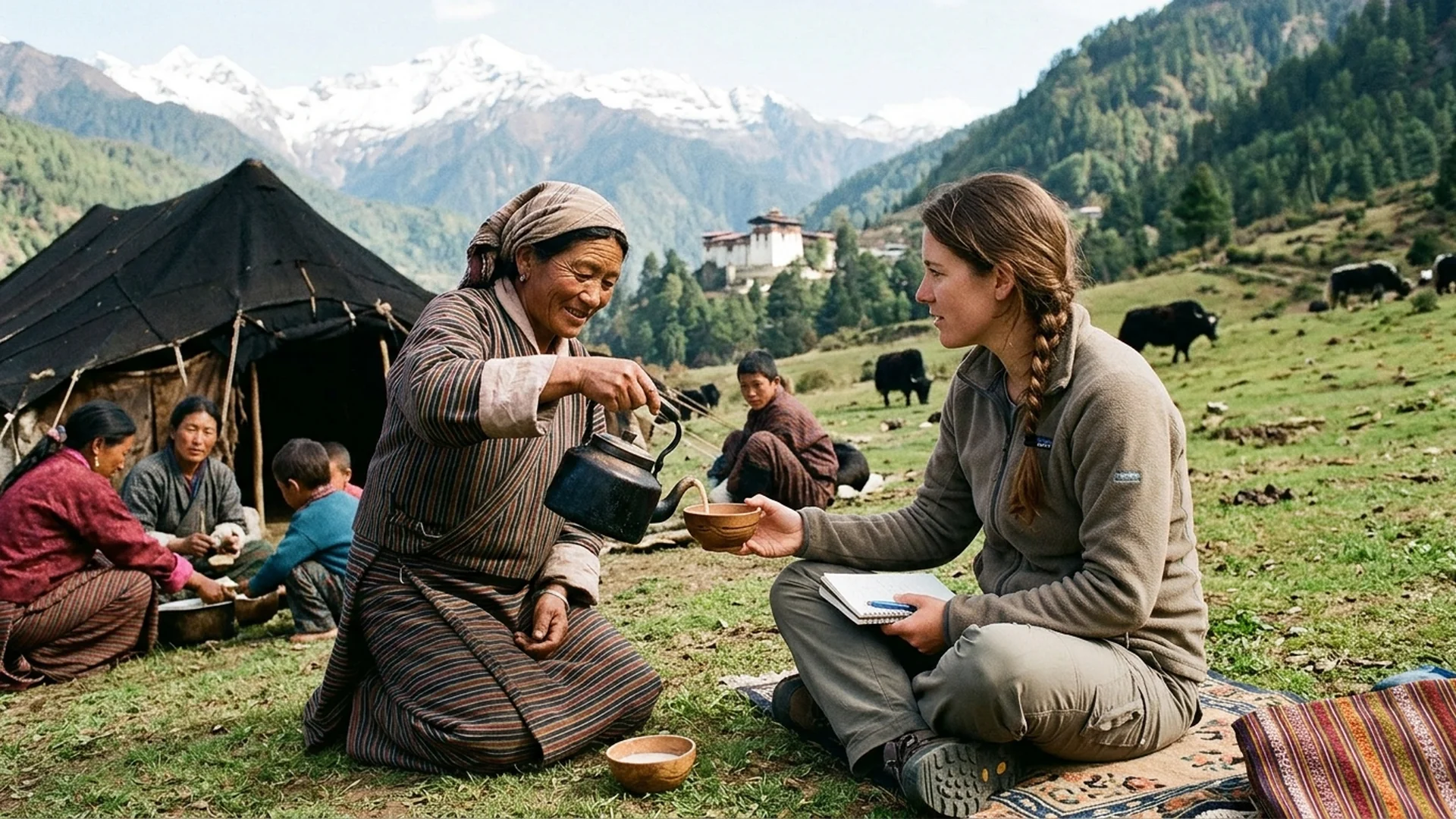
When the motorable track dissolves against a sheer cliffside, the distant roar of the Mo Chhu river and low-slung mists drifting over pristine pine forests announce your arrival in Gasa. Situated at breathtaking elevations in the northernmost reaches of the Kingdom of Bhutan, time unfurls at a meditative pace here, inviting the soul into deep communion with the wild. This is not a destination for conventional sightseeing, but rather a profound exercise in slow travel and holistic healing. Here, sacred thermal springs tucked beneath freezing Himalayan ramparts meet the living breath of ancestral cultures passed down across generations.
The pilgrimage to Gasa tests one’s resolve while bestowing rewards of peerless magnitude. The sight of its rare circular fortress rising imperiously through the mists against a backdrop of glaciated giants is an indelible imprint. In this rarefied realm, modern comforts yield gracefully to the sovereign majesty of nature, offering an unadulterated glimpse into the purest essence of Bhutanese antiquity.
Gasa Tshachu: The Therapeutic Magic of Himalayan Thermal Springs
Amidst the bracing chill of the high-altitude gorge, the rhythmic cadence of the Mo Chhu river lulls visitors to Gasa Tshachu, one of the kingdom’s most treasured sanctuaries for physical and spiritual restoration. These natural mineral hot springs are far more than a simple remedy for travel fatigue; they represent a living lineage of traditional Himalayan medicine. Bhutanese travelers have long revered the mineral-rich waters welling from the earth’s core for their restorative properties, offering relief from everything from arthritic joints to modern mental exhaustion. Enveloped by drifting mountain mists, pine forests, and pure glacial spray, the experience provides an absolute severance from the clamor of the outside world, inviting quiet contemplation as the alpine warmth slowly seeps into tired limbs.
Gasa Dzong and the Architectural Wonder of the Circular Fortress
While the vast majority of Bhutanese fortress-monasteries follow a rigid rectangular geometry, Gasa Dzong (Tashi Thongmon Dzong) breaks convention with a striking circular layout designed to hug the precipitous contours of the mountain slope and repel historical incursions. Established in the 17th century by Lama Zhabdrung Ngawang Namgyel to safeguard the northern frontier, the whitewashed fortress presents a vision of stark elegance against cobalt skies and perpetually snow-capped peaks. Within its curving walls lie sacred relics and centuries of profound historical lore, bearing silent witness to an unyielding spiritual devotion.
The Way of the Layaps: Nomadic Life on the Roof of the World
Deep within the soaring heights of Gasa lie the seasonal settlements of the Layaps, semi-nomadic highlanders whose existence is inextricably bound to herds of sure-footed yaks and vast alpine pastures. The Layap people retain a fiercely guarded cultural identity; women are traditionally adorned in black handwoven wool garments complemented by striking silver ornaments and distinctive pointed conical bamboo hats. To witness their resilience against harsh climes and experience their gentle hospitality is a rare privilege. This cultural vitality peaks during the annual Royal Highland Festival in October, a vibrant celebration of high-altitude pastoralism that preserves vanishing traditions with breathtaking authenticity.