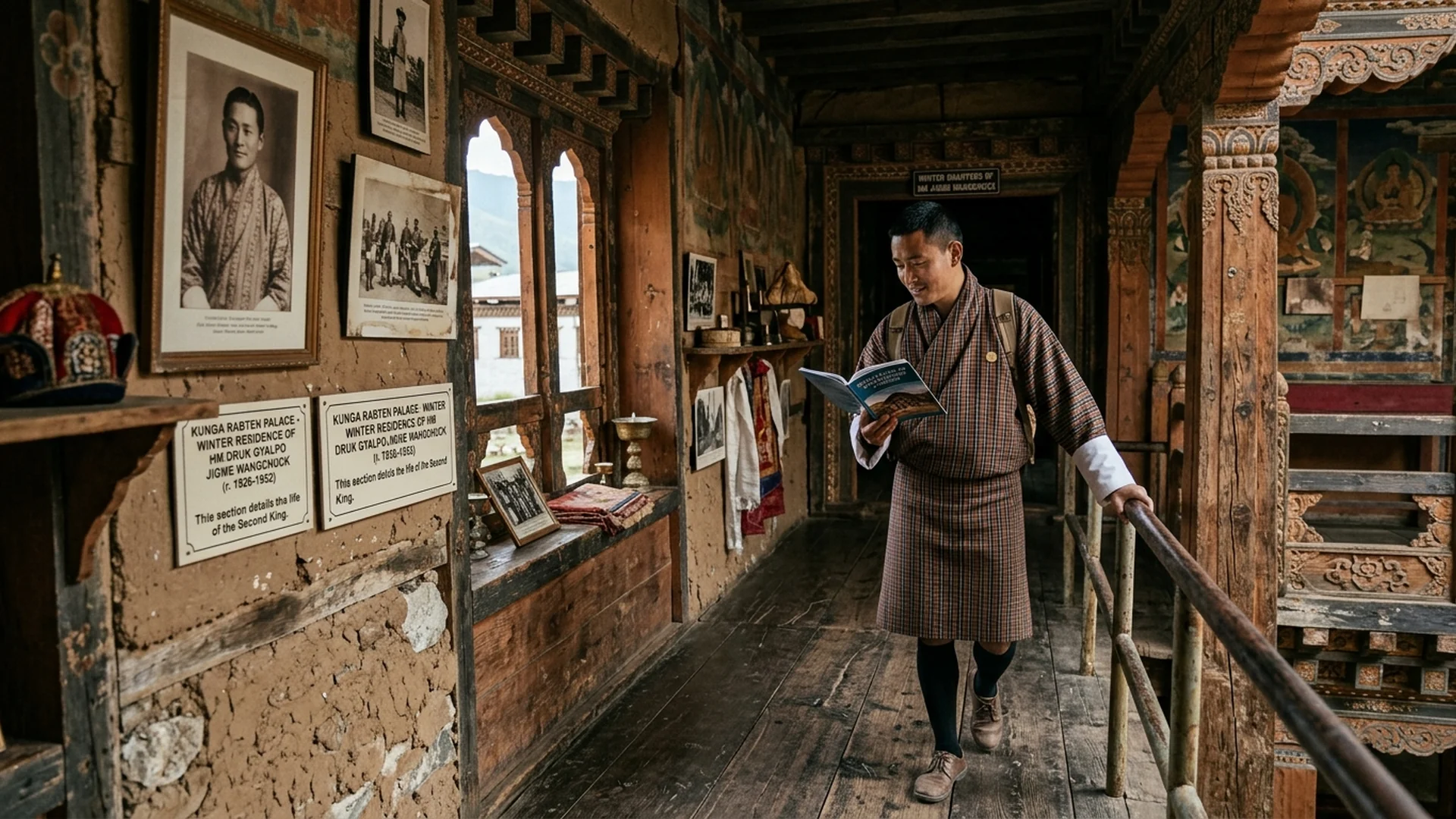
As time winds through the intricate valleys of Trongsa, whispers of the past continue to drift above the forests and soft mountain mists. Far from the restless clamor of the modern world, Kunga Rabten Palace stands not merely as a silent relic or a sterile museum, but as a living sanctuary. Once the seat of power and winter warmth for His Majesty King Jigme Wangchuck, the Second King of Bhutan, this historic estate bridges the grandeur of royal lineage with the gentle, rhythmic chanting of young resident monks.
Here, the quiet elegance of court history meld seamlessly with the timeless tranquility of the Thunder Dragon Kingdom. To walk its timber corridors is to step backward into an unhurried era, where every carved beam and fluttering prayer flag tells a profound story of devotion, artistry, and sacred geography.
A Gentle Departure: Domestic Craftsmanship Across the Trongsa Landscape
While the imposing dzongs of Bhutan stand as monolithic symbols of political fortification and spiritual defense, Kunga Rabten Palace reveals an entirely different architectural narrative—one defined by tenderness, artistry, and domestic intimacy. Perched along a dramatic cliffside overlooking verdant valleys, the palace is a masterpiece of traditional residential craftsmanship. The exterior artfully unites pristine white masonry with intricately carved pine woodwork. Every window frame bears traditional motifs, inviting the crisp morning light to illuminate the halls. Built in 1929 under the visionary direction of King Jigme Wangchuck, the palace served as a serene escape from the biting winters of the early capital, offering a refined space for governance and contemplation.
Footprints in Time: The Upper Chambers and Sacred Shrines
Ascending to the third floor feels akin to passing through a portal in time. The private bedchambers and studies of the Second King and Queen Ashi Puntsho Choden remain remarkably intact. Antique furnishings, royal carpets, and personal artifacts are arranged with such care that it feels as though the monarchs have only just stepped away. Within the complex lies the sacred Sangye Lhakhang, a sanctuary housing profound Buddhist statues and vibrant murals depicting the twenty-one manifestations of Tara. The delicate scent of burning incense and the soft flicker of butter lamps playing against gold-leafed deities sustain a deeply spiritual atmosphere that has endured for nearly a century.
New Breath: When a Royal Residence Becomes Home to Novice Monks
What elevates Kunga Rabten beyond an ordinary heritage site is its living continuity. Rather than being preserved simply as a static monument, the palace pulses with contemporary spiritual life. Today, it serves as a thriving monastic school where young Bhutanese boys study sacred texts and philosophy. The harmonious echo of morning and evening prayers reverberating along the ancient wooden verandas infuses the silent courtyards with boundless compassion. Visitors are often greeted by the genuine smiles of novice monks pausing from their studies, creating a touching portrait of heritage seamlessly sustained across generations.