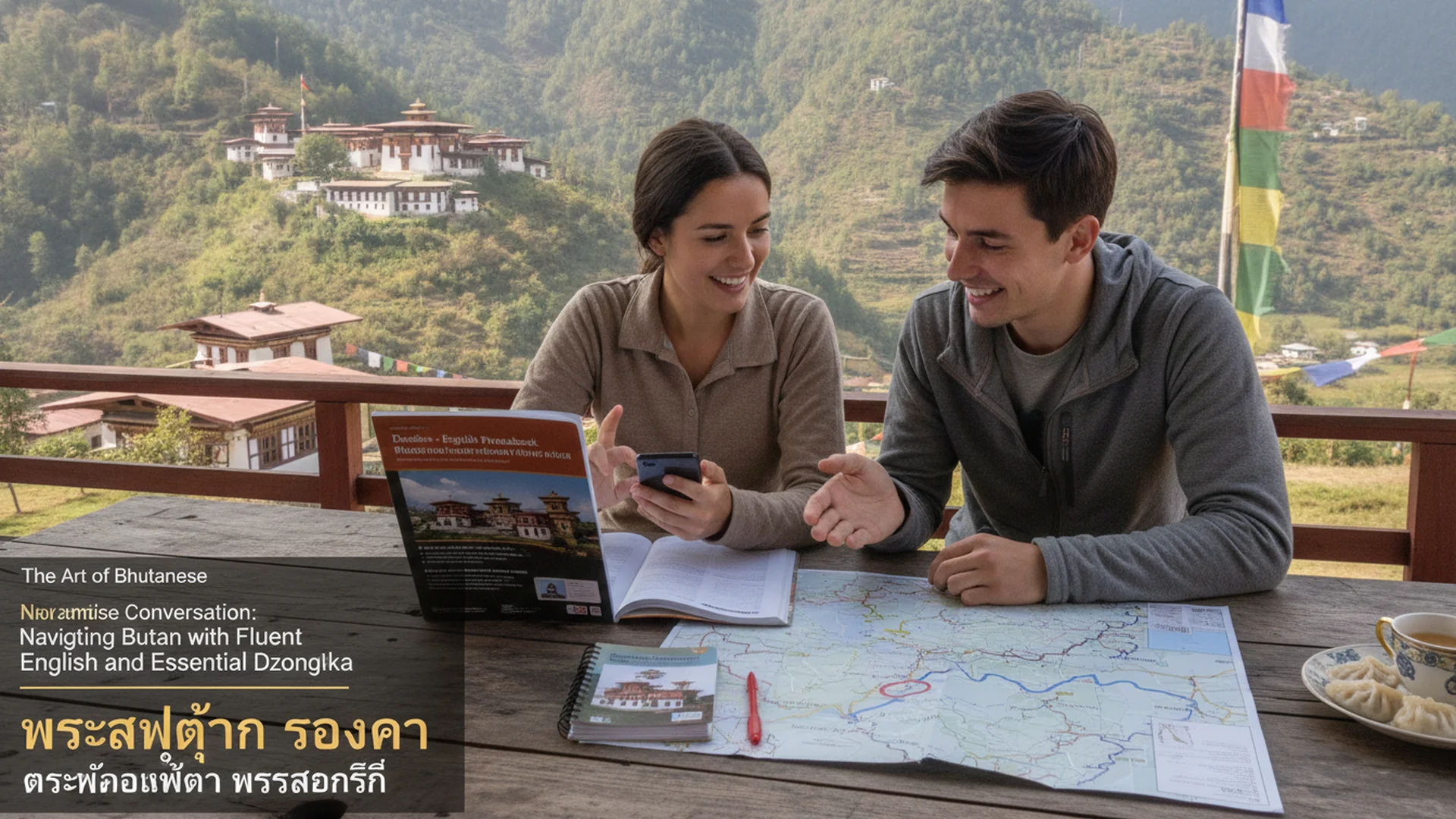
Amidst snow-crowned Himalayan crests and pristine temperate forests where prayer flags flutter in the mountain wind, one might easily imagine a remote realm entirely detached from the modern world. Yet, upon stepping into these tranquil valleys, discerning travelers are consistently surprised not merely by the monumental scale of the fortress-monasteries or the untouched wilderness, but by the effortless, natural fluency with which the Bhutanese converse in English. From luxury resort hosts to schoolchildren bounding along alpine ridges in their traditional gho and kira, linguistic connection comes with unexpected ease.
This widespread fluency is no accident of geography; it is the deliberate fruit of a national vision established in the 1960s, when Bhutan opened its doors to modernity while laying the cornerstone of a public education system conducted in English. This seamless fusion of Vajrayana Buddhist wisdom and globally fluent schooling creates an environment where travelers can engage in profound dialogues regarding philosophy, art, and Gross National Happiness (GNH) without linguistic friction.
Nevertheless, for the traveler seeking to pierce the true inner sanctum of Drukpa identity, stepping beyond English to offer a greeting in Dzongkha—the national language—unlocks the heart of the host nation. A modest, sincere effort to articulate foundational phrases transforms one from a transient spectator into an honored guest who respects the soul of the land.
Linguistic Roots: Where Modernity Meets the Himalayan Valleys
The exceptional English proficiency found across Bhutan is the calculated result of visionary long-term state planning. While neighboring nations wrestled with colonial linguistic remnants or insular education policies, Bhutan’s leadership under past monarchs instituted English as the primary language of instruction from primary school onward. Consequently, generations of Bhutanese have grown up with a sophisticated command of international communication.
Yet this fluency carries no trace of sterile globalization; rather, English in Bhutan is softened by a melodic cadence and an innate gentleness of spirit. Conversations with local historians or cultural naturalists transcend mere academic exchange, unfolding instead as poetic transmissions of Buddhist philosophy, folklore, and local cosmology that no conventional guidebook can replicate.
The Quick-Win Guide: Decoding Dzongkha for Lasting Goodwill
While English ensures effortless logistics, greeting your hosts in Dzongkha is the golden key to authentic cultural resonance. The phrase ‘Kuzuzangpo la’, meaning hello, is your primary introduction. Offered with a genuine smile, these syllables instantly transform the surrounding atmosphere into one of shared kinship.
When receiving assistance or hospitality, expressing gratitude via ‘Kadrinchey la’, accompanied by a gentle gesture of the hands, conveys profound appreciation. The secret to speaking Dzongkha with true Bhutanese grace lies in appending ‘La’ to the end of your sentences. This verbal honorific acts as a spoken bow—applicable whether you are expressing thanks, acknowledging a statement, or offering a polite refusal—instantly bridging distances and warming hearts.
The Aesthetics of Humility: Body Language in Sacred Sanctuaries
Communication in Bhutan extends far beyond spoken vocabulary into the realms of somatic awareness and situational decorum. Encounters with venerable monks or village elders require mindfulness of posture and proximity. Conversations should be conducted at a respectful distance, avoiding the direct pointing of fingers toward individuals or sacred relics; instead, use an open, upturned palm to gesture respectfully.
Furthermore, within monastic sanctuaries or architectural dzongs—which serve as both administrative and spiritual centers—proper attire is essential. Wearing full sleeves and traditional scarves (kabney for men, rachu for women) represents a profound form of non-verbal dialogue, signaling to all observers that you honor and safeguard the living heritage preserved by generations of Bhutanese ancestors.