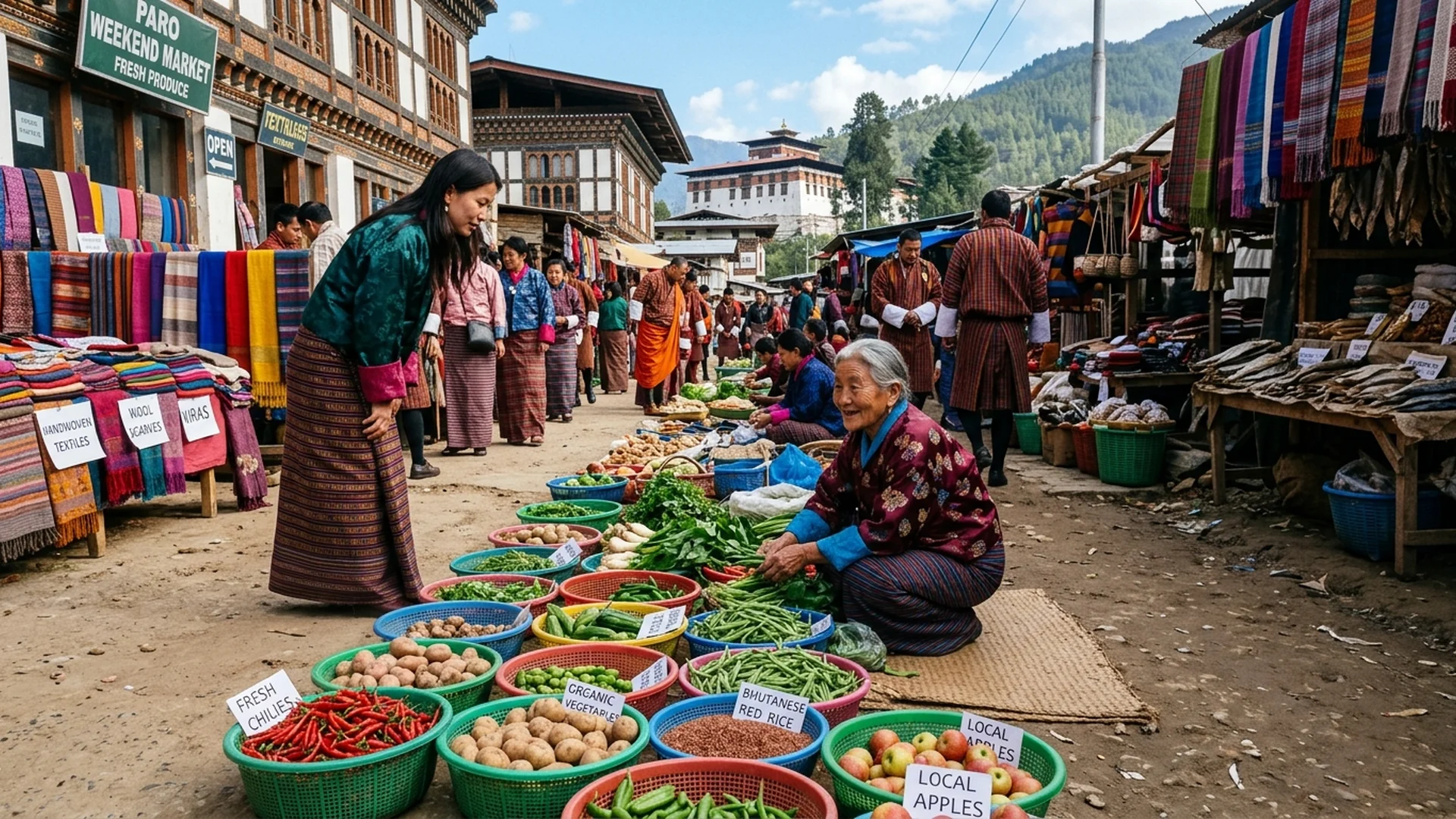
When the morning mist lifts from the towering peaks that cradle the Paro Valley, the gentle murmur of Dzongkha conversations awakens the crisp mountain air, mingling with the earthy aroma of roasting spices and woodsmoke. This is the Paro Weekend Market—far more than a simple agricultural exchange, it is the beating heart of the community, where centuries-old traditions seamlessly intertwine with the present breath of daily life.
Visiting this market on a Sunday morning offers an experience that far transcends standard sightseeing. Every step invites your senses to absorb the distinct textures, scents, and flavors of the Eastern Himalayas—a realm where prosperity is measured not by economic figures, but by the warm smiles of locals clad in traditional Gho and Kira, extending genuine hospitality to every traveler.
Tastes of the Himalayas: Exploring Wild Forages and Paro Yak Cheese
The moment you cross the threshold of the market, an atmosphere of rustic simplicity envelops you. Stalls brim with organic produce cultivated in fertile, high-altitude mountain soil. For culinary culturalists, the true centerpiece is Chugo—strands of amber-hued, dried yak cheese hung in braided bundles. Chewy and intensely savory, it represents an ancient preservation technique forged in alpine winters. Alongside it rests Sochutsu, the indigenous dried chili featured in nearly every Bhutanese hearth, paired with pristine wild honey harvested from the verdant forests of Tsirang and iron-rich Bhutanese red rice. Each element tells a silent story of humanity’s profound harmony with the rugged terrain.
A Treasury of Craft and Heritage Artistry
Beyond the fresh provisions lies a quiet sanctuary of artisan heritage. Hand-woven textiles here require months of meticulous craftsmanship, featuring geometric motifs that silently denote regional origins and ancestral identity. Nearby stalls offer fragrant blocks of incense compounded from wild juniper and rare high-altitude herbs, burned across Bhutan to purify negative energies and invite deep contemplation. Miniature masterpieces, including Bhutan’s world-renowned intricate stamps, also await the discerning collector. Pausing to examine these works slowly offers a lasting resonance that mass-produced souvenirs can never replicate.
Echoes of the Bow: Life and Archery Beside the Market
Periodic bursts of cheering and jubilant song drifting from the nearby Archery Ground signal another vital dimension of weekend life. Archery is far more than a sport in the Kingdom; it is a sacred ritual and a profound expression of national pride. Standing near the sidelines amidst the lively camaraderie and celebratory dances for successful shots offers deep insight into the communal fabric of Bhutanese society. It is an authentic tableau of living heritage that no guidebook can fully capture.