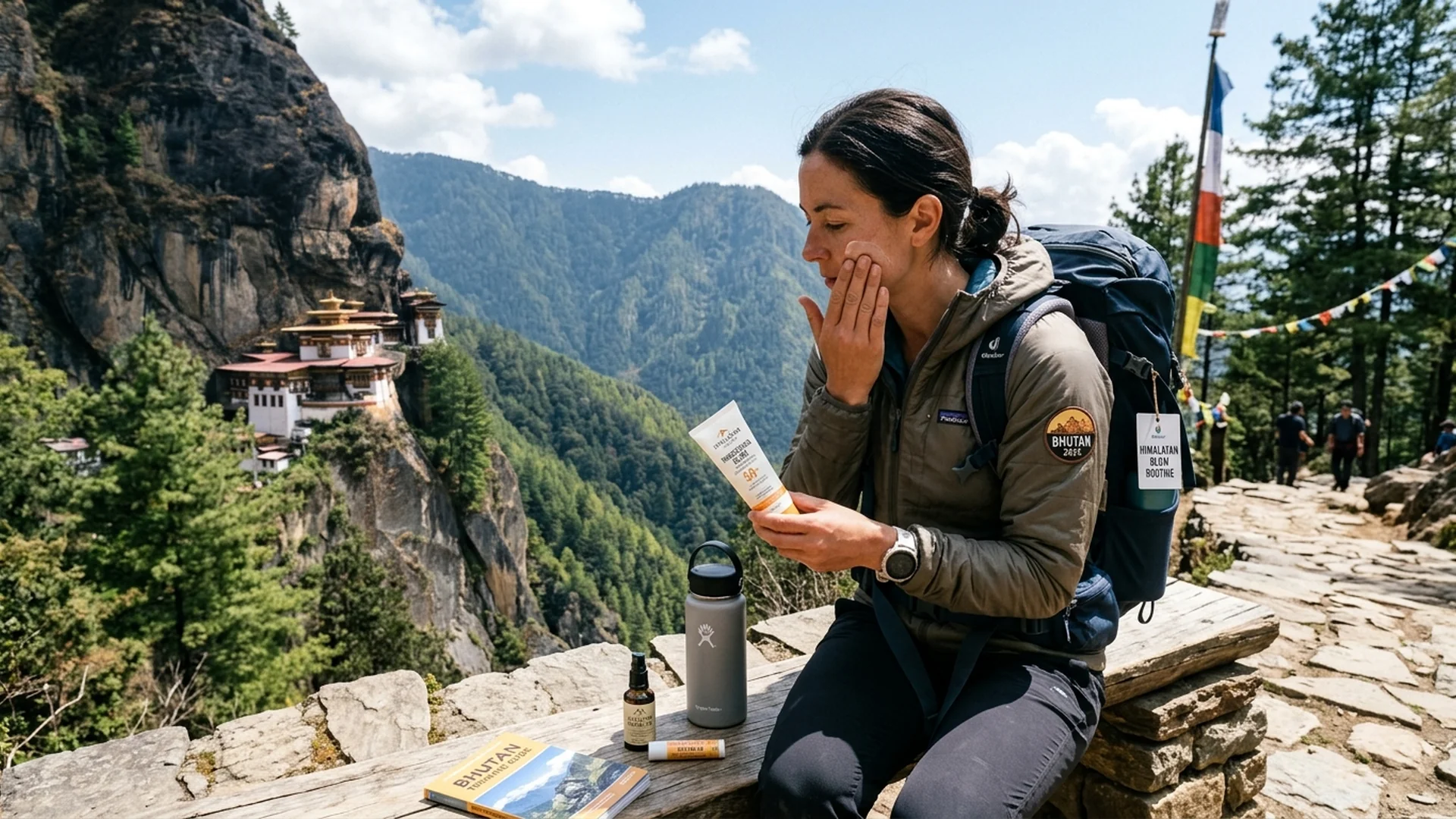
When ascending into the Land of the Thunder Dragon, thousands of meters above sea level, the pristine grandeur of the Himalayan peaks immediately commands the senses. Yet, behind this serene natural magnificence lies an environment that poses extraordinary challenges to the skin. For every thousand meters of elevation gained, ultraviolet (UV) radiation intensifies exponentially. Combined with exceptionally dry air and biting mountain winds, the skin’s natural protective barrier faces a silent, relentless assault. Thorough preparation and an intimate understanding of high-altitude dermatological shifts are vital to maintaining balance and radiance, allowing you to immerse yourself fully in the breathtaking surroundings with absolute confidence.
Journeying through Bhutan demands more than simply packing woolen layers; it calls for an elevated commitment to targeted skincare and deep dermal defense. Beneath a thinning atmosphere and the reflective landscapes of the high Himalayas, complexions require far more robust fortification than standard daily routines provide. This guide decodes the atmospheric science of high altitudes while revealing bespoke, premium skincare rituals tailored specifically for the discerning traveler.
Decoding the Himalayan Atmosphere: Why High Altitudes Demand Specialized Skincare
Ascending into high-altitude terrains such as Bhutan alters the surrounding environment entirely. Decreased atmospheric pressure and minimal ambient humidity cause moisture molecules within the skin to evaporate rapidly into the outside air. This phenomenon transcends ordinary dryness; it is known as Transepidermal Water Loss (TEWL), occurring at a rate many times faster than normal.
Beyond arid winds, high-altitude UV radiation is exceptionally pure and potent because the atmospheric layer filtering these rays is notably thin. Furthermore, when landscapes are kissed by distant snowfields, these rays reflect off icy surfaces like a mirror, striking the skin twice. Recognizing this reality transforms skincare from a seasonal afterthought into a precise, scientifically grounded protective discipline.
Advanced Fortification: The Art of Selecting Sunscreens and Antioxidants
Defending the skin against Himalayan sunlight requires moving far beyond lightweight coastal sunscreens. High-net-worth travelers should curate broad-spectrum formulations rated SPF50+ PA++++, which shield against both UVA rays (the primary driver of premature aging and loss of elasticity) and UVB rays (the cause of sunburn and erythema).
Formulations should feature rich yet easily blendable textures that harmonize seamlessly with subsequent skincare steps. Additionally, incorporating antioxidant serums rich in pure Vitamin C or ferulic acid prior to sunscreen application helps neutralize free radicals generated by intense UV exposure at the cellular level, preventing the formation of dark spots and hyperpigmentation long after the journey concludes.
The Science of Moisture Sealing: Restoring Elasticity via Occlusive Layering
The frigid, arid air of the Himalayas readily strips softness from the complexion. Without natural lipid barriers, the skin easily succumbs to burning sensations and flaking. The definitive remedy is not merely increasing water consumption, but constructing a physical shield using occlusive layering techniques.
Begin by infusing hydration with essences or serums featuring multi-molecular hyaluronic acids to draw moisture deep into the dermal layers. Follow this by sealing with a nutrient-rich moisturizer containing ceramides, squalane, or shea butter, which acts as a microscopic veil preventing water from evaporating into the external atmosphere. Your skin thus maintains its plump, supple, and luminous vitality even when standing amidst freezing alpine gales.