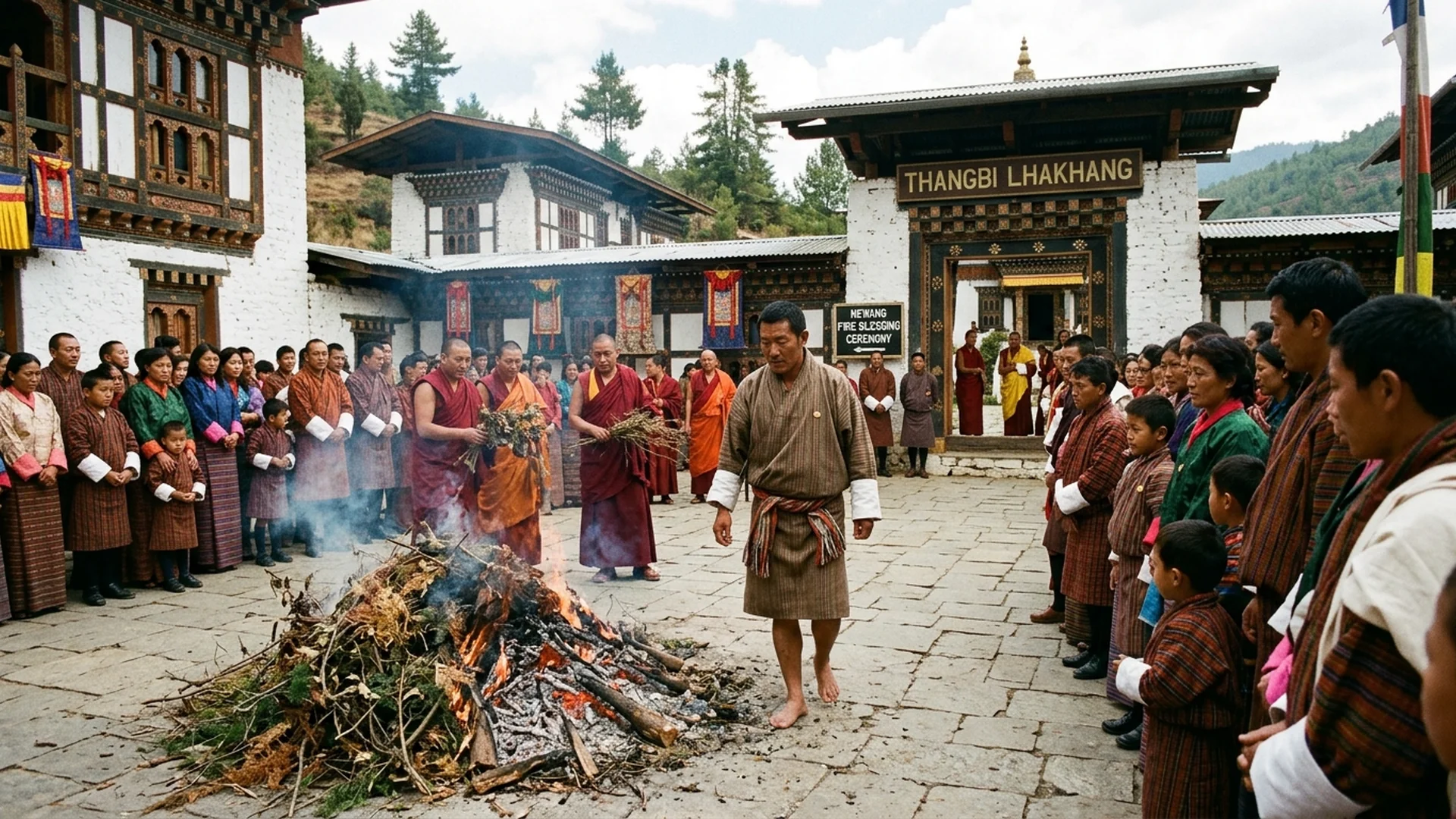
Beyond the ripple of golden wheat fields and the gentle mists blanketing the Chokhor Valley of Bumthang, the heart is effortlessly drawn into another dimension of time at Thangbi Lhakhang. This ancient monastery, tucked quietly away from heavily trodden commercial tourist routes, is far more than a resilient structure defying the centuries; it is a pulse of unadorned devotion where the breath of ancient legends and timeless mantras continues unbroken.
Visiting this sacred enclave during the crisp arrival of autumn feels less like conventional travel and more like a profound pilgrimage connecting human consciousness to vast natural energies. Amidst the resonant thrum of ancestral drums and hypnotic masked dances, the discerning traveler is invited to witness the Mewang fire blessing and an intellectual legacy passed down through generations, reflecting the authentic core of inner peace intrinsic to the Kingdom of Bhutan.
Fifteenth-Century Roots: Founding Legends and the Mystique of Bumthang
Thangbi Lhakhang, formally known as Thangbi Lhendrup Choling, was established in 1470 by Chokyi Drakpa Yeshe Pal Zangpo—the fourth Shamar Rinpoche—upon a sprawling plateau historically likened in sacred topography to the body of a mythological garuda. The architecture stands as a testament to traditional Bhutanese craftsmanship, sheltering venerable 15th-century clay sculpted deities and sublime Vajrayana mural paintings within its hallowed chambers.
Near the threshold, the monastery guards profound historical relics, notably the iron-chain mail armor fashioned by Terton Pema Lingpa, one of Bhutan’s foremost treasure revealers. These sacred iron links transcend mere historical weaponry; they remain potent conduits of spiritual protection before which pilgrims bow in utmost reverence. From the wooden veranda, gazing downward reveals the meandering waters of the Chamkhar Chhu river winding gracefully through pastoral fields and tranquil hamlets, embodying a serene stillness impossible to find elsewhere.
Thangbi Mani and the Mewang Fire Blessing: Cleansing the Spirit Through Flame
Every year during the eighth month of the Bhutanese lunar calendar—typically spanning September and October—the courtyards of Thangbi Lhakhang awaken vibrantly for the Thangbi Mani festival. This cultural celebration remains wonderfully authentic and utterly untouched by commercialism. The crisp mountain air fills with the resonant resonance of traditional Cham mask dances performed by local Gomchens and villagers, intended to pacify malevolent forces and fortify community resilience.
The climax of the festival, drawing sincere pilgrims from afar, is the nocturnal or twilight Mewang fire blessing. Towering bonfires are ignited against the chill of the alpine evening, accompanied by solemn monastic prayers led by the resident lay monks. Participants run or leap across the sanctified flames three times in accordance with ancient tradition. This profound ritual is believed to incinerate the accumulated karma, grievances, and misfortunes of the past year, offering spiritual renewal and sanctified protection for the journey ahead.
The Way of the Gomchens: Guardians of the Heart and Local Culture
A defining characteristic of Thangbi Lhakhang is its administration and ritual continuity sustained by the Gomchens, or lay monks. Unlike conventional state monastic bodies, these spiritual practitioners balance family life with rigorous scriptural study and meditation. They are the vigilant torchbearers of ancient astrological knowledge, ritual arts, and liturgical chants inherited directly from their forebears.
Engaging in quiet conversation or shared moments with the Gomchom community in Thangbi offers deep intellectual insight into Gross National Happiness as a lived reality rather than mere policy. Here, happiness is anchored in radical simplicity, mutual reliance, and a profound reverence for the ancestral landscape—all eloquently communicated through unhurried hospitality and gentle smiles.