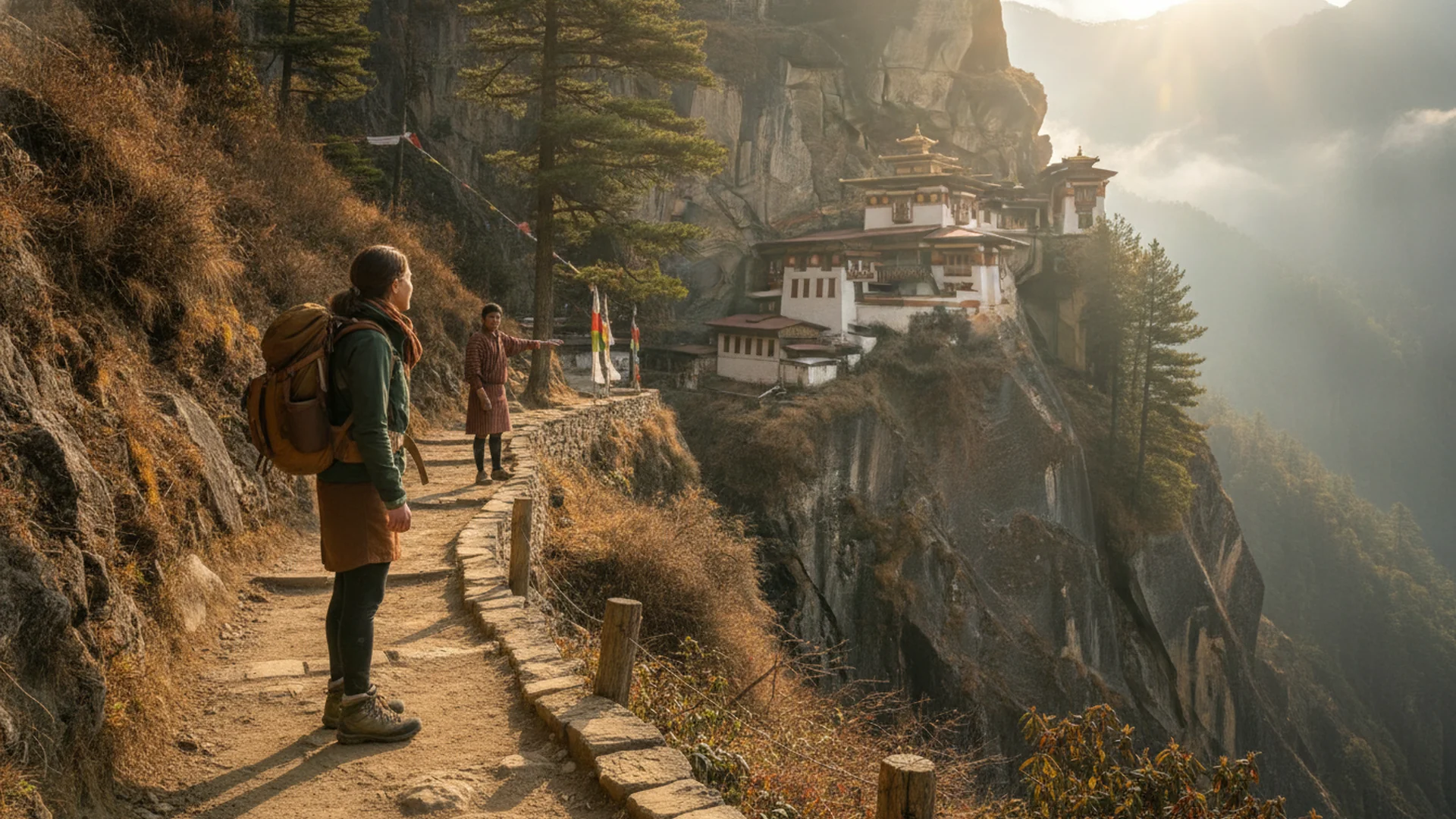
The arresting image of whitewashed walls and gilded golden roofs clinging precariously to a sheer 900-meter granite cliff above the Paro Valley remains the definitive vision of the Kingdom of Bhutan. Yet, the ascent to Paro Taktsang—universally revered as Tiger’s Nest—resting at 3,120 meters above sea level, transcends mere sightseeing. It is an unhurried pilgrimage, a profound test of physical endurance and inner stillness set against the majestic amphitheater of the Himalayas.
Stepping upward into increasingly rarefied air, accompanied by the rhythmic fluttering of prayer banners and the subtle fragrance of blue pine, demands far more than raw physical stamina. Conquering this trail is an exercise in pacing and breath control, transforming a 6.4-kilometer alpine journey into a delicate, indelible meditation. For discerning global travelers seeking soulful depth, this trail offers a rare synthesis of untamed wilderness and timeless spiritual heritage.
The Anatomy of the Cliffside Trail: Terrain, Distance, and True Difficulty
The pilgrimage to Tiger’s Nest commences at the Ramthangkha parking area at an elevation of roughly 2,600 meters, ascending a net elevation gain of 520 meters to the monastery gates at 3,120 meters. The geography unfolds across three distinct phases. The initial phase winds upward through dense blue pine forests and ancient rhododendron groves along a broad, forgiving earth track. The second phase contours along the mountain ridge toward the mid-point sanctuary, while the final phase plunges downward before ascending a series of ancient stone staircases carved past roaring waterfalls and deep chasms, ultimately delivering the pilgrim to the threshold of the sacred Lhakhang. Rated as a moderate hike, the path requires no technical mountaineering gear, instead challenging cardiovascular capacity through relentless elevation gain and thinning atmospheric pressure.
Rhythmic Breath in Mist-Veiled Heights: Managing Oxygen and Preventing AMS
The true secret to an effortless and secure ascent lies in harmonizing one’s pace with respiration—what seasoned guides refer to as the ‘Pace of Peace.’ Because elevations exceeding 2,500 meters offer significantly lower oxygen density than sea level, rushing is entirely counterproductive. Maintaining a steady, unhurried rhythm, taking soft, deliberate steps, and breathing deeply through the nose while exhaling slowly through the mouth preserves blood oxygen levels and staves off cumulative fatigue. Furthermore, allowing the physiology two to three days of prior adjustment in the sheltered valleys of Paro or Thimphu ensures complete acclimatization, effectively mitigating the threat of Acute Mountain Sickness (AMS).
Taktsang Cafeteria & Panoramic Vistas: Rest, Butter Tea, and Alpine Aesthetics
After approximately 1.5 to 2 hours of steady walking through the lower forest, travelers arrive at the Taktsang Cafeteria, perched dramatically upon a sweeping ridge at 2,940 meters. This architectural outpost, crafted in traditional Bhutanese vernacular, features a broad timber veranda framing an unobstructed, heart-stopping view of the monastery suspended across the valley. Pausing here to sip steaming cups of traditional butter tea (Suja) or honey-infused ginger tea amid crisp mountain breezes restores equilibrium and prepares the spirit for the demanding yet deeply rewarding final push.
Beyond the Sacred Threshold: Spiritual Legacy, Etiquette, and Inner Reverence
Paro Taktsang is far more than a breathtaking architectural monument; it is the beating spiritual heart of Bhutan. According to sacred tradition, Guru Padmasambhava (Rinpoche) manifested upon this sheer precipice astride a tigress in the 8th century to subdue malevolent forces and meditate within the sacred cave. Crossing the threshold requires rigorous adherence to local protocol: passing security checkpoints, removing footwear, donning immaculate attire (no shorts, sleeveless shirts, or hats permitted), and leaving all cameras, mobile devices, and backpacks securely locked away before entering the inner sanctuaries. Circumambulating the altars in a clockwise direction, absorbing the low resonance of monastic chants, and surrendering to the profound stillness of the sacred cave offers an unmatchable encounter with inner peace.