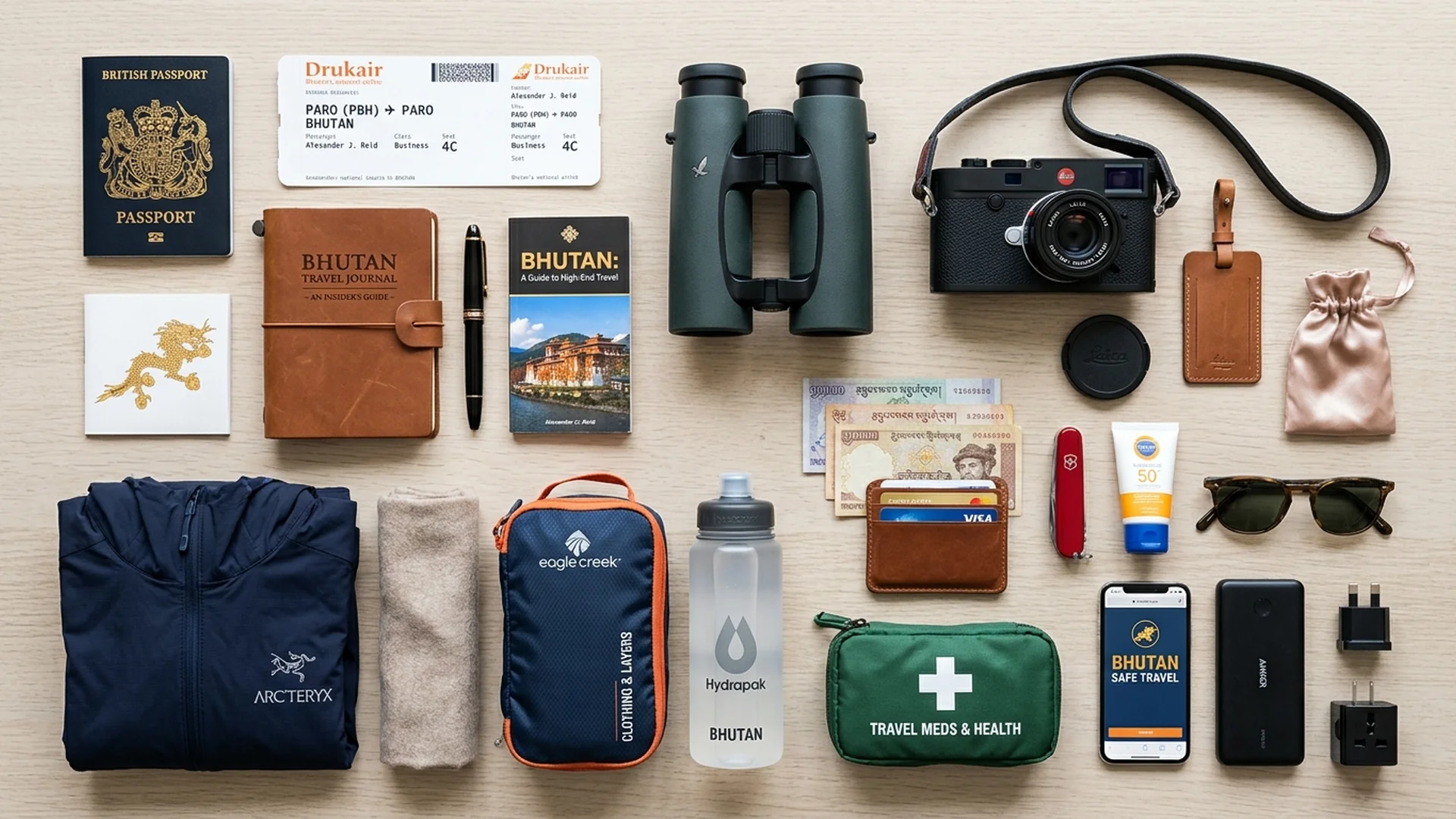
When morning mist drifts across the towering peaks of the Himalayas, blanketing emerald forests and ancient monastic fortresses known as dzongs, the primary question for high-end travelers seeking sanctuary is rarely one of luxury. Instead, it is a deeper yearning for peace of mind and absolute security in a realm where time itself seems to move at a gentler, more deliberate cadence than the outside world. It is frequently said that the Kingdom of Bhutan stands among the most tranquil destinations in Asia, yet we must ask whether this is merely a superficial impression or a profound reality shaped by the philosophy of Gross National Happiness.
Journeying into the Land of the Thunder Dragon is rarely challenged by conventional urban crime. Rather, the journey presents a majestic encounter with raw nature, soaring elevations, and rigorous cultural traditions that demand thoughtful understanding. Unraveling the nuances of travel safety here requires an expansive perspective that moves far beyond standard crime statistics—delving into sustainable tourism frameworks, meticulous quality controls, and the kingdom’s preparedness for environmental shifts to ensure every step upon this sacred earth is physically and spiritually secure.
The Architecture of Safety: When Tranquility Becomes a Way of Life
International indices consistently place Bhutan among the safest nations on earth for travelers. Strolling after dusk along the quiet lanes of Thimphu or Paro is entirely devoid of apprehension. Citizens conduct their lives with deep integrity, an organic product of Vajrayana Buddhist foundations. Security here is not manufactured through imposing perimeter fences or heavy policing, but through a shared communal conscience cultivated across generations. Furthermore, the government mandates that all international visitors travel via licensed tour operators accompanied by dedicated guides and professional drivers. This serves as an invisible shield, effortlessly removing concerns regarding navigation, communication, or unexpected emergencies.
Confronting Nature on the Roof of the World: Understanding Altitude Sickness
While human security is absolute, the primary challenge demanding the attention of discerning travelers is the natural topography. Bhutan is overwhelmingly mountainous. Thimphu rests at approximately 2,330 meters above sea level, Paro sits near 2,250 meters, and traversing high viewpoints like Dochula Pass or venturing into high-altitude trekking routes pushes elevations past 3,000 to 4,000 meters. This introduces the risk of Acute Mountain Sickness. Headaches, nausea, or fatigue can manifest regardless of age or physical conditioning. Optimal preparation requires dedicated acclimatization during the initial days, generous hydration, abstaining from alcohol, and heeding the counsel of expert private guides who routinely carry portable oxygen and standard medical supplies.
Cultural Etiquette and Golden Rules: The Key to Seamless Travel
Another dimension of safety often overlooked by global travelers is cultural security—avoiding inadvertent friction born of unfamiliarity. Bhutan fiercely safeguards its pristine heritage. Government offices and sacred sanctuaries, including historic dzongs, enforce rigorous dress codes. Both gentlemen and ladies are expected to dress modestly with shoulders and knees covered. Entering temple sanctums requires removing hats and sunglasses, and strict bans govern photography within sacred inner chambers. Transgression is not merely a social faux pas; it risks alienating local sentiment. Relying on an attentive private guide to advise precisely where lenses are welcomed and where cameras must remain stowed is the ultimate safeguard.