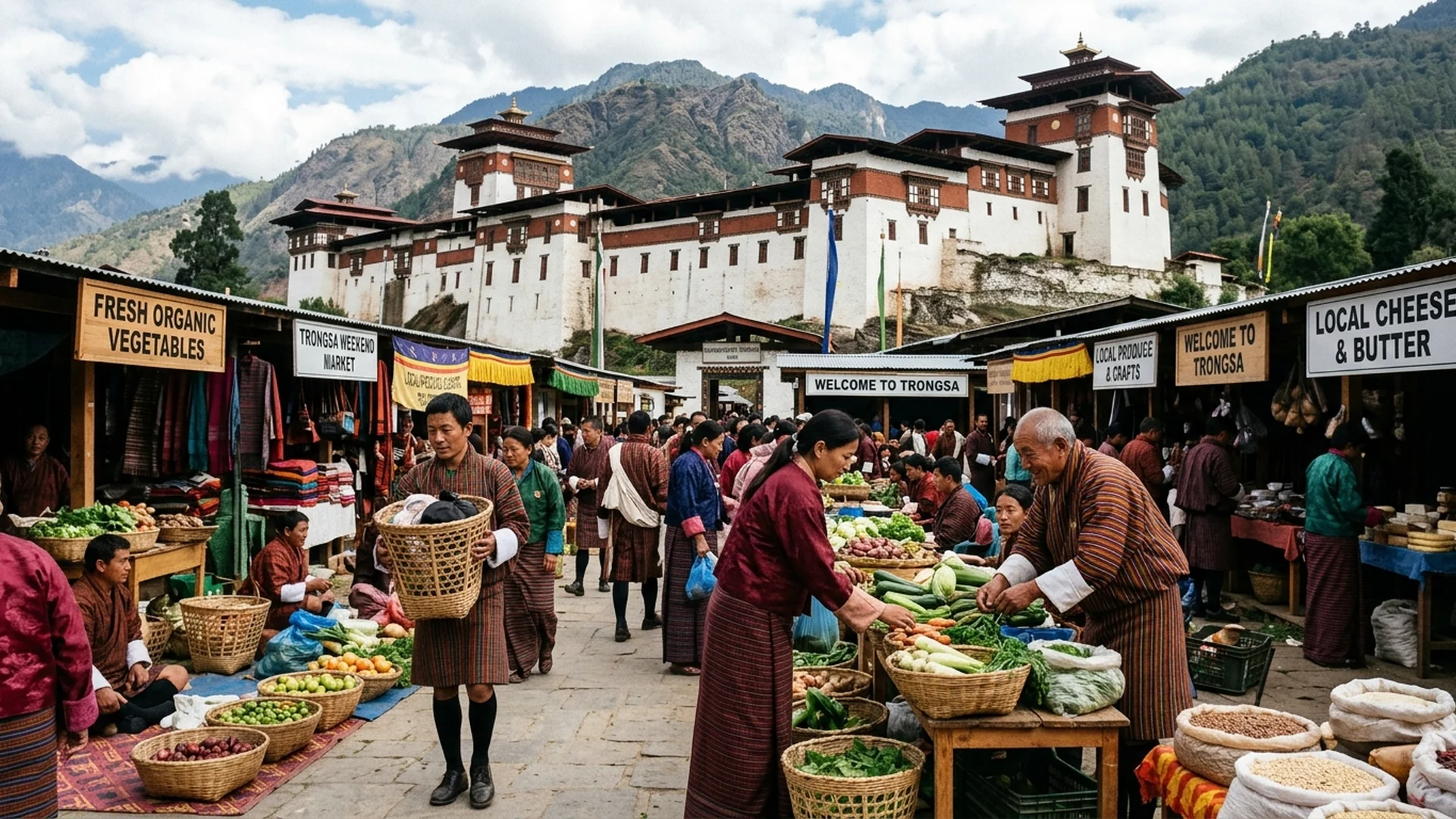
As the morning mist slowly lifts from the soaring peaks, the monumental silhouette of Trongsa Dzong—the formidable fortress-monastery that serves as the beating heart of central Bhutan—casts a protective shadow over a modest, bustling marketplace coming quietly to life. This is far more than a simple agricultural trading post; it is a sacred nexus of community and a gathering point for mountain dwellers who traverse deep valleys clad in immaculate, intricately patterned Gho and Kira.
The rich aroma of wild Himalayan spices and traditional fermented cheese drifts on the crisp mountain air, while Dzongkha conversations harmonize with the steady tread of footsteps along the red-earth lanes. The Trongsa Weekend Market offers an unfiltered reflection of authentic happiness, entirely unvarnished for the lens of tourism. For the discerning cultural traveler, it is an immersive portal into the genuine essence of slow living, championing community resilience through the mindful principles of regenerative tourism.
Cultural Reflection Beneath the Fortress Wall
Trongsa acts as a vital geographical and cultural bridge between western and eastern Bhutan. Consequently, its weekend market functions as an organic amphitheater where diverse ethnic groups converge after descending from remote mountain settlements. Men attired in knee-length Gho robes and traditional patterned socks, alongside women draped in vibrant Kira dresses featuring striking geometric motifs, browse the stalls with easy smiles and quiet grace. The atmosphere radiates an intimate, familial warmth. Even as modern influences slowly ripple across the globe, the guardians of this high-altitude valley steadfastly preserve their ancestral identity. Standing quietly and observing the unhurried rhythm of life beneath the ancient ramparts of Trongsa Dzong invites a profound sense of inner stillness and a renewed appreciation for the lost art of unhurried time.
Himalayan Foraging Treasures: Local Harvests and Ancestral Flavors
The modest stalls of the market overflow with natural provisions entirely foreign to metropolitan centers. Fresh wild fiddlehead ferns, locally known as Nakay, are foraged directly from alpine stream banks. Zoedue—cheese fermented within sheepskins—yields a deeply pungent, complex aroma and flavor entirely unique to the region, while Chhurpi, hardened cheese dried on strings, provides enduring sustenance for high-altitude travelers traversing mountain passes. Alongside these are jars of wild forest honey harvested from deep hollows in ancient trees. Every item speaks volumes about the extraordinary biodiversity of the Himalayan ecosystem and ancient food preservation techniques passed down through generations, illuminating an unbroken, harmonious relationship between humanity and the rugged wilderness.
Enduring Craftsmanship and Sustainable Community Support
Beyond agricultural harvests, the market serves as a vital showcase for precious heritage crafts. Discerning collectors of textile arts will discover Yathra—luxurious wool fabrics hand-woven in natural dyes, originating from the valleys of Bumthang—alongside impeccably crafted bamboo basketry fashioned by artisans from Zhemgang. Procuring these pieces directly from the makers ensures that commerce translates into a meaningful exchange, securing financial empowerment for farming households and artisan families. This direct-to-artisan model aligns seamlessly with the ethos of responsible travel, ensuring that intangible cultural heritage continues to thrive for generations to come.