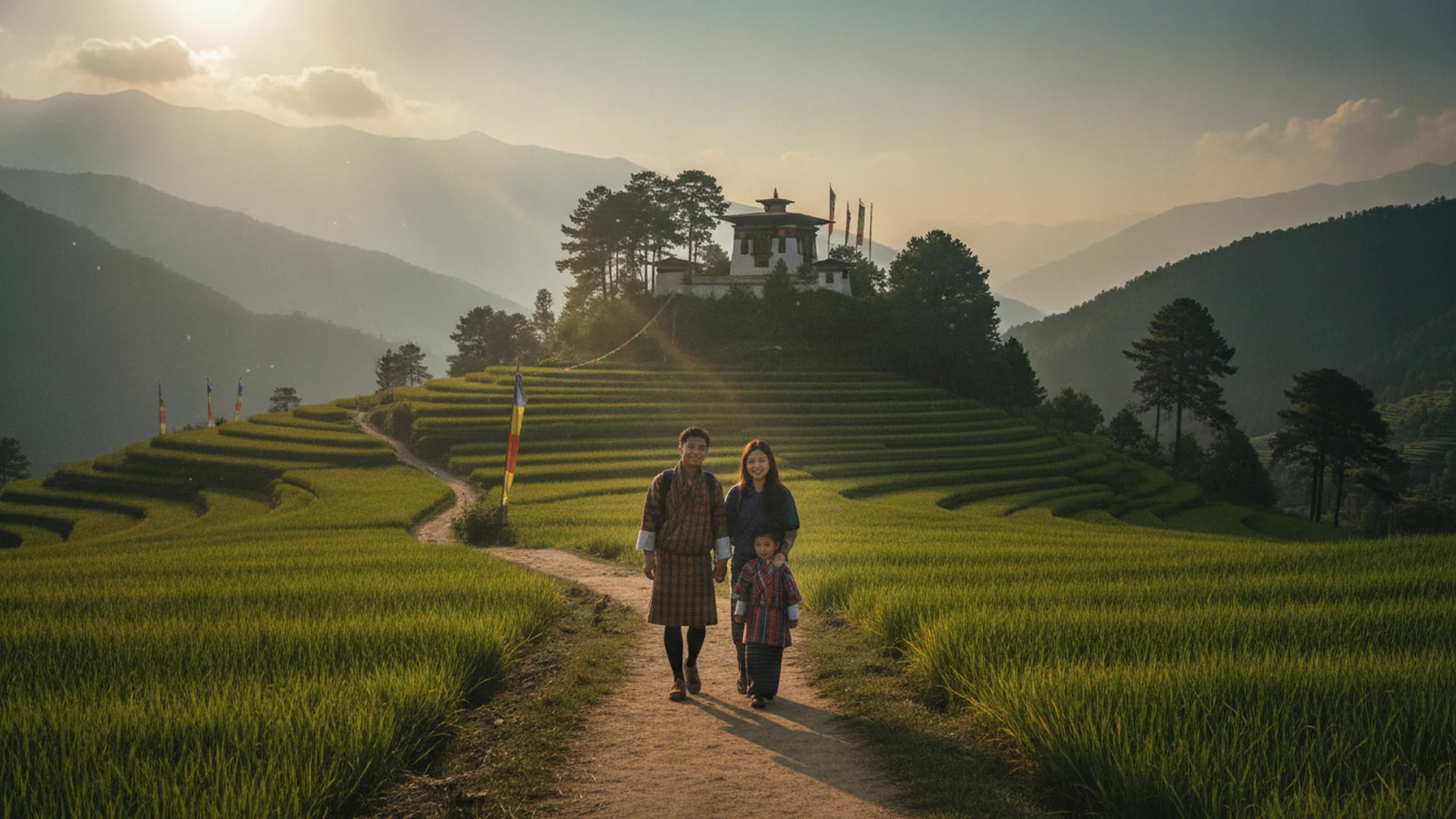
A delicate bell chime resonates softly against the crisp Himalayan wind, blanketing the mist-shrouded valleys in profound stillness. In Bhutan, hiking transcends physical endurance or the conquest of lofty summits; it is instead the living art of mindful walking—a meditative movement designed to soothe the spirit, absorb the pure energy of ancient forests, and connect with centuries of unbroken Buddhist philosophy.
Amidst towering peaks piercing the sky at several thousand meters, Bhutan conceals a wealth of gentle day hikes. These paths are thoughtfully tailored for travelers of all generations, welcoming novices, seniors, and families with young children to experience timeless beauty without physical strain. Meander past golden terraced rice paddies, whispering pine forests, vibrant blooming rhododendrons, and contemporary prayer flags fluttering toward sacred monasteries perched serenely upon the ridgelines.
The hallmark of a premium Himalayan journey in Bhutan is the seamless harmony between pristine wilderness and meticulous personal care. Every trail is elevated by expert local guides, careful altitude acclimatization pacing, and discreet concierge support, ensuring every step through the Land of the Thunder Dragon remains safe, exquisite, and unforgettable.
1. The Philosophy of Mindful Walking: Meditation Amidst the Peaks
In Bhutanese culture, mountains and primeval forests are never viewed merely as dramatic scenery; they serve as sanctuaries for protective deities and sacred Buddhist abodes. Traversing these lands thus becomes an inward pilgrimage. Moving slowly and deliberately along natural paths allows the body to attune to nature’s rhythm, blending each breath with the crisp, restorative air of the high Himalayas.
Crafted specifically to banish urban urgency, these gentle day hikes invite you and your family to converse with the surrounding silence, listen to streams babbling over limestone beds, and watch auspicious prayer flags dance with the breeze. This meditative pace acts as an ideal restorative balm for city-worn minds while nurturing warm, unhurried connections among traveling companions.
2. Five Mastercrafted Day Hikes for Beginners and Families
Bhutan offers an exquisite portfolio of short-form nature walks that seamlessly blend pristine wilderness with living culture. Here are five standout itineraries you simply cannot miss:
1. Gangtey Nature Trail (Phobjikha Valley): A gentle, level path traversing a magnificent glacial valley for roughly four kilometers (taking 1.5 to 2 hours). Beginning at the ancient Gangtey Goemba (sanctuary monastery), the trail descends through fragrant blue pine forests and expansive meadows. In winter, this valley becomes the cherished winter home of the rare, globally endangered black-necked cranes.
2. Khamsum Yulley Namgyal Chorten (Punakha): Wind your way through emerald terraced rice fields alongside the meandering Mo Chhu (river) before tackling a gentle, 45-minute hillside ascent to this resplendent golden stupa. Commissioned by the Queen Mother to invoke universal peace, the monument’s summit rewards you with breathtaking panoramic vistas across the entire Punakha Valley.
3. Wangditse Nature Trail (Thimphu): A delightful two-kilometer forest stroll positioned above the capital city of Thimphu. The path meanders lazily through blue pine groves and rhododendron thickets, offering elevated, postcard-perfect perspectives of Tashichho Dzong (fortified monastery-fortress) and the towering Buddha Dordenma.
4. Cheri Monastery Trail (Thimphu): Cross an ancient timber bridge and ascend through peaceful oak and hemlock forests on a one-hour journey alongside the Wang Chhu. Leading toward Cheri Goemba—Bhutan’s very first monastic sanctuary established by Zhabdrung Ngawang Namgyal—the tranquil route frequently treats mindful observers to grazing gorals browsing undisturbed.
5. Paro Taktsang Viewpoint Trail (Paro): For families and beginners seeking the essence of Tiger’s Nest without the full arduous climb, ascending to the halfway cafeteria viewpoint is immensely rewarding. Taking 1.5 to 2 hours along a wide, secure path, you can sip hot butter tea while admiring the sheer cliffside sanctuary suspended impossibly in the clouds.
3. Graceful Acclimatization and Nourishing Culinary Traditions
The cornerstone of a comfortable, stress-free Himalayan trek for every generation lies in thoughtful altitude management. Much of Bhutan rests between 2,000 and 3,000 meters above sea level, elevations that can induce mild oxygen adjustments if one moves too hastily.
Elite travel planning incorporates a systematic acclimatization curve, initiating explorations in lower-altitude capitals and valleys like Punakha before ascending toward higher outposts like Paro or Phobjikha. Furthermore, continuous hydration with pure mineral water, hot infusions of fresh ginger and wild honey, and freshly prepared, easily digestible local dishes ensure your body’s vital energy remains robust throughout the adventure.
4. Himalayan Gear and the Layering System: Dressing with Intelligent Ease
Himalayan weather is famously capricious; warm, brilliant sunshine by day can swiftly yield to biting winds or dropping temperatures as shadows lengthen. Mastering the three-layer clothing system is therefore essential for thermal comfort:
- Base Layer: Moisture-wicking, breathable garments crafted from fine merino wool or high-performance synthetic athletic fabrics.
- Insulating Layer: A lightweight fleece or compressible down jacket designed to trap core body warmth efficiently.
- Outer Layer: A windproof, water-resistant shell (such as GORE-TEX) to shield against mountain gales and passing mists.
Footwear should consist of broken-in, ankle-supporting hiking boots with deep, reliable tread. Coupled with a pair of trekking poles, these reduce knee joint impact by up to 25 percent—a distinct advantage for senior travelers.