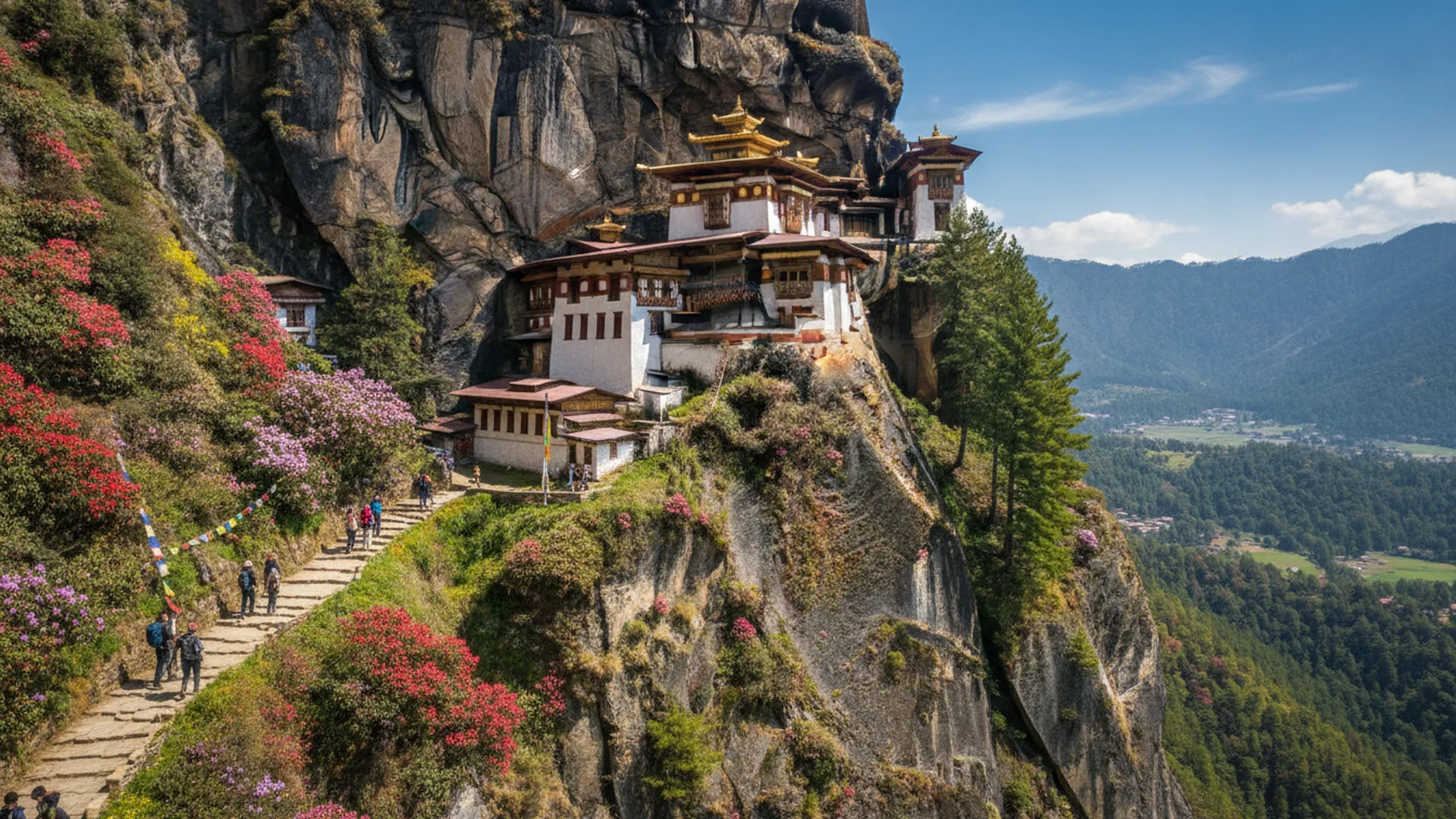
High in the eastern folds of the Himalayas, the Kingdom of Bhutan moves to a cadence undisturbed by the relentless velocity of the modern world. Here, in the land of Gross National Happiness, time is measured not by clockwork, but by the drift of mountain mist, the changing hue of pine needles, and the ancient seasonal winds carrying prayers across glacial valleys.
Crossing into Bhutan is less a geographic transit than a quiet threshold into sacred geometry. For the discerning traveler, discerning when to cross this threshold is an art unto itself. Each quarter of the year unlocks a distinct facet of the realm—from rhododendron-cloaked crags in spring to golden terraced fields alive with sacred monastic rites in autumn.
This editorial guide explores the seasonal architecture of Bhutan, shedding light on the sanctuary of its four seasons, the spiritual resonance of its annual Tshechu festivals, and the thoughtful mechanics of its Sustainable Development Fee (SDF) designed to protect this realm in perpetuity.
Spring Awakening: Rhododendron Blooms and Crisp Himalayan Horizons
As the bitter chill of winter retreats between March and May, the valleys of Paro and Punakha undergo a quiet metamorphosis. The wild slopes burst into a vibrant canvas of white, crimson, and pale rose as ancient rhododendron forests blossom in unison. Days are filled with mild mountain air and clear horizons, offering unhindered vistas of snow-capped peaks against deep indigo skies. For trekkers embarking on sacred mountain routes and photographers chasing the first light over valley fortress-monasteries (Dzongs), spring represents Bhutan at its most vital and pristine.
Autumn Reverie: Sacred Tshechus and Golden Harvest Valleys
To glimpse the true spiritual core of the kingdom, one must arrive when the summer rains yield to the translucent skies of September through November. Autumn transforms the agricultural heartlands into shimmering fields of gold, set against the dramatic backdrop of ancient stone architecture. This is the grand season of the Tshechu—sacred monastic festivals such as the Thimphu and Paro Tshechus. Monk-dancers clad in heavy brocade masks execute timeless sacred dances (Cham), their movements echoing the ancient victory of Dharma over shadow. The thunder of drums and the long resonance of monastic horns transform every Dzong courtyard into a living tapestry of faith and artistic reverence.
The Quiet Seasons: Monsoon Emeralds and Winter Solitude
While many travelers favor spring and autumn, the summer monsoon (June to August) and winter frost (December to February) hold profound rewards for the contemplative voyager. Summer brings warm rains that paint the terraced rice fields in luminous shades of emerald, enveloping the sanctuaries in soft clouds of mist—an ideal period for secluded wellness retreats and unhurried cultural immersions without crowds. Conversely, winter brings sharp frost and cold starry nights, balanced by cloudless daytime sun and unparalleled clarity of the High Himalayas. In the quiet marshlands of the Phobjikha Valley, winter heralds the auspicious arrival of the endangered black-necked cranes, migrating from the Tibetan plateau in a ritual as old as the mountains themselves.