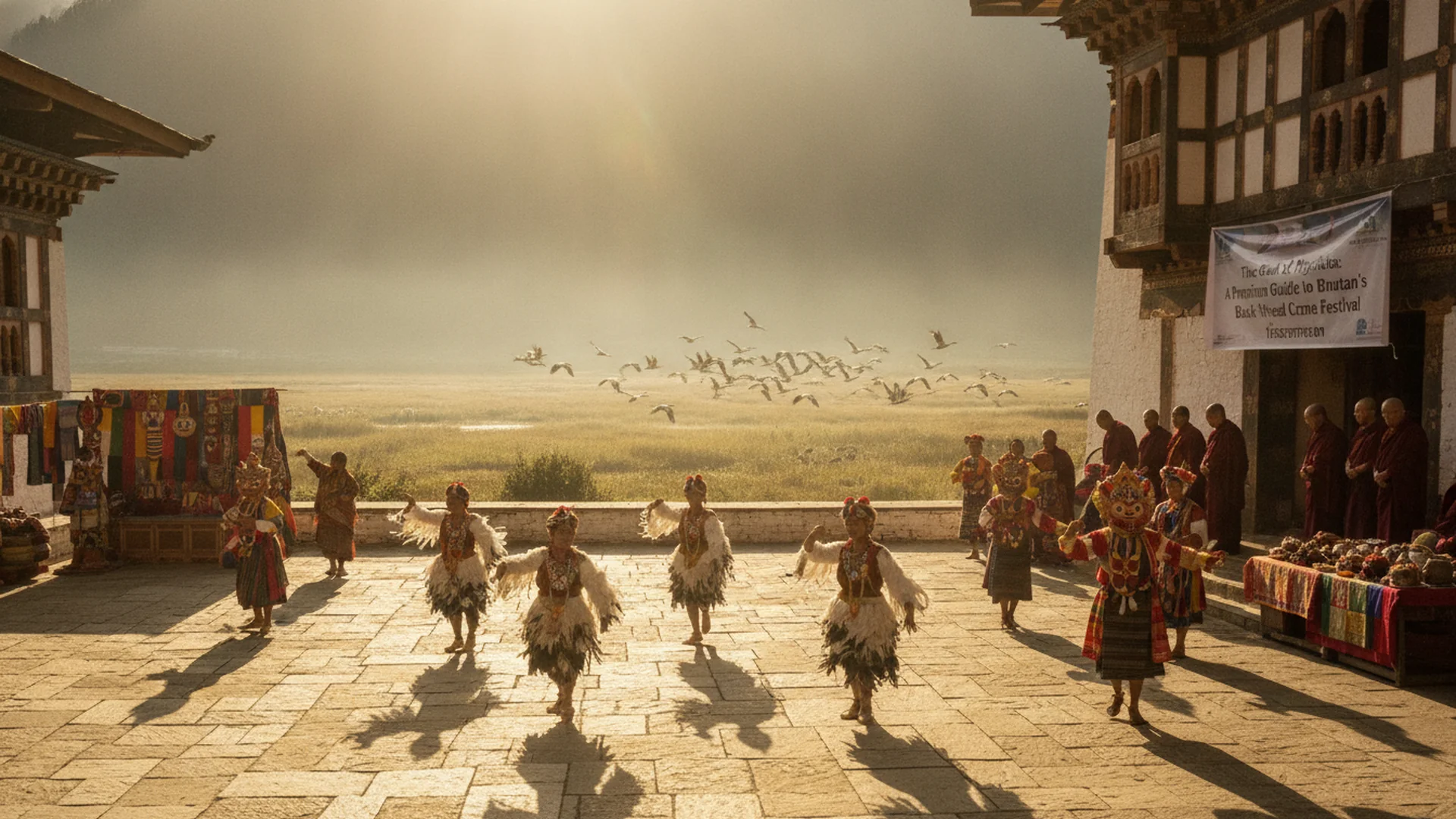
As the first crisp autumn mists settle over the expansive glacial valley, a resonant call echoes across the Himalayan skies, announcing the return of the most noble visitors from the Tibetan plateau. Known to the Bhutanese people with deep reverence as Thrung Thrung Karmo, the black-necked cranes descend once more upon the sacred sanctuary of the Phobjikha Valley. Their arrival is far more than a seasonal migration; it is an epochal awakening of spirit, binding humanity to the natural world in the Last Shangri-La.
Against a backdrop of centuries-old monastic sanctuaries and pristine landscapes untouched by the hurried modern world, Phobjikha transforms each November into an open-air theater for the Black-Necked Crane Festival. This venerable celebration reflects a harmonious union between human devotion, profound Buddhist philosophy, and an unwavering communal vow to environmental stewardship. For the discerning traveler seeking deep resonance alongside elevated comfort, this is an invitation to step outside of ordinary time and into a realm where absolute silence is the truest luxury.
From Tibetan Legends to Sacred Grounds: The Spiritual Echoes of Phobjikha
Nestled in the western foothills of the Himalayas, the Phobjikha Valley is a vast, horseshoe-shaped glacial amphitheater cradled by dense pine forests and open alpine meadows. This serene expanse serves as the winter sanctuary for endangered black-necked cranes migrating across daunting high-altitude passes from Tibet. Beyond mere biology, local folklore holds that these elegant birds are heavenly messengers, famously known to circle the revered Gangtey Goenpa monastery three times upon arrival and departure as an act of circumambulation. This profound spiritual bond inspires local villagers to fiercely protect their habitat; even the valley’s electrical cables are buried entirely underground to ensure the safety of the flocks. It stands as a living embodiment of the Gross National Happiness philosophy, where every sentient form of life is honored on the very same earth.
The Magic of November Eleventh: Masked Dances and Anthems of Preservation
Every eleventh of November—coinciding with the birth anniversary of the Fourth Druk Gyalpo—the stone courtyards of the historic Gangtey Goenpa brim with the quiet joy of villagers and discerning travelers alike. Established in 1998 by the Royal Society for the Protection of Nature (RSPN) to foster community-led conservation, the festival serves as both a cultural repository and an environmental pledge. The undeniable highlight is the traditional crane dance, performed by local schoolchildren draped in exquisite black-and-white feathered costumes, gracefully mirroring the distinct foraging habits and avian elegance of the visitors. Accompanied by masked black-hat dances (Zhana Ngachham) and folk melodies praising the natural world, watching these performances amid crisp mountain air and drifting temple mists offers a cultural immersion rarely found in the twenty-first century.
The Aesthetics of High-Altitude Luxury: Where Wilderness Meets Refined Grace
Experiencing the ethereal beauty of Phobjikha in high comfort is elevated by world-class sanctuaries such as Amankora Gangtey and Six Senses Gangtey, both thoughtfully engineered to blend seamlessly into their dramatic surroundings. These properties eschew ostentatious display in favor of refined simplicity—utilizing native pine timber, understated local craftsmanship, and soaring picture windows that frame panoramic vistas of golden meadows and distant cranes right from the warmth of a crackling hearth. Dedicated hosts curate bespoke itineraries, from organic farm-to-table dining infused with Himalayan herbs to expert-led nature walks along secluded valley trails or deeply restorative volcanic stone hot-stone baths designed to melt away any lingering travel fatigue.