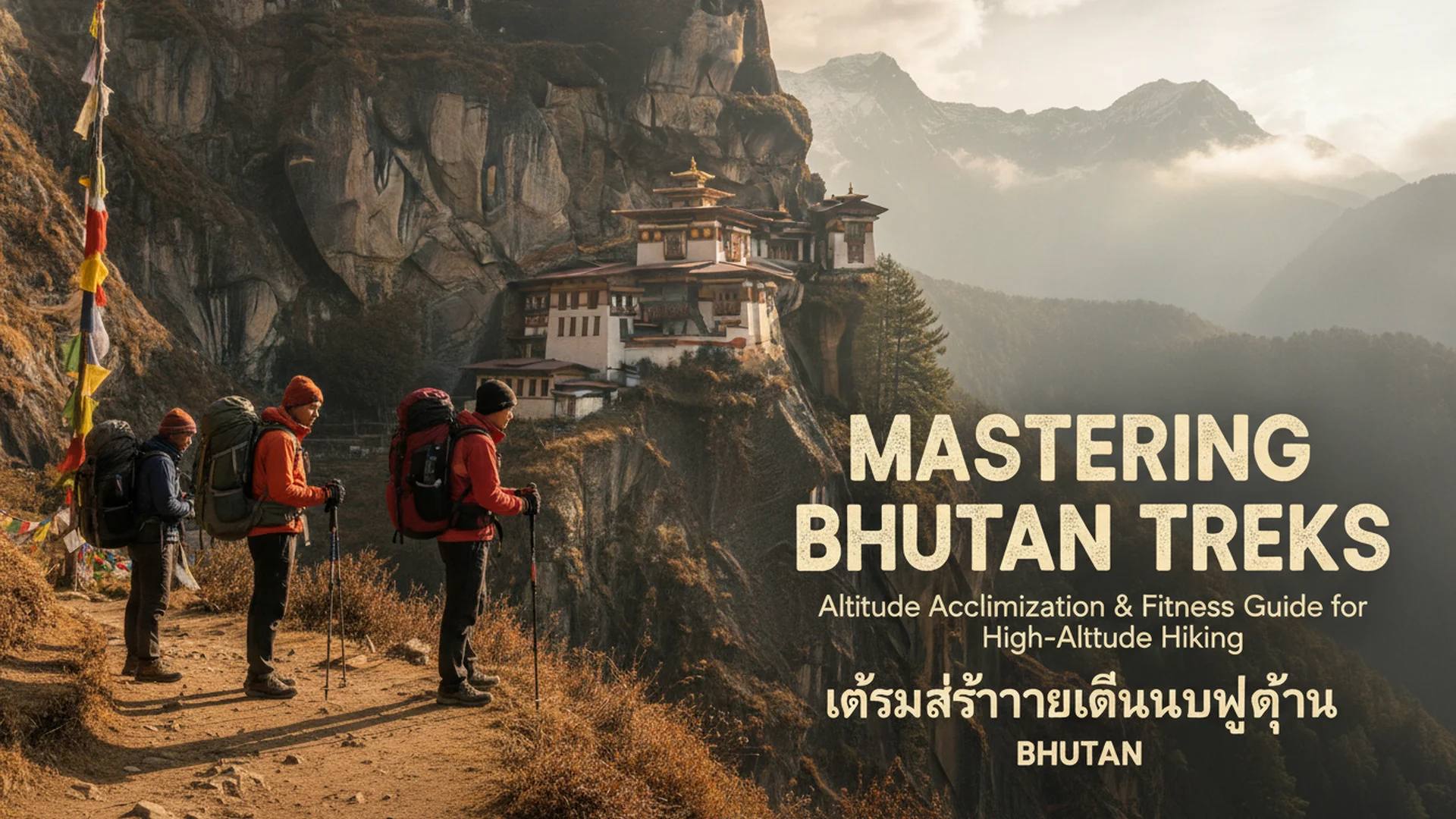
Amidst the sacred, mist-veiled majesty of the Eastern Himalayas, Bhutan’s high-altitude trails beckon discerning global travelers with pristine ancient pine forests, alpine glacial lakes, and sweeping snow-capped mountain passes rising between 3,000 and over 5,000 meters above sea level. Yet this legendary natural beauty is accompanied by an invisible physiological challenge: the thinning atmosphere and the significant drop in partial oxygen pressure with every step of elevation gained.
The true art of journeying across Bhutan’s unspoiled wilderness lies not merely in muscular endurance or cardiovascular strength, but in the sophisticated science of altitude acclimatization. From the perspective of veteran high-altitude trekking guides, conquering these routes with grace begins weeks before departure through structured training regimens, breathwork mastery, targeted nutrition, and an acute awareness of the body’s subtle signals.
Transforming apprehension regarding Acute Mountain Sickness (AMS) into quiet confidence is the definitive key to unlocking a premier Himalayan trekking experience. It allows the traveler to immerse themselves fully in the profound spiritual stillness and immense natural splendor of the kingdom safely, elegantly, and without restriction.
1. The Anatomy of Altitude: Navigating Thin Himalayan Air
Venturing into the Himalayan heartland of Bhutan—from classic routes such as the Druk Path Trek (reaching maximum elevations around 4,200 meters) to more demanding expeditions like the Jhomolhari Trek (exceeding 4,900 meters at Bhonte La pass) or the legendary Snowman Trek—subjects the human body to sudden environmental shifts. At an elevation of 3,000 meters, ambient oxygen availability drops to approximately 70 percent compared to sea level, decreasing further to 50–55 percent at 5,000 meters.
As barometric pressure falls, the lungs must work harder to draw oxygen into the bloodstream, triggering increased respiration and elevated heart rates to supply vital organs. If elevation gain outpaces natural physiological adaptation, acute hypoxia may ensue, manifesting as Acute Mountain Sickness (AMS) with symptoms including persistent throbbing headaches, nausea, lethargy, loss of appetite, and insomnia.
In planning preventative strategies for Bhutan treks, it is essential to recognize that AMS is entirely unrelated to physical weakness or lack of willpower; even elite endurance athletes can experience symptoms if their bodies outpace atmospheric adaptation. Respecting natural physiological limits through scientific understanding is the first step toward mindful exploration.
2. The Conditioning Blueprint: An 8–12 Week Pre-Trip Training Program
Preparing the body for high-altitude trekking in Bhutan requires a structured, multi-dimensional regimen initiated two to three months prior to departure to enhance cardiovascular resilience and targeted muscular endurance:
- Aerobic Base Building (Zone 2 Training): Engage in running, trail running, cycling, or swimming maintained within Zone 2 heart rate parameters (60 to 70 percent of maximum heart rate) for 45 to 90 minutes, three to four days per week. This conditioning expands muscular mitochondrial density, optimizing the body’s efficiency in utilizing scarce oxygen.
- Eccentric and Targeted Strength Conditioning: Bhutanese trails feature prolonged ascents and steep descents that place considerable stress on the quadriceps and hips. Incorporate weighted squats, lunges, step-ups carrying a 5–10 kilogram pack, and eccentric leg presses to build shock-absorption capacity.
- Core Stability Integration: Carrying personal daypacks across six to eight hours of daily trekking demands a resilient core. Regular plank variations, bird-dogs, and farmer’s carries prevent cumulative lower back fatigue.
- Specific Hiking Simulations: Simulate expedition conditions weekly by ascending high stairwells or steep natural inclines wearing a fully loaded pack, allowing neuromuscular pathways to adapt to authentic movement dynamics.
3. On-Trail Strategy: Pacing, Nutrition, and ‘Climb High, Sleep Low’
Upon stepping onto Bhutanese high-altitude trails, professional guides adhere to the traditional Dzongkha maxim Gaelyey Gaelyey, translating to “slowly and steadily.” Maintaining a consistent, unhurried pace while synchronizing respiration with footsteps minimizes unnecessary oxygen consumption.
Effective trekking itineraries must strictly implement the principle of ‘Climb High, Sleep Low.’ Trekkers ascend to higher elevations during daytime excursions to stimulate red blood cell production, returning to lower altitudes to sleep without compounding physiological stress. Above 3,000 meters, sleeping elevation should not increase by more than 300 to 500 meters per day, interspersed with dedicated acclimatization days for every 1,000 meters gained.
Regarding nutrition, high-altitude digestion naturally slows, increasing the demand for complex carbohydrates which require fewer oxygen molecules for metabolic conversion than proteins or fats. Integrating traditional Bhutanese red rice, lentil soups, and boiled vegetables with three to four liters of daily hydration helps prevent hemoconcentration and mitigates the dehydrating effects of dry alpine air.
4. Clinical Prophylaxis and Personal Health Gear
Comprehensive medical preparation ensures peace of mind throughout remote expeditions. Acetazolamide (Diamox) is widely recognized in travel medicine for preventing and mitigating AMS, functioning by accelerating blood acid-base balance and stimulating deeper nocturnal respiration. Consultation with a travel medicine clinic prior to departure is mandatory to determine appropriate dosage (typically 125 milligrams twice daily, initiated 24 hours prior to ascending above 2,500 meters).
Additionally, continuous monitoring supports safe acclimatization. Trekkers should carry a portable pulse oximeter to measure blood oxygen saturation (SpO2) and pulse rates each morning and evening. Essential personal equipment includes:
- Layering Apparel Systems: Merino wool moisture-wicking base layers, high-loft insulation layers, and breathable hard-shell windproof jackets to regulate core temperature and prevent hypothermia.
- Insulated Flasks: Essential for carrying warm hydration during sub-zero trekking conditions, preventing drinking water from freezing.
- UV Protection Gear: Category 3 to 4 glacier sunglasses and broad-spectrum SPF 50+ PA++++ sunscreen to counter intense high-altitude ultraviolet radiation.