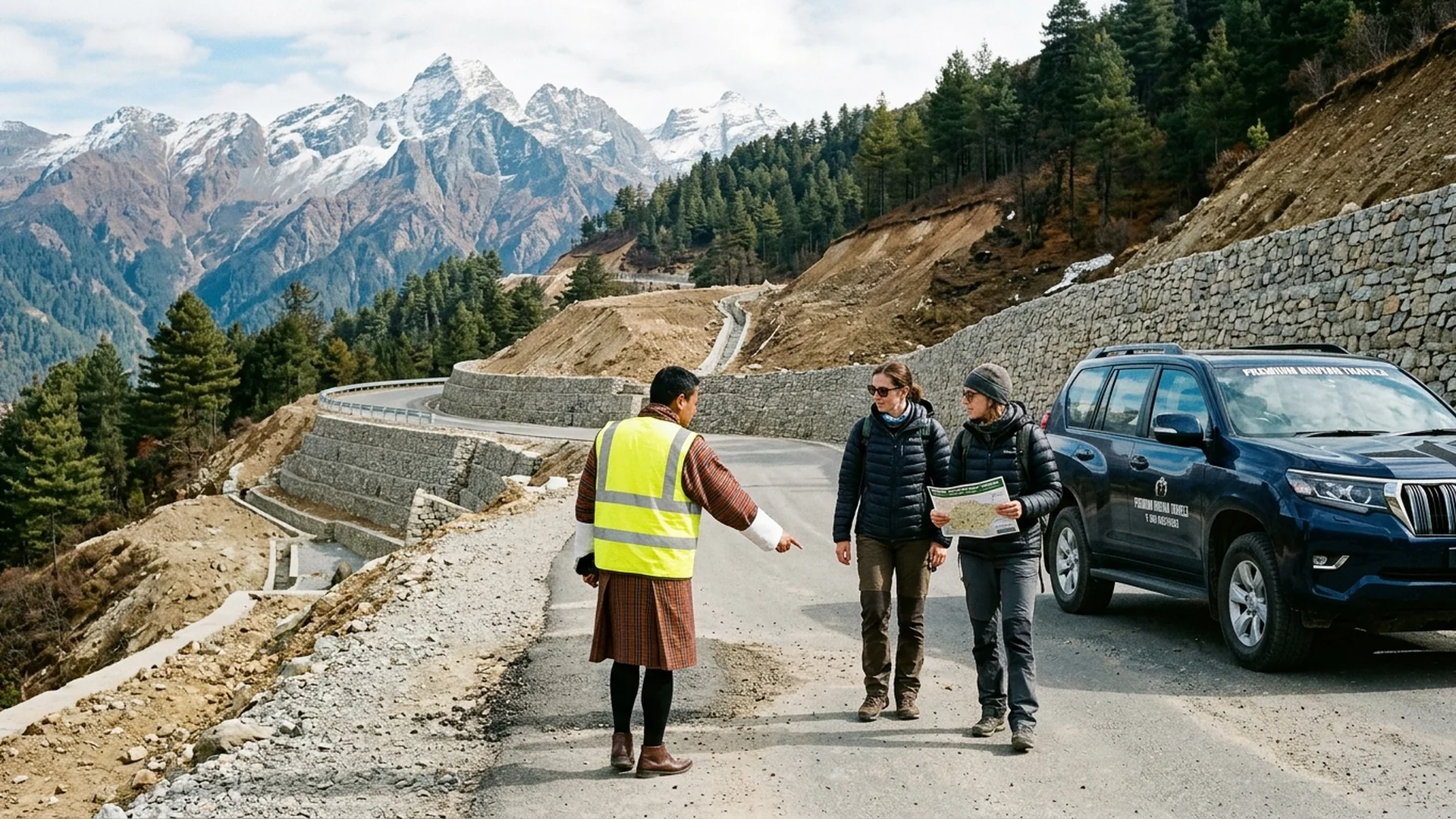
When conjuring the image of the Thunder Dragon Kingdom, visions invariably drift toward ancient monasteries clinging to sheer vertical precipices and the jagged, snow-mantled spine of the Himalayas. Yet behind this ethereal aesthetic lies a landscape of profound topographical drama, characterized by dizzying switchbacks and cloud-piercing high-altitude passes. For the discerning global traveler who values both flawless execution and uncompromised safety, understanding Bhutan’s transport infrastructure, natural risk management, and elite travel protocols transforms any apprehension of rugged terrain into deep-seated peace of mind.
Encircled entirely by formidable Himalayan ridges, the Kingdom’s connectivity relies upon a vital artery known as the Lateral Road, which snakes along steep hillsides and breaches mountain passes soaring past 3,000 meters to link Thimphu with Punakha, Phobjikha, and Paro. Seasonal shifts—from the lush, cloud-drenched veils of monsoon to the crystalline white expanses of high-winter frost—introduce distinct physical variables. Yet, through rigorous institutional oversight and professional preparedness, Bhutan stands as a masterclass in modern destination risk management.
The Anatomy of Alpine Roads: Decoding the Lateral Road and High Passes
Bhutan’s arterial transport network depends almost entirely on a single continuous highway threading from the western frontier to the far east. Traversing celebrated elevations such as Dochula Pass or Pelela Pass offers breathtaking panoramas of pristine glacial summits, but these spectacles demand profound physical respect. While historic gravel tracks have undergone extensive engineering upgrades, the inherent fragility of young Himalayan geology means micro-climates can shift rapidly. Comprehending how these arterial paths stitch isolated glacial valleys together underscores the irreplaceable value of seasoned local navigators at the wheel.
Monsoon Resilience and Winter Protocols: Superior Professional Mastery
The summer monsoon—stretching from June through September—frequently delivers torrential downpours and occasional slip zones, while winter introduces crisp black ice and snowfall upon high elevated crossings. In response, the Royal Government of Bhutan alongside premier destination partners enforces synchronized contingency protocols. The Department of Roads stations heavy excavation machinery at vulnerable bottlenecks to ensure immediate clearance. Simultaneously, all authorized touring fleets exclusively deploy high-clearance four-wheel-drive SUVs or luxury passenger vans piloted by licensed chauffeurs who have undergone specialized defensive driving certifications tailored strictly to Himalayan topographies.
The Art of Adaptation: Cultivating Itinerary Flexibility
True security in the Himalayan realm begins with surrender to the unhurried cadence of nature. Journeys here cannot and should not be dictated by rigid temporal compression; elite itineraries are deliberately architected with fluid contingencies, permitting seamless re-routing should atmospheric shifts demand caution. Real-time atmospheric assessments conducted collaboratively by private guides, drivers, and central operations ensure that every nautical mile traversed remains anchored in absolute safety and quiet refinement.