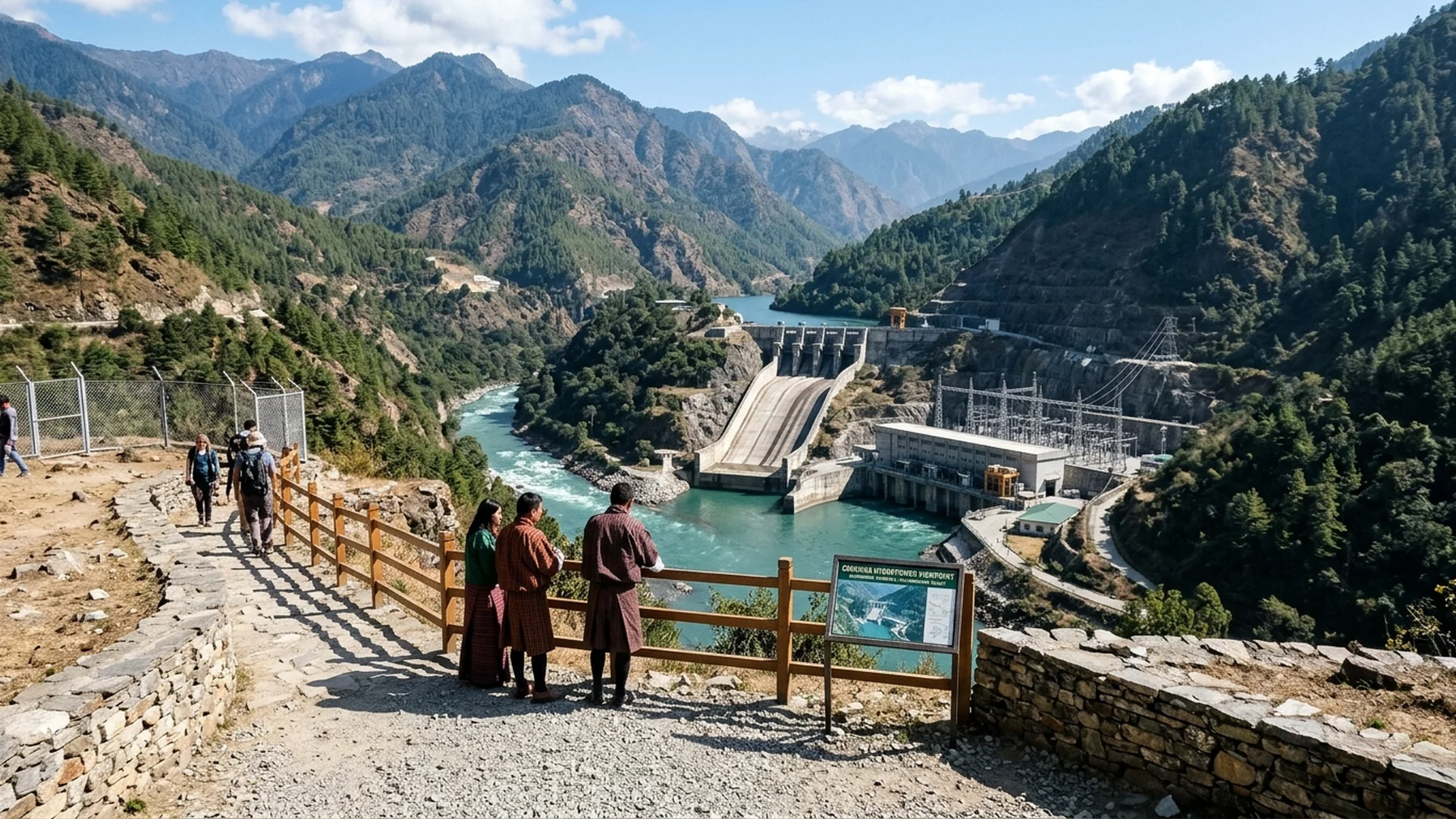
When vehicles begin their ascent from the lowland southern border into the dense, emerald embrace of the Himalayan foothills along the primary corridor linking Phuentsholing to the capital of Thimphu, conventional preconceptions of large-scale infrastructure are often dominated by industrial starkness. Yet, at the Chhukha Hydropower Viewpoint in Bhutan, an entirely antithetical experience unfolds. This is far more than a mere highway respite to stretch weary limbs or draw in pristine alpine air; it is a living canvas where human intellect and majestic nature have collaborated with profound grace.
Morning mists drift effortlessly above the emerald expanse of the monumental reservoir, starkly contrasting with the dense, dark-green conifers and sheer granite cliffs. This landscape stands as a testament to the Kingdom’s unwavering dedication to clean, eco-conscious development. The Chhukha viewpoint serves as a bridge connecting past, present, and future—a monument to sustainability seamlessly woven into the philosophy of Gross National Happiness (GNH), inviting discerning travelers to pause, reflect, and behold the world’s powerful beauty with deep reverence.
The Hydraulic Pulse: History and Significance of the Chhukha Dam
If there is a beating heart sustaining Bhutan’s modern economic sovereignty, it is undoubtedly the harnessed power of its rushing rivers. Blessed with steep topography and torrential alpine watersheds, the kingdom possesses a natural predisposition for clean hydroelectric innovation. The Chhukha Dam stands as the vanguard—the nation’s very first major hydroelectric project, realized through enduring bilateral cooperation between the governments of Bhutan and India. The realization of this engineering feat not only secured domestic energy independence but also birthed a cornerstone export commodity, allowing the country to navigate modern economic horizons without compromising its pristine forest cover. Standing at the viewpoint to gaze upon the dam and the precisely managed currents below is akin to reading a monumental chapter of Bhutan’s macroeconomic history etched directly into the physical landscape.
The Aesthetics of the Wang Chhu and Emerald Gorges
Upon stepping out at the Chhukha Hydropower Viewpoint, the eye is instantly drawn to the sweeping grandeur of the gorge. The Wang Chhu river, known across the border in India as the Raidak, cuts aggressively through ancient bedrock. The water’s hue shifts dynamically throughout the day, catching sunlight and cloud shadows to transition from deep, rich emerald to translucent alpine azure. During moments when low-slung mists blanket the pine-crowned ridges and the water’s surface, the atmosphere becomes utterly detached from the restless cadence of the modern world. The subdued, distant roar of water rushing through spillways harmonizes with the wind whispering through evergreen boughs, composing an organic symphony that fosters profound inner calm for travelers seeking deeper meaning in their journeys.
A Vital Milestone on the Western Highway: From Phuentsholing to Thimphu
Traversing the Western Bhutan highway from the frontier checkpoint of Phuentsholing toward the capital of Thimphu typically requires four to five hours, dictated by serpentine mountain contours and shifting Himalayan weather. Situated almost precisely at the midpoint of this odyssey, the Chhukha viewpoint has naturally established itself as an indispensable architectural pit stop for discerning international travelers and professional photographers alike. Stepping out to feel the crisp mountain breeze while savoring a hot cup of tea amidst sweeping vistas effortlessly dispels the fatigue of winding mountain roads. Furthermore, informative displays and the surrounding environment offer profound insights into how local communities manage and protect their natural capital.