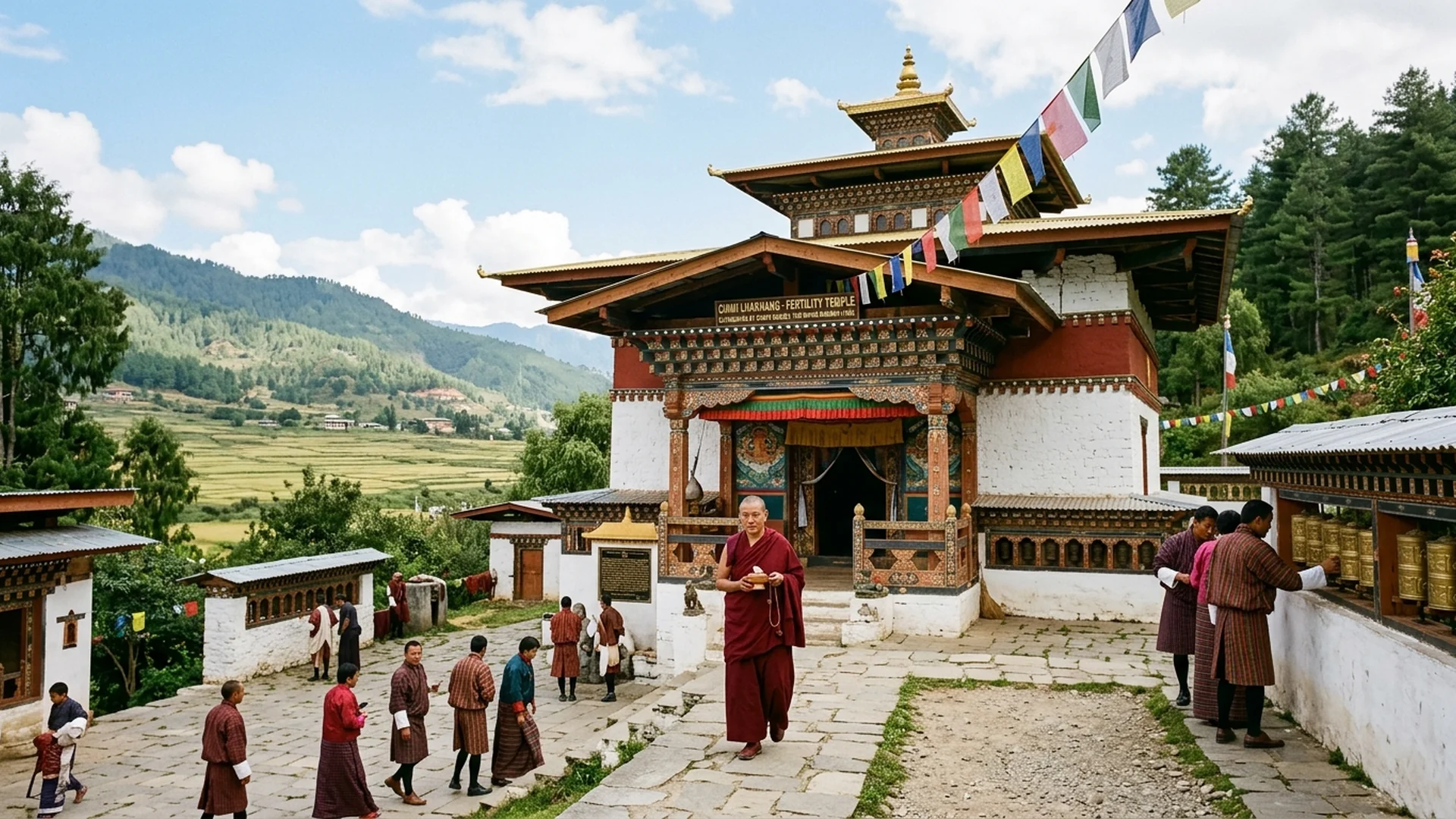
Amidst the delicate mists that embrace the mountain ridges of the Punakha Valley, a tranquil footpath winds through emerald-green terraced rice paddies and pastoral farmlands, slowly escorting the traveler across the thresholds of time into a realm where faith and landscape dissolve into one another. Chimi Lhakhang, celebrated universally as Bhutan’s revered fertility temple, is far more than a sacred waypoint for couples yearning for progeny; it is an immersive portal into the colorful, profound depths of Vajrayana Buddhist philosophy, embodied by an iconoclastic saint who wielded perceived madness to awaken the inner spirit.
Approaching this half-millennium-old sanctuary demands that discerning travelers temporarily set aside the rigid lenses of modern convention and open their hearts to the legend of Drukpa Kunley, affectionately and boldly dubbed by Western scholars as ‘The Divine Madman.’ This revered master utilized unorthodox ballads, roaring laughter, local spirits, and startling imagery to dismantle societal hypocrisy while firmly establishing enduring foundations of prosperity, fecundity, and serenity across this Himalayan kingdom.
Footprints of the Holy Madman: The Legend of Drukpa Kunley and the Roots of Chimi Lhakhang
Tracing back to the late 15th century, Drukpa Kunley, an accomplished master of the Drukpa Kagyu lineage, journeyed across the Bhutanese highlands. Rather than secluding himself within austere monastic walls, he chose to walk directly among villagers, farmers, and everyday folk, disseminating profound dharma through earthy humor, brilliantly veiled metaphors, and the subjugation of malevolent spirits through unwavering meditative mastery. Legend records that he subdued a fierce demoness of the Dochula Pass with his legendary ‘thunderbolt of wisdom’—physically represented today—pinning her spirit precisely where Chimi Lhakhang now stands. The establishment of this modest yet potent temple was never merely an architectural monument to the Buddha, but an enduring sanctuary liberating human consciousness from the stifling cages of conventional dogma.
Architecture Amidst Rice Paddies and the Meaning Behind the Phallic Symbol
As one strolls through the peaceful village of Sopsokha, what immediately arrests the eye alongside the majestic mountain vistas are the vibrant phallic murals adorning the whitewashed exterior walls of nearly every farmhouse. To the uninitiated traveler, these striking motifs provoke initial surprise or amusement; yet within the tapestry of traditional Bhutanese worldview, they represent Drukpa Kunley’s creative, life-giving force acting as potent talismans. They ward off malicious spirits, neutralize jealousy, and summon auspicious fortune into domestic spaces. Perched gracefully upon a rounded hillock reminiscent of a mother’s breast, Chimi Lhakhang itself features immaculate white walls contrasted against gilded woodwork and intricate interior murals, perfectly reflecting the quiet, unpretentious aesthetic of traditional Bhutanese sacred architecture.
Fertility Rites and the Magic of the Sacred Wooden Hammer
Within the hallowed inner sanctum of Chimi Lhakhang, the air hangs heavy with the soothing aromas of burning incense and yak butter melting slowly upon brass lamps. Resident monks gently guide visiting couples who have traveled from distant corners of the globe to receive personal blessings for childbearing. Pilgrims are invited to gently touch a sacred wooden bow and an ancient carved ritual hammer once wielded by Drukpa Kunley, receiving consecrated holy water and the compassionate prayers of the monastic community. True to tradition, couples whose wishes are fulfilled frequently return in later years to have the resident monks bestow an auspicious, highly personalized name upon their newborn—often echoing the syllables of Kunley or carrying deep threads of boundless compassion.