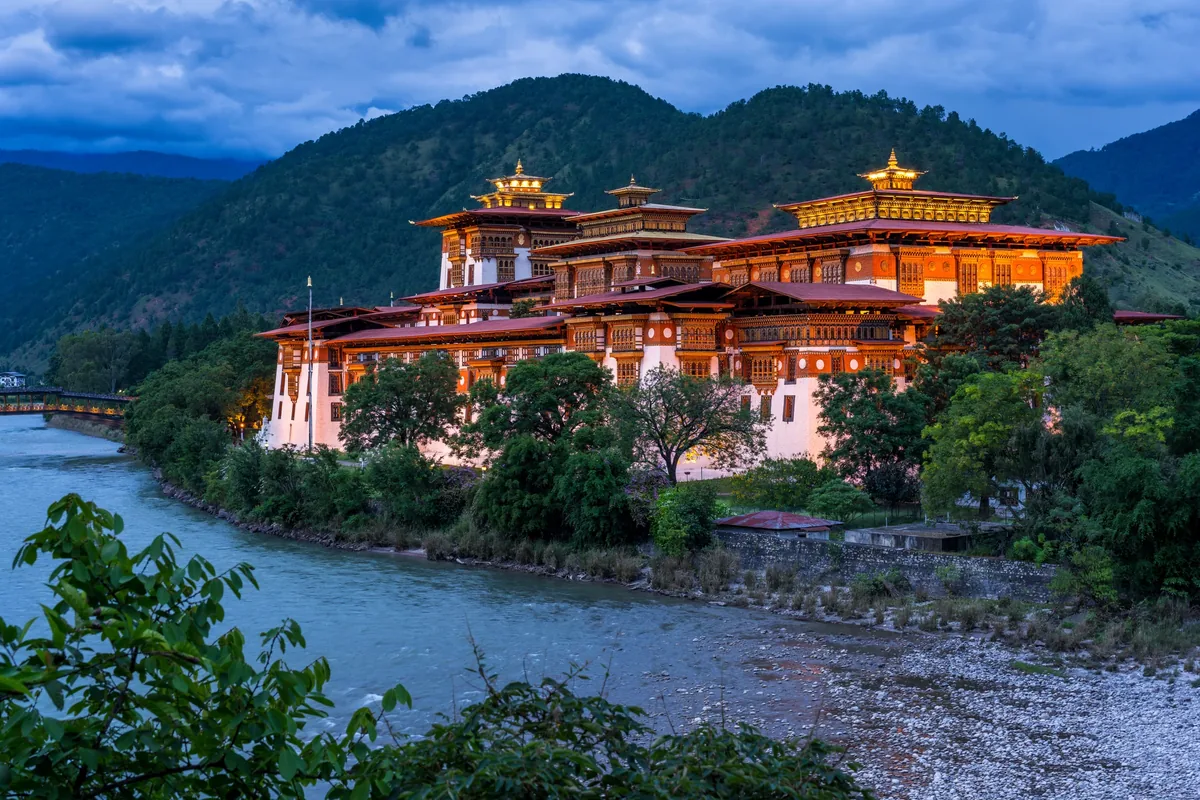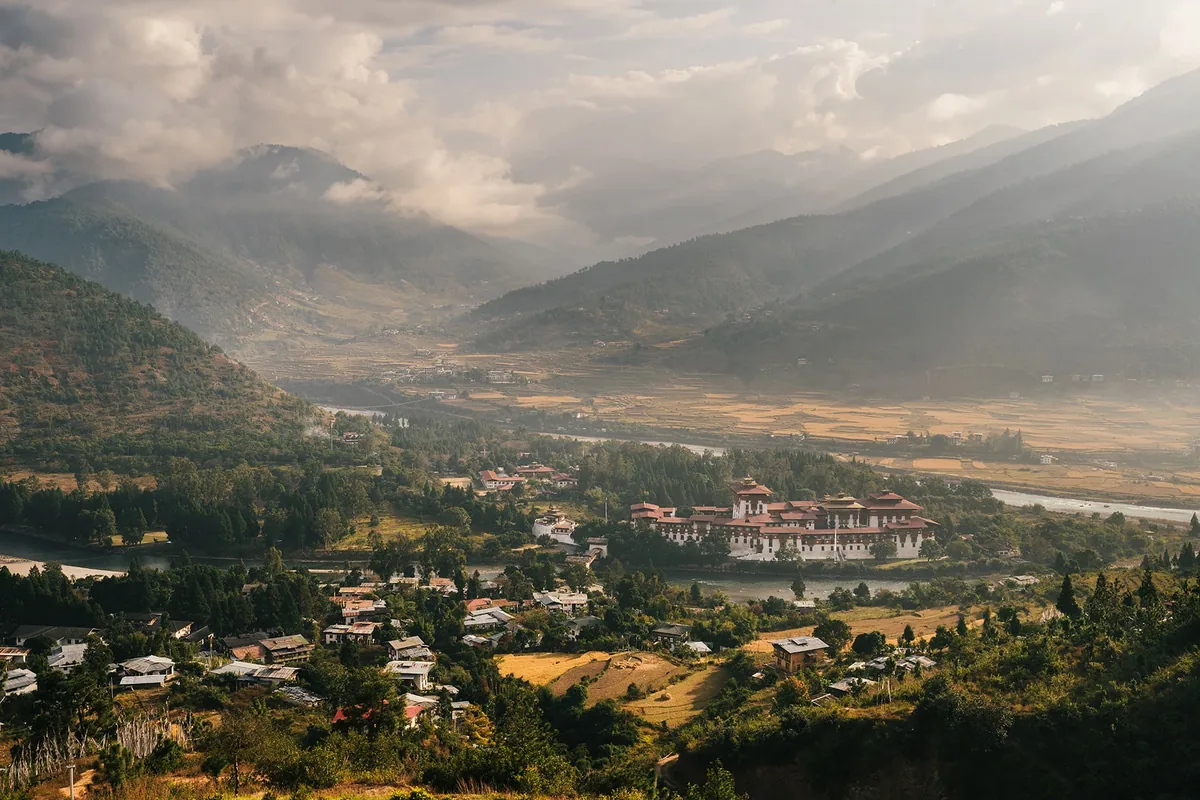
Enclosed within the dramatic natural ramparts of the Eastern Himalayas, at the sacred confluence of the roaring Pho Chhu (Father River) and the serene Mo Chhu (Mother River), stands Punakha Dzong. Known in Dzongkha as Pungthang Dechen Phodrang—the ‘Palace of Great Happiness’—this formidable fortress of whitewashed masonry and cinnabar-red timberwork serves as one of the most spiritually potent and historically influential landmarks in the Kingdom of Bhutan.
Journeying to Punakha Dzong is far more than a mere sightseeing excursion; it is a deliberate crossing of thresholds into the profound depths of Mahayana Buddhism. As the former winter capital and a seat of government for over four centuries, this fortress-monastery exists in a timeless equilibrium between pristine wilderness, ancient architecture, and living devotion. This is particularly true during spring, when surrounding jacaranda trees shed a flurry of pastel-violet blossoms across ancient stone walkways, creating an ambiance of peerless romance and tranquility.
For discerning travelers seeking intellectual enrichment and elevated cultural immersion, decoding the intricacies of Punakha Dzong—from the ancient Bazam cantilever bridge and sacred murals to its royal coronation legacy—offers an unmistakable key to the heart and soul of Bhutan.
Spiritual Legacy and the Royal Stage of the Wangchuck Dynasty
Punakha Dzong transcends the definition of a mere civic administrative center; it stands as a pristine monument to the unification of Bhutan. Built between 1637 and 1638 by Zhabdrung Ngawang Namgyal—the great spiritual master who consolidated the Himalayan realm—the fortress manifested from prophetic visions foretold by Guru Rinpoche. Its sacred appellation, Pungthang Dechen Phodrang, evokes a state of profound inner peace and abiding bliss bestowed upon all who enter its gates.
For over three centuries, Punakha served as the winter capital and seat of government until the capital was relocated to Thimphu in 1955. Yet, its ceremonial preeminence remains undiminished. The dzong hosted the coronation of Bhutan’s first monarch, Sir Ugyen Wangchuck, in 1907, and has since witnessed the coronations of all subsequent Wangchuck kings, as well as the magnificent 2011 royal wedding of His Majesty King Jigme Khesar Namgyel Wangchuck and Queen Jetsun Pema.
Furthermore, owing to its sheltered valley altitude of 1,200 meters, Punakha remains pleasantly warm compared to Thimphu. It preserves the ancient tradition of serving as the ‘winter palace’ for the Je Khenpo (Chief Abbot) and the Central Monastic Body, who migrate here to reside throughout the coldest months of the year.
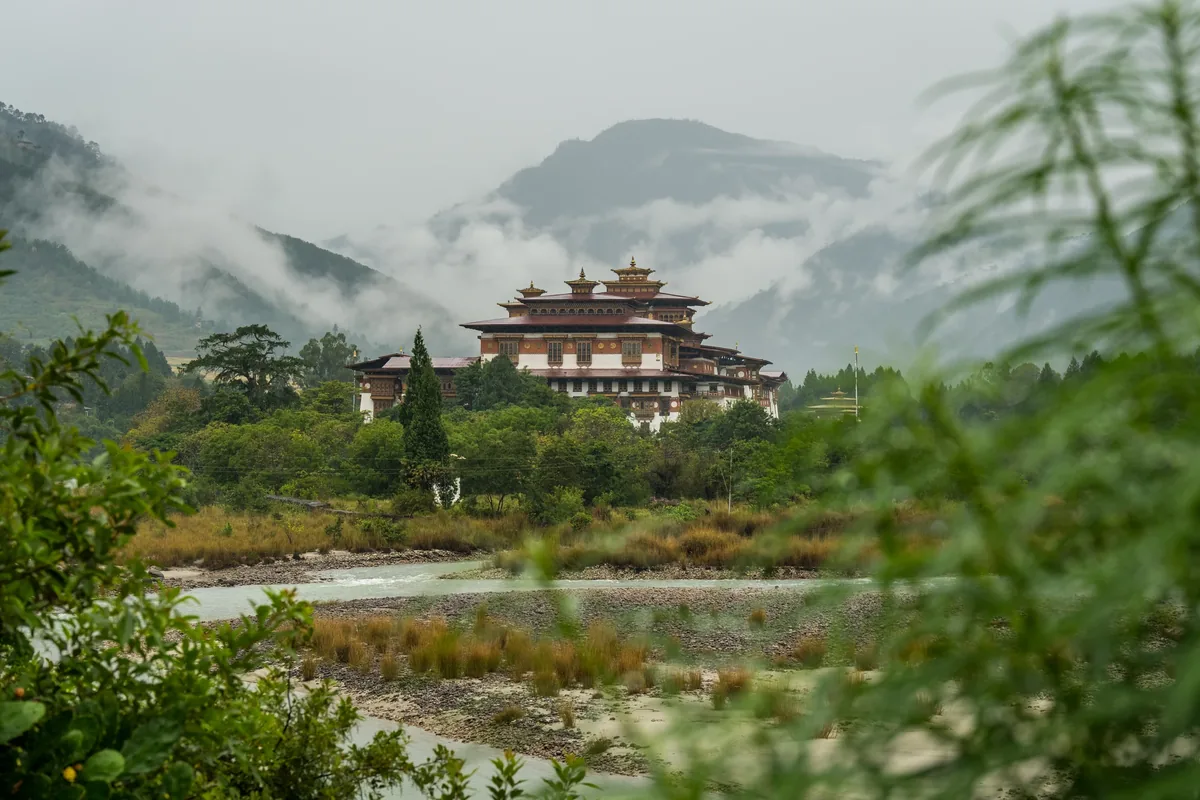
Decoding the Nail-Free Architecture and the Sacred Hall of a Hundred Pillars
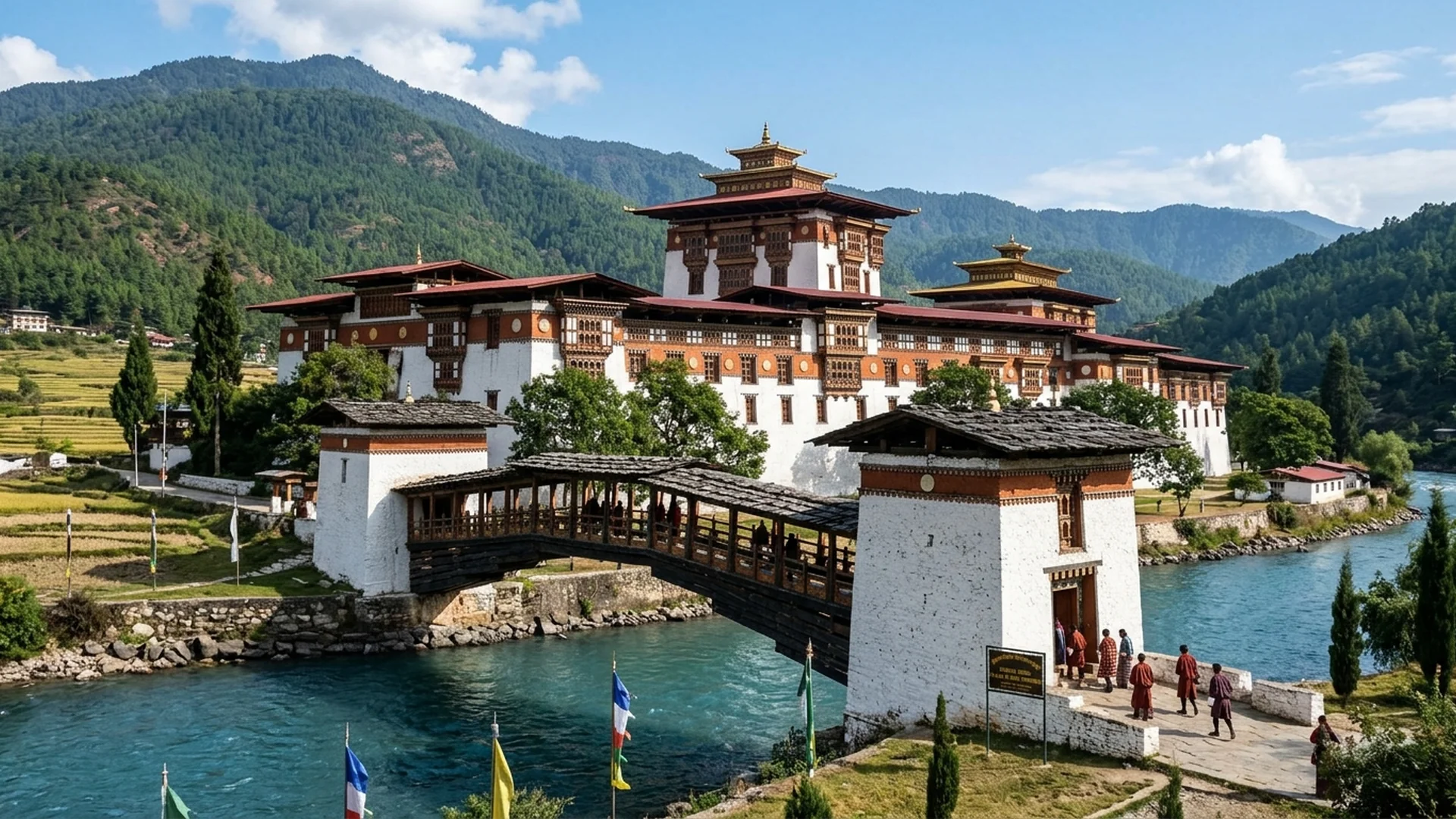
Spanning roughly 180 meters in length and 72 meters in width, the structural masterwork of Punakha Dzong was erected utilizing intricate interlocking joinery and dressed stone without a single iron nail. Eschewing paper blueprints, the master builders relied on ancient ancestral techniques known as Zow Balep, guided entirely by meditative focus and spiritual insight.
Entry to the dzong requires crossing the historic Bazam, a traditional cantilevered wooden bridge spanning the Mo Chhu. Ascending the steep wooden entryway reveals three distinct courtyards (docheys), setting it apart from standard dzongs which typically feature only two. The first courtyard administers civic affairs, the second houses monastic residential quarters, and the third—the most sacred—contains the six-story Utse (central watchtower), which safeguards sacred relics and the embalmed remains of the Zhabdrung.
The zenith of sacred artistry within is the Kunrey (One Hundred Pillar Hall). This magnificent prayer hall houses colossal gilded statues of the Buddha, Guru Rinpoche, and Zhabdrung Ngawang Namgyal. The surrounding walls are swathed in mineral-pigmented murals detailing Buddhist cosmology, the life of the Buddha, and intricate mandalas of astonishing intricacy.
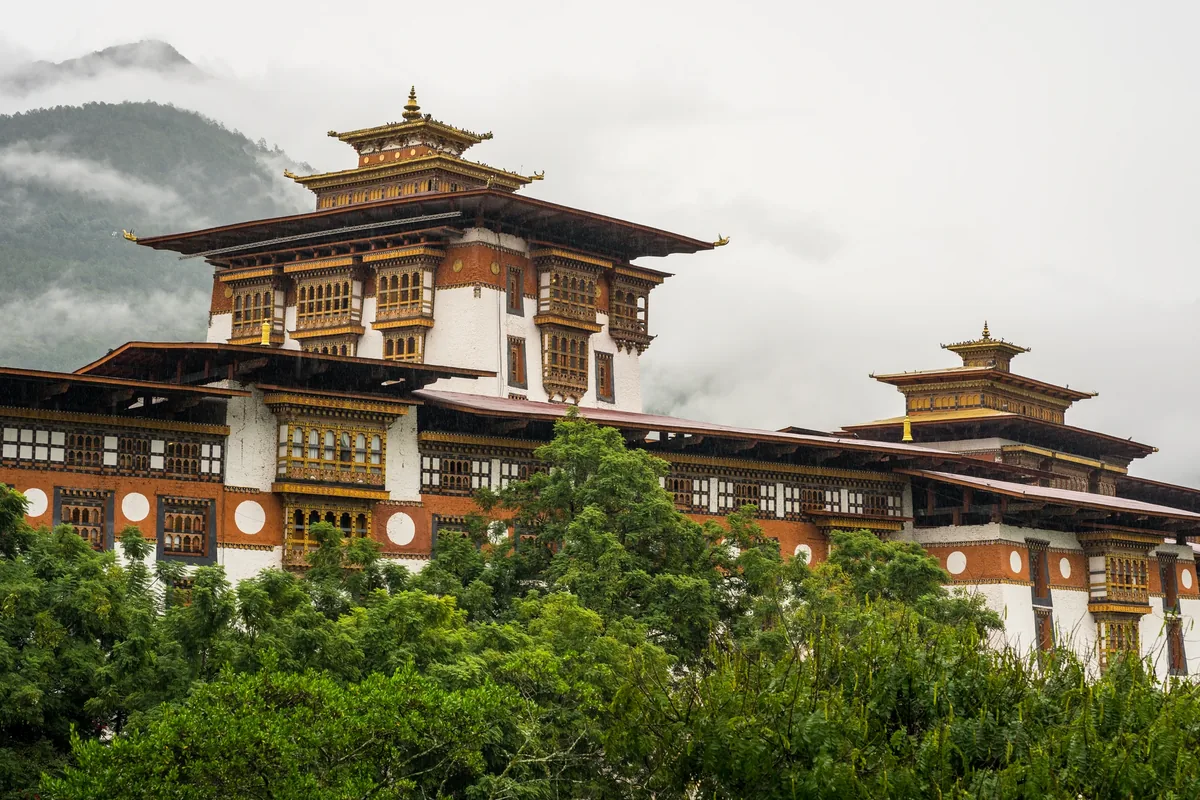
Seasonal Aesthetics: White Stone Ramparts and Blooming Jacarandas
The aesthetic character of Punakha Dzong shifts gracefully with the seasons, yet its absolute pinnacle of visual poetry unfolds between March and May during spring. Towering jacaranda trees, planted along the fortress walls and interior courtyards, burst forth in a riot of pastel blue-violet blossoms.
As delicate petals drift downward onto ancient stone pathways and the banks of the Mo Chhu, their soft violet softens the austerity of snow-white masonry, dark carved window frames, and cinnabar-red roofs. Morning sunlight glinting off the two rivers—the deep glacial-blue Pho Chhu and the crystal-clear Mo Chhu—renders the dzong an ethereal floating castle plucked straight from an illuminated manuscript.
Visitors arriving in February or March may also witness the Punakha Drubchen and Punakha Tshechu, elaborate historical reenactments and sacred masked dances (Cham) performed by monks, keeping centuries-old spiritual traditions vibrantly alive.