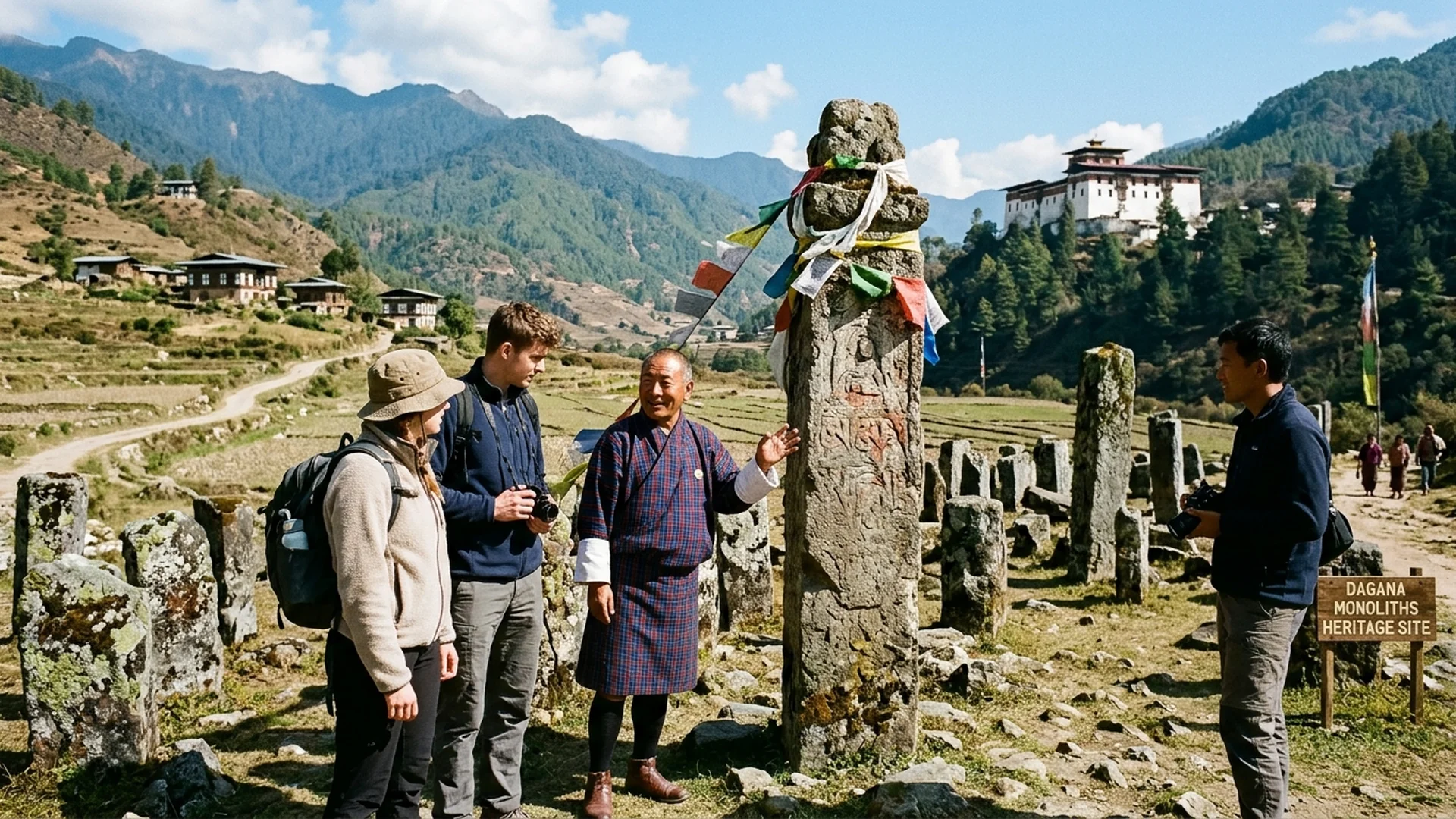
When the classic trails of Paro and Thimphu recede into memory, a journey southward across the Himalayan ridges feels less like travel and more like stepping across the threshold of time itself. Here, amid morning mists that cling to slopes cloaked in eighty percent pristine forest, lies Dagana. This secluded expanse serves as one of the Thunder Dragon Kingdom’s most vital ecological lungs and spiritual treasuries. The heartbeat of the valley resonates with ancient chants echoing around Daga Trashiyangtse Dzong, a commanding fortress established in 1651 upon a strategic ridge overlooking the meandering Daga Chhu. Framed by legends of three sacred monoliths that embody Vajrayana Buddhist philosophy, Dagana offers discerning travelers an untouched sanctuary where traditional Ngalop village life unfolds entirely undisturbed by the modern world.
Daga Trashiyangtse Dzong: A 17th-Century Bastion of Southern Spirituality
Amidst the low-hanging mists that veil the southern ridges, Daga Trashiyangtse Dzong stands with quiet majesty. Commissioned in 1651 by Druk Namgyel under the directive of the Zhabdrung Ngawang Namgyal, this fortress was erected to unify the southern territories and secure the kingdom’s borders. Its masterfully carved timberwork and whitewashed stone ramparts reflect the sophisticated defensive architecture of an era long past. Within its hallowed chambers rest extraordinary spiritual heirlooms, including a four-foot-five-inch ancient horn discovered in the sixteenth century and a naturally formed stone conch. Today, the fortress continues its dual lineage as the administrative seat of the district and a monastic sanctuary where unbroken lineages of sacred liturgy resonate daily, offering visitors an atmosphere of unalloyed peace.
The Legend of the Three Sacred Monoliths: Nature and Vajrayana Mysticism
The defining allure of Dagana lies in its trio of sacred monoliths, revered by locals as celestial guardians of the valley. The journey begins with Do Namkhai Kaw, or the Sky Stone, a twenty-meter monolith believed to have miraculously flown from Bodh Gaya in India. Legend holds that this pillar stood in silent counsel, warning master builders not to raise the fortress towers higher than its summit to avert structural ruin. The second marvel, Do Kelpai Genthey, features five natural stone steps; according to ancient belief, these steps slowly submerge with the ages, signaling the eventual conclusion of an epoch when they vanish entirely. The final pillar, Tha Namkhai Dzong, is a sheer cliffside sanctuary where Guru Rinpoche meditated in the eighth century, adorned with a miraculous bell that rings softly in the mountain breeze.
Tseza Village and the Emerald Canopy: Experiencing Ngalop Heritage
Beyond the fortress precincts, winding trails lead travelers into Tseza village and the agrarian settlements of the Ngalop people, where ancient woodlands account for over eighty percent of the landscape. Ancient champ, chirpine, and sal trees release the crisp fragrance of a completely untouched wilderness into the mountain air. Villagers maintain traditional agrarian rhythms, dwelling in rammed-earth homesteads adorned with intricate woodwork while terrace farming carves geometric poetry into the hillsides. Sharing a cup of steaming butter tea (suja) and exchanging quiet pleasantries with local elders offers a restorative, deeply human connection that lingers long after departure.