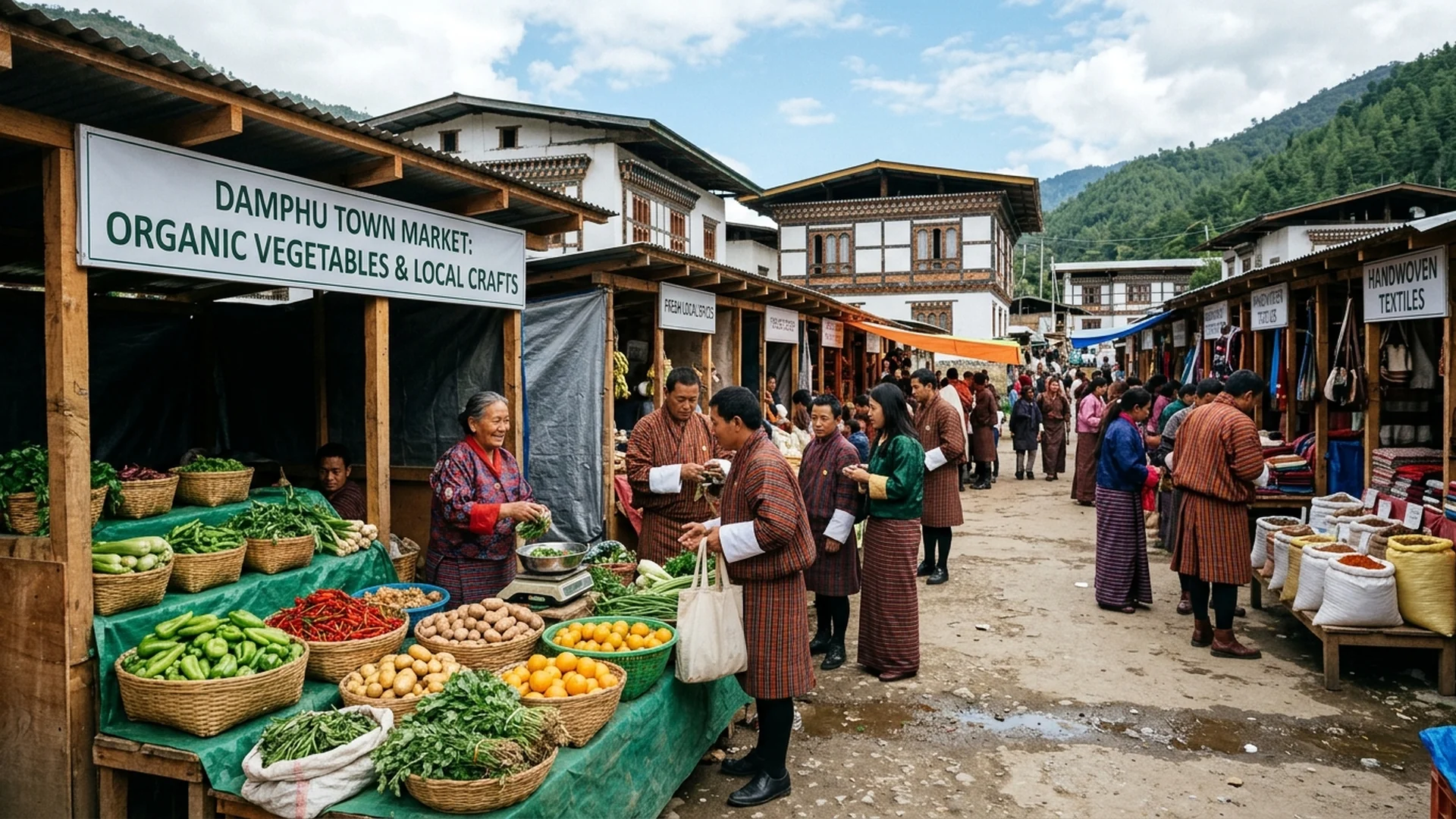
As morning mist lifts slowly from the undulating ridges of Tsirang Dzongkhag, the valley floor awakens to the steady rhythm of footsteps and warm greetings. This is Damphu Town Market, an organic bounty tucked far away from standard tourist corridors, offering a contemplative window into a Bhutan untouched by mass itineraries.
Crossing the threshold of Damphu feels akin to turning the pages of an intimate ledger recording traditional Bhutanese pastoral life. The subtle fragrance of indigenous spices, wild-foraged teas, and the vibrant earthiness of freshly harvested roots speak volumes of a landscape where humanity still moves in unhurried lockstep with the turning seasons.
A Multicultural Convergence at the Heart of Tsirang
Tsirang is widely celebrated as one of Bhutan’s most culturally diverse districts, and Damphu Town Market operates as its open-air stage. Here, distinct ways of life blend with effortless grace: the ancient customs of indigenous hill communities converse fluidly with the vibrant heritage of southern Bhutanese families. Regional dialects, shared laughter, and intricate handwoven textiles harmonize under the morning sun, crafting an intimate atmosphere entirely distinct from the urban quiet of Thimphu or the monastic grandeur of Paro.
Organic Treasures and the Pristine Flavors of the Forest
As the agricultural breadbasket of the region, the stalls of Damphu overflow with produce cultivated entirely through ancestral, chemical-free methods. Discerning visitors encounter the legendary Tsirang mandarin oranges, whose exceptional sweet-tart balance stems from unique microclimates and mineral-rich mountain soils. Alongside citrus, the market yields tender bamboo shoots, foraged forest herbs, handmade datshi cheese, and seasonal delicacies that trace an unbroken line between the cultivator and the ancient woods.
Heritage Handcrafts Passed Down Through Generations
Beyond the abundant provisions, Damphu Market preserves exceptional examples of traditional craftsmanship. Intricate bamboo and rattan basketry, fashioned by local artisans, showcases remarkable durability and geometric motifs rooted in ancient lore. Conversing quietly with village elders who bring these handmade pieces to market provides a profound intellectual bridge, illuminating the patience and reverence woven into everyday objects crafted by hand.