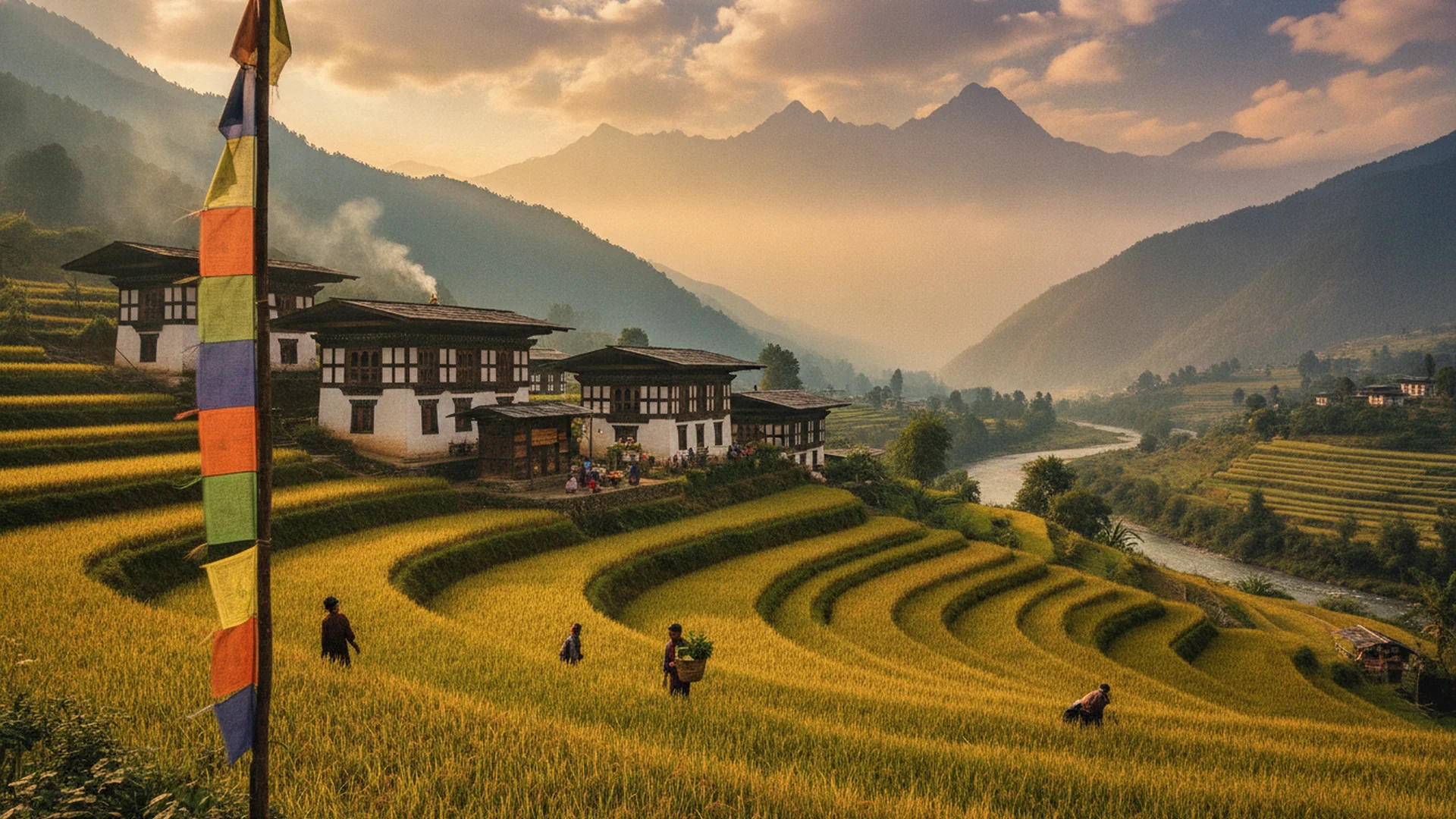
When the definition of luxury is rewritten far beyond the superficial excess of modern amenities, the profound dimensions of travel bring us to the threshold of an ancient, hand-carved wooden door. Here stands a Bhutanese heritage farmstay, a centuries-old rammed-earth dwelling resting quietly against the majestic backdrop of the Himalayas. In this sanctuary, true luxury is not measured by flashiness, but by the embrace of a slower rhythm of life: hearing the whisper of the wind through fluttering prayer flags and receiving the pure, unpretentious hospitality of a host family dedicated to preserving their ancestral legacy.
Living within a traditional farmhouse, thoughtfully restored to meet the highest standards of cleanliness and safety, offers an immersive experience that intimately connects the traveler’s soul with nature and community. From the comforting aroma of indigenous red rice and organic herbs to quiet evening moments when golden sunlight casts a warm glow over tranquil fields and orchards, this is experiential travel at its most transcendent.
Earthen Architecture and the Heritage of Time
The structural design of traditional farmhouses in Bhutan is an architectural marvel achieved entirely without the use of nails. The robust walls are crafted from rammed earth, expertly blended with intricately carved hardwood details. The ground level typically serves as a secure space for storing harvests and sheltering livestock, while the upper floor remains open-air for drying crops. The residential quarters above are warmly appointed with handcrafted local woodwork, complemented by impeccably clean, modern bathrooms. Staying in these living museums allows guests to sleep surrounded by history, where every corner whispers tales of generational devotion and love.
Three Valleys of Inspiration: Paro, Phobjikha, and Bumthang
The charm of Bhutanese farmstays is scattered across scenic valleys, each defined by distinct landscapes and spiritual identities. Begin in the Paro Valley, a realm of terraced rice paddies and ancient villages near the legendary Tiger’s Nest monastery, where farmhouses welcome travelers like returning family. Journey onward to the Phobjikha Valley, a sweeping glacial bowl embraced by pristine wilderness and serving as the winter sanctuary for endangered black-necked cranes, offering unmatched stillness. Finally, reach the Bumthang Valley, the spiritual and cultural heartland surrounded by meadows, apple orchards, and the gentle resonance of ancient Buddhist civilization.
The Healing Arts: Where Mountain Water, Hot Stones, and Herbs Converge
A pinnacle highlight of any farmstay experience is the Dotsho, a traditional medicinal hot stone bath. Hosts carefully select river stones rich in minerals, heating them over an open fire until they glow before submerging them into a specialized wooden tub partitioned away from the bather. This process rapidly boils mountain spring water, which is then infused with wild, organic herbs such as Khempa (Artemisia), known for relieving muscle tension, detoxifying the body, and soothing travel fatigue. Soaking beneath a blanket of Himalayan stars while sipping warm tea offers a restorative luxury that money simply cannot buy.