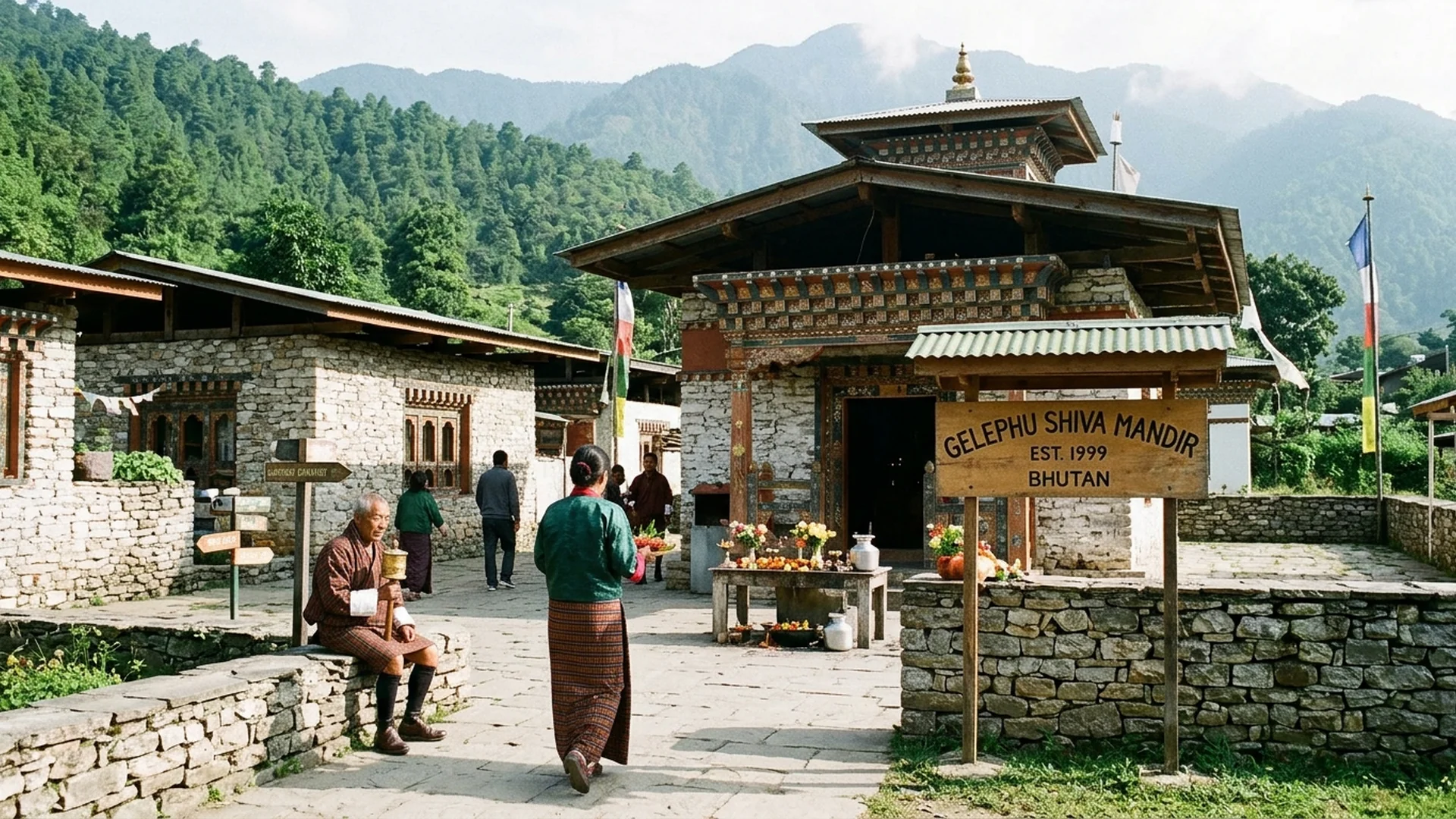
When conjuring the Himalayan kingdom of Bhutan, the mind instinctively wanders to emerald-green forests and Vajrayana Buddhist monasteries clinging precariously to sheer granite cliffs. Yet amidst the misty lowlands and the gentle waters of the Shetikhari River in the country’s southern reaches, a profound jewel of interfaith harmony quietly thrives: the Gelephu Shiva Mandir, historically known as the Shivalaya Yagyaswar Mahadev Mandir. This sacred shrine stands as a powerful testament to religious tolerance and the harmonious convergence of diverse spiritual traditions in modern Bhutan.
More than a mere place of worship, this sanctuary reflects the deep compassion and visionary leadership of Bhutan’s monarchs, originally established to embrace and uplift the local Hindu community. Today, as Bhutan embarks on its most historic transformation with the birth of the Gelephu Mindfulness City—a global enclave of conscious economic and spiritual development—this temple is undergoing a breathtaking metamorphosis into a gleaming ‘Golden Mandir.’ It is an exquisite physical manifestation of a national philosophy that seamlessly weaves spirituality, artistry, and cultural diversity into a singular, unbroken tapestry.
Foundations of Faith: A Royal Gift Along the Shetikhari Waters
Standing in serene grace along the banks of the Shetikhari River within the Sarpang district, the Gelephu Shiva Mandir traces its origins to royal decrees aimed at creating a dedicated space for rituals and community gatherings, mirroring the renowned Shivalaya Mandir in Samtse. Designed with meticulous attention to traditional architectural motifs and sacred craftsmanship, the temple envelops visitors in a profound stillness, offering an ideal setting for quiet contemplation and inner reflection.
Within the unique socio-cultural fabric of Bhutan, religious diversity is never viewed as a dividing line, but rather as an essential element that enriches the collective whole. This sacred Hindu shrine operates effortlessly as a bridge, uniting individuals of varying beliefs under the overarching umbrella of Gross National Happiness—a philosophy that places spiritual well-being at the very center of human existence.
Ascent to the ‘Golden Mandir’: A New Chapter in the Mindfulness City
Perhaps the most compelling contemporary narrative surrounding the temple is its historic renaissance. Under royal command, the Gelephu Shiva Mandir is undergoing an ambitious, comprehensive restoration, featuring intricate interior and exterior gilding that will crown it as a radiant ‘Golden Mandir.’ This transformation transcends mere aesthetic enhancement; it stands as a collective convergence of national devotion, with citizens from every corner of the kingdom rallying to support its realization.
This architectural revival aligns perfectly with the visionary parameters of the Gelephu Mindfulness City (GMC)—a pioneering special economic and mindful zone designed as a global blueprint for sustainable futures. The deliberate elevation of both Buddhist and Hindu sacred sites side-by-side within this mega-initiative underscores a foundational truth: that spiritual grounding is indispensable to Bhutan’s enduring evolution.
Cultural Pulses and Sacred Festivals Along the Indo-Bhutan Frontier
Anchored in the country’s southernmost belt where Bhutan meets the Indian state of Assam, Gelephu experiences a warm, subtropical climate year-round, offering a gentle contrast to the alpine chills of the northern valleys. The environment surrounding the Shiva Mandir hums with vibrant daily life and changing seasonal rhythms.
During auspicious celebrations such as Maha Shivaratri or Bolbam, the temple grounds swell with devoted pilgrims arriving to offer their highest respects to Lord Shiva. The resonance of ancient chants, mingled with the drifting fragrant smoke of incense and the soothing murmur of the nearby river, weaves a deeply moving cultural tapestry rarely witnessed in high-altitude Himalayan realms.