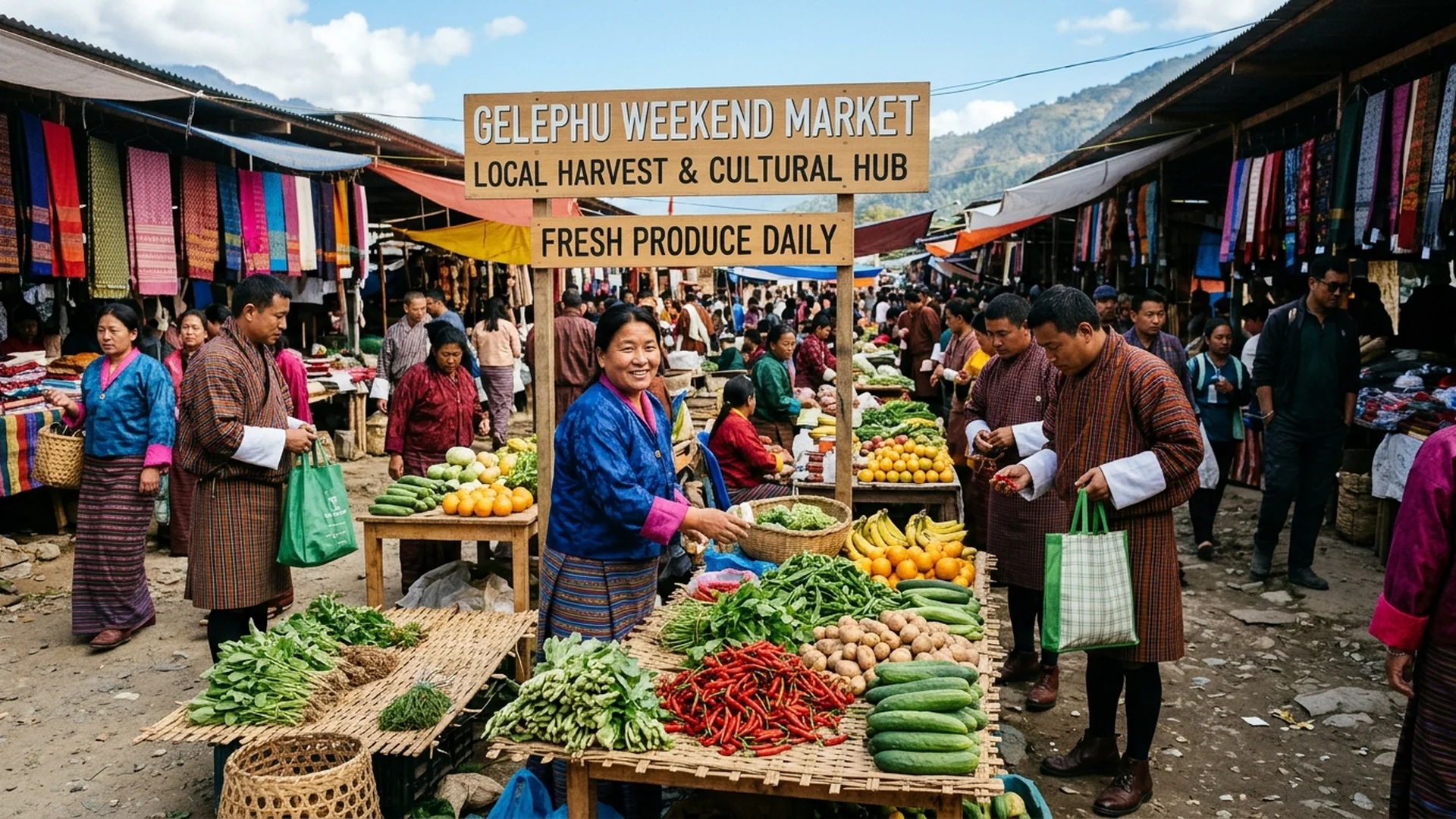
When conjuring the Kingdom of Bhutan, the mind instinctively wanders to mist-shrouded alpine valleys, ancient monasteries clinging impossibly to sheer cliff faces, and the resonant chant of monks echoing through pristine silence. Yet, descend toward the subtropical emerald forests of the south, and the fertile lowlands of Gelephu unveil an entirely different cadence of Bhutanese life—one suffused with brilliant colors, warm laughter, and the rich earthy aromas of diverse harvests.
At the Gelephu Weekend Market, a lively nexus serves as a living bridge between highland traditions and borderland cultures. Far more than a mere trading post, this bustling marketplace is the beating pulse of a community where myriad ethnicities converge harmoniously, all while this sacred southern frontier prepares for its visionary evolution into the forthcoming Gelephu Mindfulness City.
A Symphony of Southern Himalayan Hues and Aromas
As the first rays of morning sunlight catch the corrugated tin roofs of the stalls, the Gelephu Weekend Market bursts into an energetic symphony of life. The pungent, inviting aroma of sun-dried red chilies and exotic spices hangs softly in the lingering morning mist. Stalls brim with seasonal harvests reaped from pristine soils, inviting discerning travelers and culinary purists to unearth treasures such as nakey—tender wild fiddlehead ferns gathered along mountain stream banks—alongside wild bamboo shoots, foraged forest mushrooms, and pristine rounds of local datshi cheese waiting to transform into national delicacies. Every step through this vibrant marketplace engages the senses in an authentic celebration of untamed, chemical-free abundance.
A Cultural Crossroads Where High Mountains Meet Border Lowlands
The true fascination of Gelephu lies less in its exotic wares and more in the extraordinary tapestry of people gathered at this geographical crossroads. Bhutanese merchants draped in traditional gho and kira stand shoulder-to-shoulder with diverse local villagers. A chorus of overlapping tongues—Dzongkha, Nepali, and Hindi—blends into a melodic soundtrack of commerce, camaraderie, and community. Ready smiles and gracious greetings embody the innate hospitality that forms the cornerstone of Bhutanese society. Observing these fluid human interactions offers profound insight into how gracefully this compact nation embraces diversity and resilience.
Culinary Heritage and Wisdom Passed Through Generations
Beneath towering mounds of verdant greens, sun-ripened produce, and aromatic herbs lies an intricate web of generational wisdom. The residents of the Gelephu region possess an intimate, intuitive understanding of forest botany, utilizing native flora interchangeably as culinary enhancers and traditional folk remedies. Engaging with vendors or observing the deliberate selection of ingredients for iconic dishes like Ema Datshi reveals a lifestyle that is simultaneously simple yet profoundly aligned with nature. Every item tells a silent story of weather patterns, ecological reverence, and a deliberate refusal to march to the frantic drumbeat of the modern world.