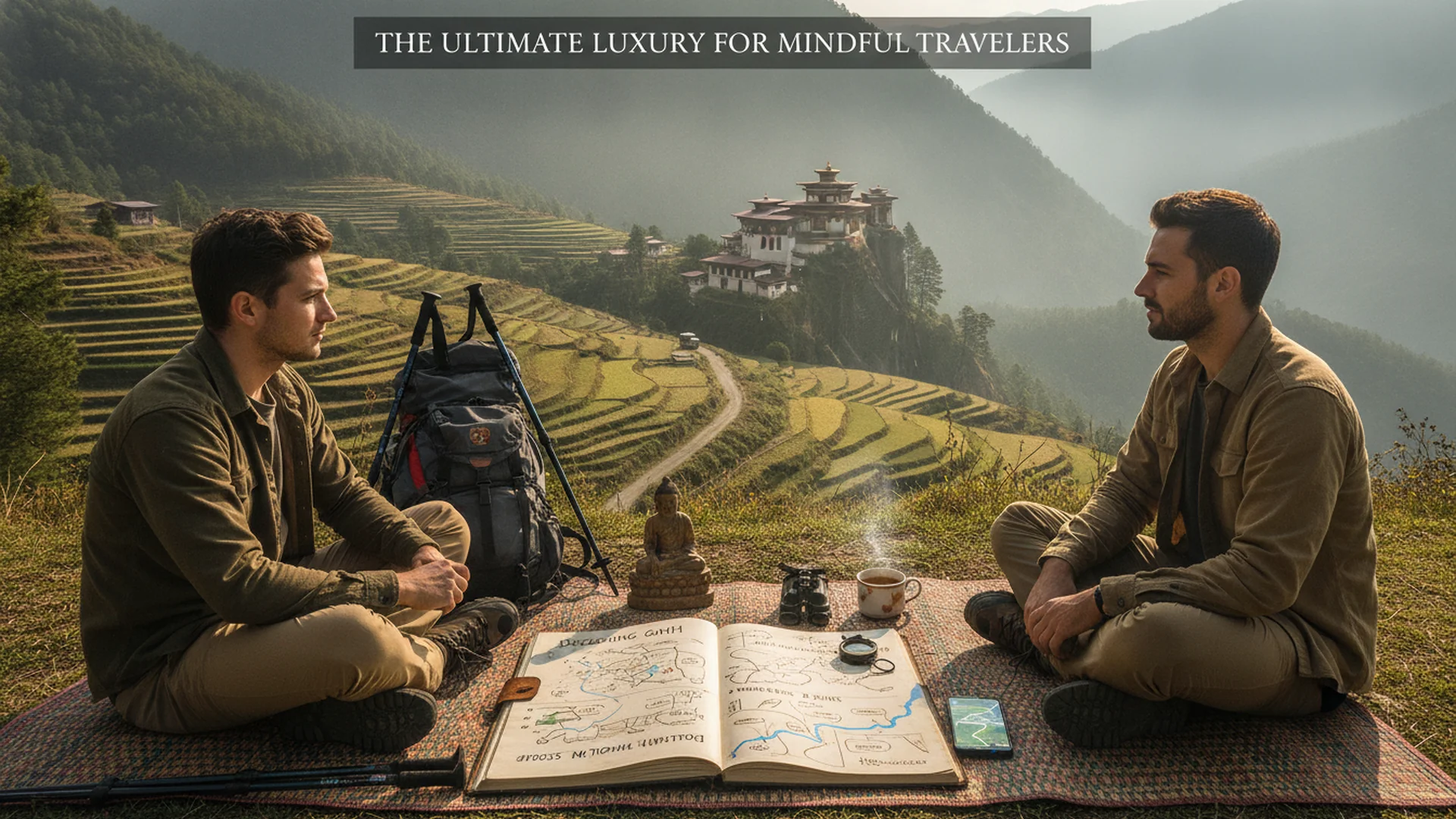
Amidst a modern world driven by relentless speed and economic ledgers, a small sovereign realm rests cradled within the Eastern Himalayas, where true prosperity is measured not by Gross Domestic Product (GDP), but by Gross National Happiness (GNH). This pioneering philosophy is far more than a political or economic abstraction; it is the living breath, the rhythmic cadence, and the sacred pulse that preserves Bhutan’s timeless grace.
Journeying to Bhutan in this era of quiet transformation offers discerning travelers an introduction to true quiet luxury. The extraordinary privilege sought by high-net-worth explorers here is defined not by superficial extravagance, but by pristine mountain air, the hushed murmur of ancient prayer wheels against cliffside sanctuaries, and the luminous, unfeigned hospitality of a people anchored in inner peace.
This is a sanctuary that proves intentional visitor caps and sustainable development fees are not barriers to entry, but rather protective veils. They ensure that only those with open hearts and a reverent curiosity may cross the threshold to experience the profound essence of well-being that humanity has spent generations seeking.
The Four Pillars of GNH: The Intellectual Foundation of the Himalayan Realm
Conceived in the 1970s by His Majesty Jigme Singye Wangchuck, the fourth King of Bhutan, Gross National Happiness emerged from the profound realization that economic growth alone cannot secure genuine human flourishing. GNH rests upon four robust pillars: sustainable and equitable socioeconomic development, the preservation and promotion of traditional culture, the conservation of the natural environment, and good governance.
These pillars transcend mere state policy, woven seamlessly into the daily rhythm of Bhutanese life. They manifest in constitutional mandates ensuring that over sixty percent of the nation remains forested in perpetuity—a threshold currently surpassed at over seventy percent—as well as the graceful wearing of the traditional Gho and Kira within official institutions and schools. By deliberately curbing heavy industries to avert ecological degradation, Bhutan demonstrates its unwavering commitment to measured, respectful growth rooted in ancestral heritage.
High Value, Low Volume: When Sustainability Becomes the Ultimate Exclusivity
In an era where mass tourism frequently leaves indelible scars upon global heritage sites, Bhutan charts a courageous, counter-current path through its ‘High Value, Low Volume’ tourism model. By prioritizing conscientious, discerning travelers over sheer visitor volume, and implementing the Sustainable Development Fee (SDF), the kingdom safeguards its delicate ecological and cultural tapestries.
For the environmentally conscious traveler, the SDF is not merely a tariff, but a profound point of pride—a direct contribution to free local healthcare, universal education, and the preservation of the world’s only carbon-negative nation. Every step taken within this mountain kingdom becomes an act of stewardship, ensuring that the legacy of these sacred valleys endures for generations to come.
The Aesthetics of Stillness: Luxury Connected to the Soul
Luxury in Bhutan diverges entirely from conventional notions of opulent leisure. World-class lodges nestled within the fertile valleys of Paro and Punakha are architectural testaments to local craftsmanship, utilizing vernacular materials and sustainable energy systems with discreet elegance. Here, true exclusivity is found in profound quietude, absolute privacy, and intuitive, personalized service.
Imagine greeting the dawn with locally sourced herbal tea as mountain mist unfurls across terraced rice fields. Consider ascending the ancient pine forests toward Taktsang Goempa—the legendary Tiger’s Nest sanctuary—to quiet the mind, or restoring the physical vessel through a traditional Dotsho hot stone bath infused with medicinal mountain herbs. Each curated moment invites the traveler to unplug from external turbulence and reconnect with their innermost self.