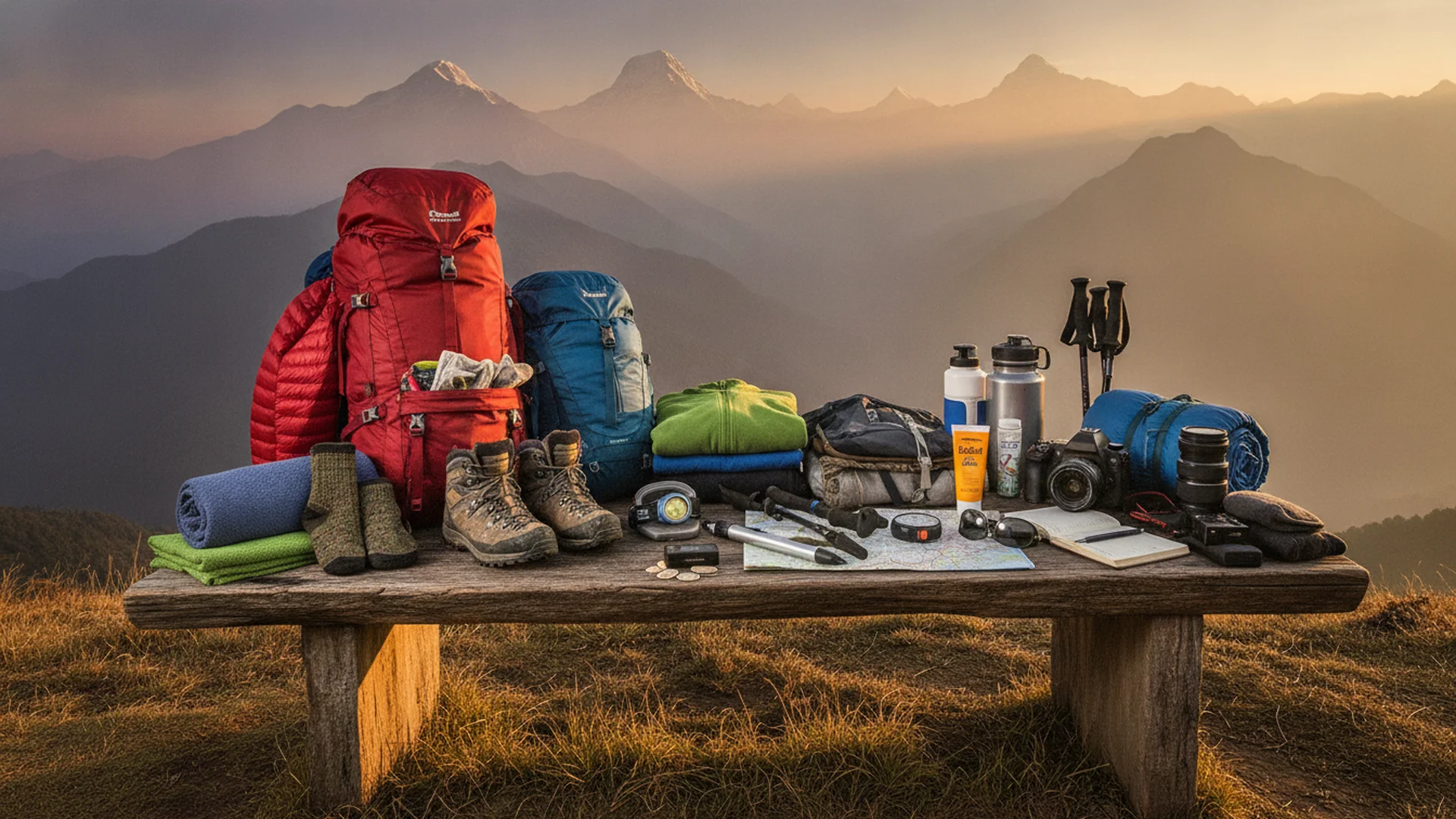
Ascending the sacred mountain paths of the Kingdom of Bhutan is far more than a test of physical endurance or a romantic pursuit of untamed wilderness; it is an intimate dialogue with high-altitude geography. Amidst landscapes of breathtaking austerity—ranging from damp, primeval pine forests to wind-scoured ridges soaring past 4,000 meters above sea level—Bhutan’s weather can pivot effortlessly from brilliant morning sunshine to biting gales or swirling snow within the span of a single hour.
The most common misstep among discerning travelers is not a shortage of gear, but rather a misallocation of equipment unsuited to Bhutan’s traditional logistical network. Here, a distinct boundary exists between the daypack carried on your own shoulders and the sturdy duffel bag transported ahead by sure-footed packhorses or yaks. Understanding this rhythm of the trail transforms an arduous expedition into an unhurried, deeply contemplative, and wholly secure journey.
The Philosophy of Vestimentary Armor: Mastering the Three-Layer System
Outfitting oneself for classic Bhutanese routes such as the Druk Path or the rugged approaches to Jomolhari Base Camp demands strict adherence to the three-layer paradigm, particularly when daily ambient temperatures can fluctuate by more than twenty degrees Celsius. The foundation, or Base Layer, must comprise pure Merino wool or high-performance synthetic quick-dry fibers designed to wick moisture rapidly away from the skin. Cotton is strictly prohibited; its propensity to retain moisture induces rapid hypothermia the moment physical exertion ceases.
Over this lies the Mid Layer—lightweight fleece or compressible down garments designed to trap body heat, easily shed or donned as mountain winds wax and wane. The outer boundary, or Shell Layer, relies on breathable, waterproof membranes like Gore-Tex to repel driving rain, sleet, and glacial gusts. Inside high-altitude alpine camps where temperatures routinely plunge below freezing, a heavy down parka rated for temperatures down to -10°C to -15°C remains an absolute sanctuary against the mountain cold.
Logistical Division: Daypacks, Duffels, and the Legacy of Mountain Pack Animals
Bhutanese trekking operations preserve a meticulous, time-honored division of luggage. All primary gear is packed into a heavy-duty duffel bag—restricted strictly to 15 kilograms per traveler—which is loaded onto the backs of horses or yaks at dawn to journey ahead to the next designated campsite. Once morning departure commences, this duffel remains entirely inaccessible until evening camp is reached. Consequently, its contents must be strictly reserved for sleeping systems, evening sanctuary wear, and personal toiletries.
Conversely, a 25 to 35-liter daypack remains your constant companion along the trail. Essential contents include your weather-shell jacket, an auxiliary warm layer, at least two liters of water, personal first-aid provisions, UV protection, photographic equipment, and nutrient-dense trail snacks. Selecting a daypack equipped with an ergonomic suspension and a supportive hip belt is vital to mitigating fatigue across punishing ascents and descents.
Guardians of Every Footstep: Boot Strategy and Technical Trail Aids
Bhutan’s ancient footpaths present an eclectic tapestry of loose scree, exposed root systems, morning frost, and slick mud. Appropriate footwear must therefore feature mid-to-high ankle support, aggressive rubber outsoles such as Vibram, and waterproof membranes. A golden rule among seasoned Himalayan mountaineers: never debut a brand-new pair of boots on an active expedition. Footwear must undergo a thorough break-in period of at least three to four weeks prior to departure to shape the linings to the foot and prevent debilitating friction.
Furthermore, telescoping trekking poles serve as invaluable biomechanical allies, reducing impact stress on the knees by up to 25 percent during steep, knee-grinding descents from high mountain passes. When paired with a dual-layer sock strategy—comprising a moisture-wicking sock liner beneath a cushioned heavy wool sock—friction is virtually eliminated, ensuring unblemished strides.
High-Altitude Wellness: Defending Against Thin Air and Intense Alpine Radiation
As trekking itineraries ascend beyond the 3,000-to-4,500-meter threshold, the atmosphere thins markedly, diminishing available ambient oxygen. Equipping oneself for high-altitude physiology is paramount. Consult a travel physician regarding prophylactic medications such as acetazolamide (Diamox), alongside standard analgesics and electrolyte replacements. For hydration, wide-mouth heavy-duty plastic bottles like Nalgene are strongly favored over flexible hydration bladders, whose drinking tubes are prone to freezing solid in sub-zero alpine conditions.
Equally formidable is the intense ultraviolet radiation characteristic of high-altitude environments. Sunlight reflected off snowfields and granite expanses can inflict severe damage on skin and retinas alike. High-grade UV400 or Category 3-4 sunglasses equipped with side shields, broad-spectrum SPF 50+ sunscreen, and UV-blocking lip balms are non-negotiable daily companions.