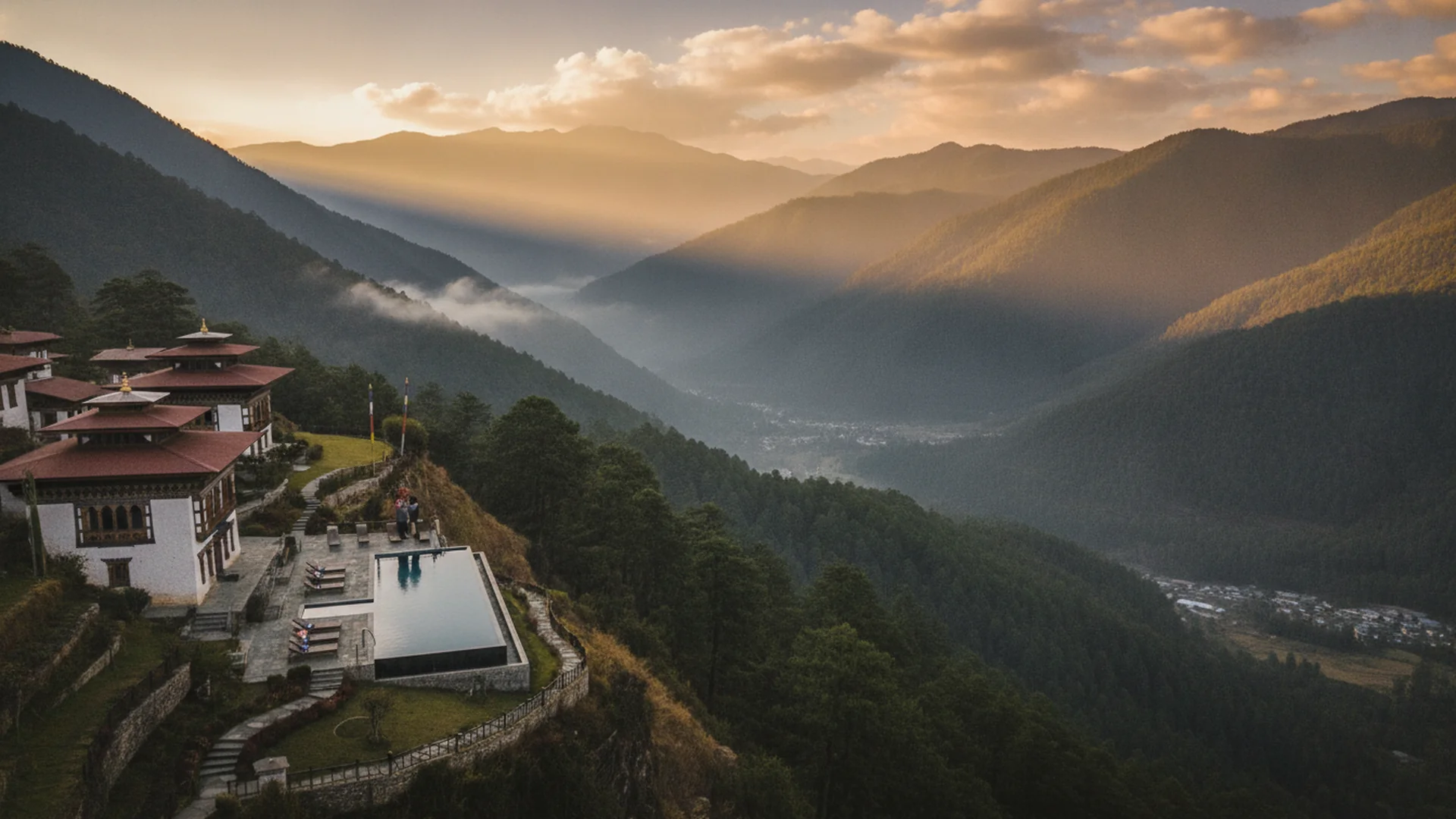
A journey into the Kingdom of Bhutan is never merely a matter of moving pins across a map; it is an immersive, valley-to-valley pilgrimage where each geographic cradle conceals its own distinct microclimate, topography, and ancient identity. Selecting where to lay your head each evening is not simply about physical comfort—it is the master key to unlocking the aesthetic and physiological rhythms of the land.
Because every valley whispers a different historical and spiritual narrative, understanding why waking to the morning mist over the Mo Chhu River in Punakha feels entirely different from sheltering within a high-altitude pine forest in Thimphu elevates the entire expedition. This guide invites the discerning global traveler to decode the most treasured coordinates across the kingdom, ensuring every night spent in Bhutan aligns seamlessly with the cadence of nature and heritage.
Paro: The Sacred Gateway of Flowing Rivers and Cliffside Sanctuaries
Paro stands as both the alpha and omega of nearly every Bhutanese itinerary, housing the nation’s sole international aviation gateway. Consequently, accommodation here spans a rich spectrum—from heritage townhouses once belonging to aristocratic families to world-class luxury outposts tucked discreetly into hillside pine groves. For those who harbor dreams of gazing upon the iconic cliffside silhouette of Taktsang Goempa (Tiger’s Nest) directly from a private terrace, selecting a sanctuary on the western periphery of the valley is paramount. Alternatively, retreats situated along the banks of the Paro Chhu offer an idyllic symphony of weeping willows, wheat fields, and the gentle, meditative murmur of rushing glacial waters to soothe transcontinental fatigue.
Thimphu: Balancing Cultural Vitality with Pine-Scented Seclusion
Thimphu, a capital devoid of traffic lights yet brimming with vibrant cultural pulse, offers two distinct stylistic choices for the discerning traveler. For connoisseurs drawn to the rhythm of local artisan workshops, weekend markets, and majestic monastic fortresses, a central urban address allows effortless exploration on foot. Yet, for high-net-worth guests prioritizing absolute discretion and stillness, the outer ridges of the valley—steeped in dense pine forests—harbor contemporary Bhutanese architectural marvels. These secluded sanctuaries employ local timber and quarried stone, featuring expansive floor-to-ceiling glass that frames sweeping, cinematic panoramas of the valley floor below.
Punakha: The Warm Embrace of Converging Rivers and Terraced Fields
Descending from the soaring heights of Dochu La pass into the Punakha valley, an immediate softening of the air is palpable. Resting at a considerably lower elevation than Thimphu and Paro, Punakha serves as an inviting winter sanctuary. The most coveted addresses here cluster along the banks of the Mo Chhu and Pho Chhu rivers, where these two sacred waterways converge. Properties in this verdant enclave harmonize effortlessly with cascading rice terraces and fragrant citrus orchards. Spending a languid afternoon sipping warm butter tea while wisps of cloud drift lazily across the riverbanks offers a profound restoration of vitality and inner equilibrium.