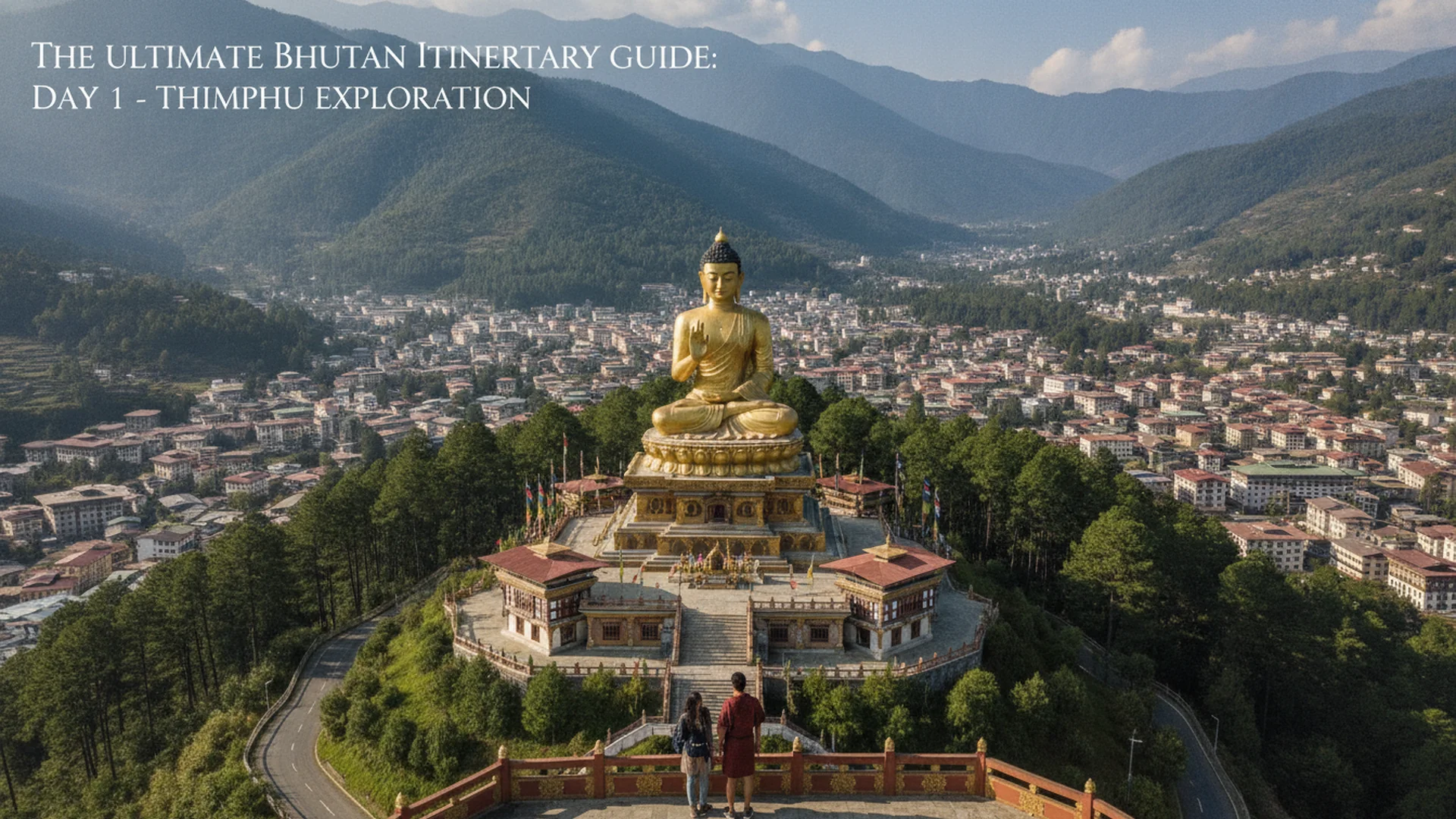
As crisp Himalayan winds whisper across snow-dusted ridges deep within the inner valleys, the subtle aromas of agarwood and pine embers drift from traditional wood-fired stoves. Bhutan is far more than a destination on a map; it is a sacred geographical refuge that gently insists we slow down and anchor ourselves in the present moment.
Entering the Kingdom of the Thunder Dragon under its pioneering Sustainable Development Fee (SDF) policy reframes the nature of luxury travel altogether. Asking how many days one should devote to Bhutan is no longer a simple calculation of holiday leave or flight connections—it is a deliberate investment of time. To travel here is to curate a private narrative of cultural depth, architectural grandeur, and restorative tranquility.
Deciphering Duration: 5, 7, or 10 Days in the Dragon Realm
Allocating your time in Bhutan is akin to laying subtle strokes on a silk scroll—every day carries intent and deserves unhurried appreciation. For those seeking an impactful yet concise stay, a 5-day, 4-night itinerary focuses on the political capital of Thimphu and the historic valley of Paro. The crown jewel of this short sojourn is the ascent to Paro Taktsang (Tiger’s Nest Goempa), a sacred monastic sanctuary clinging dramatically to a sheer granite cliff 900 meters above the valley floor.
With a 7-day, 6-night framework, the majestic Punakha Valley reveals itself. Crossing into this lower, sun-dappled valley rewards travelers with a visit to Punakha Dzong, arguably the Kingdom’s most breathtaking monastery-fortress situated at the confluence of the Pho Chhu and Mo Chhu rivers. This duration offers an exquisite balance, allowing travelers to slow their pace, engage in quiet conversations with local artisans, and savor Bhutanese culinary heritage such as ema datshi (farm-fresh chilies stewed in local yak cheese).
For those drawn to profound stillness and raw nature, extending to a 10-day expedition leads deep into the remote Phobjikha Valley (Gangtey). This vast glacial wetland serves as the winter home for the rare black-necked cranes. Here, amidst sweeping alpine meadows and ancient timbered hamlets, travel transforms into a deeply private, meditative sanctuary experience.
Architectural Cadence: The High Himalayan Route Across Sacred Valleys
Journeying through Bhutan is never a mere commute from point A to point B; it is a ritual passage through changing microclimates and centuries-old mountain sanctuaries. The main highway winding along the Himalayan slopes offers an ever-shifting tapestry, transitioning from dense blue-pine forests to frost-kissed high-altitude passes.
At Dochula Pass (3,100 meters), 108 memorial stupas—known as the Druk Wangyal Chortens—stand silently against the jagged backdrop of the Eastern Himalayas. It is a contemplative pause where refined travelers pause for hot spiced tea while absorbing the quiet grandeur of the landscape. Utilizing high-performance private transport driven by master mountain chauffeurs elevates these transit hours into moments of seamless comfort and panoramic photography.
The SDF Philosophy: Maximizing Value in a High-Value Destination
Under Bhutan’s visionary ‘High Value, Low Volume’ tourism ethos, the Sustainable Development Fee (SDF) directly protects the Kingdom’s pristine environment, free healthcare, and cultural heritage. Within this framework, luxury is defined by privacy, access, and authenticity.
A bespoke itinerary maximizes this investment by pairing atmospheric heritage lodges with master local guides. These seasoned historians hold keys to private lhakhangs (temples) closed to the general public, arrange private audience encounters with senior monks, and curate intimate outdoor dining settings overlooking untouched river valleys. True value in Bhutan lies not in rushed sightseeing, but in privileged moments of profound peace.