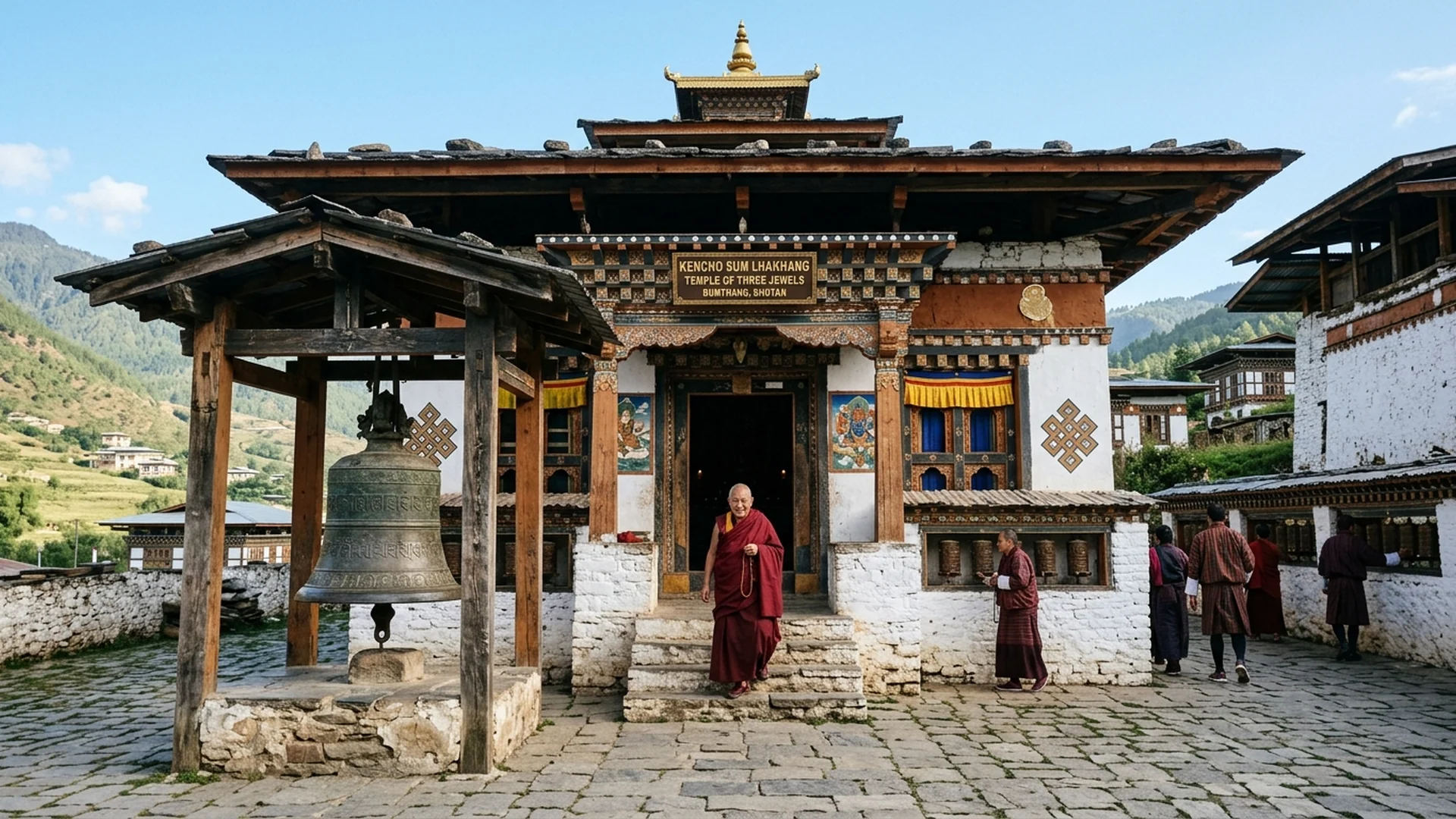
Amidst the delicate mountain mists that drift across the tranquil Chokhor Valley in Bumthang, the quiet echoes of a past stretching back over twelve centuries still resonate in the stillness. Kencho Sum Lhakhang is far more than a mere sanctuary; it is a sacred spiritual anchor that weaves together the enduring legends of Guru Rinpoche and the master treasure revealers who sought to unveil the hidden dimensions of the Dharma. The subtle fragrance of ancient pine and drifting incense carries the discerning traveler back to the dawn of Buddhism in this remote Himalayan fastness, where the boundary between the mortal realm and the sacred domain dissolves into whispered reverence.
Approaching this ancient monastery opens a doorway to a profoundly contemplative experience that transcends ordinary sightseeing. Every square inch of Kencho Sum Lhakhang breathes with wondrous lore—from the legendary bronze bell whose resonance once reached as far as Lhasa, to the mysterious subterranean waters resting in the quiet depths below. The miraculous rebirth of its architecture following a devastating fire stands as an eternal testament to the unbroken faith of the Bhutanese people, inviting thoughtful travelers to reflect upon the infinite value of time, memory, and the enduring human spirit.
The Essence of the Three Jewels: Deciphering Bumthang’s Sacred Geometry
The nomenclature of Kencho Sum Lhakhang carries profound philosophical weight, with ‘Kencho Sum’ literally translating to the ‘Three Jewels’ of Buddhism. This profound spiritual concept is physically manifested through the three principal sacred statues enshrined within the solemn prayer hall: Vairocana Buddha, Avalokiteshvara, and Guru Rinpoche (Padmasambhava). The deliberate positioning of these revered figures transcends mere religious artistry, acting instead as conduits for boundless compassion and transcendental wisdom that have safeguarded the Bumthang valley for centuries. The interior ambiance is suspended in the amber glow of burning yak butter lamps, enveloped by the venerable patinas of aged Thangkas and masterfully preserved wall murals that transport every visitor across the threshold of ordinary time.
The Enigma of the Bronze Bell: Echoes from Bumthang to Lhasa
Among the most captivating legends surrounding the sanctuary is the tale of its mythical ancient bell. Historical lore recounts that whenever this monumental bell was struck, its powerful, resonant peal would travel effortlessly across rugged mountain ranges and highland pastures all the way to Lhasa, the capital of Tibet, provoking awe far and wide. Intrigued by tales of its miraculous properties, a Tibetan faction once attempted to plunder and carry the artifact away. However, its immense, otherworldly weight—combined with the innate sanctity of the site—prevented the thieves from making a clean escape, resulting in the bell suffering a permanent, historic fracture. Though its far-reaching voice has long since faded into history, the precious remnants of the ancient bell remain carefully preserved within the temple as a tangible witness to epochs past.
Reflections from the Depths: Subterranean Lakes and Sealed Treasure Slabs
Beneath the stone-paved courtyard of Kencho Sum Lhakhang rests a secret steeped in mystique: a subterranean lake believed to communicate with bottomless sub-aquatic realms. According to local oral tradition, the subterranean Serpent King once emerged from these hidden waters to bestow sacred pillars and esoteric texts upon a terton (treasure revealer), equipping them to propagate the Buddhist teachings. Although the physical portal to this legendary lake remains sealed and blanketed by the passage of eras, the sacred nexus of the site is permanently demarcated by an ancient stone slab in the heart of the courtyard—a marker approached by villagers and pilgrims with deep reverence and utmost circumspection.
Reborn from the Ashes: The Architecture of Resurrection
The contemporary elegance of Kencho Sum Lhakhang stands as a triumphant testament to architectural resurrection. Following a catastrophic fire in 2010 that threatened to reduce the historic sanctuary to cinders, profound grief swept through the Bhutanese community. Yet, through extraordinary communal devotion and the expertise of royal master carpenters, a magnificent timber-carved sanctuary was raised anew upon the original sacred foundations. The vibrant pigments of traditional floral motifs and auspicious symbols adorning the newly crafted beams blend seamlessly with the surviving antiquities that escaped the inferno, forging a jewel-like architectural masterpiece that honors the nation’s unwavering commitment to cultural preservation.