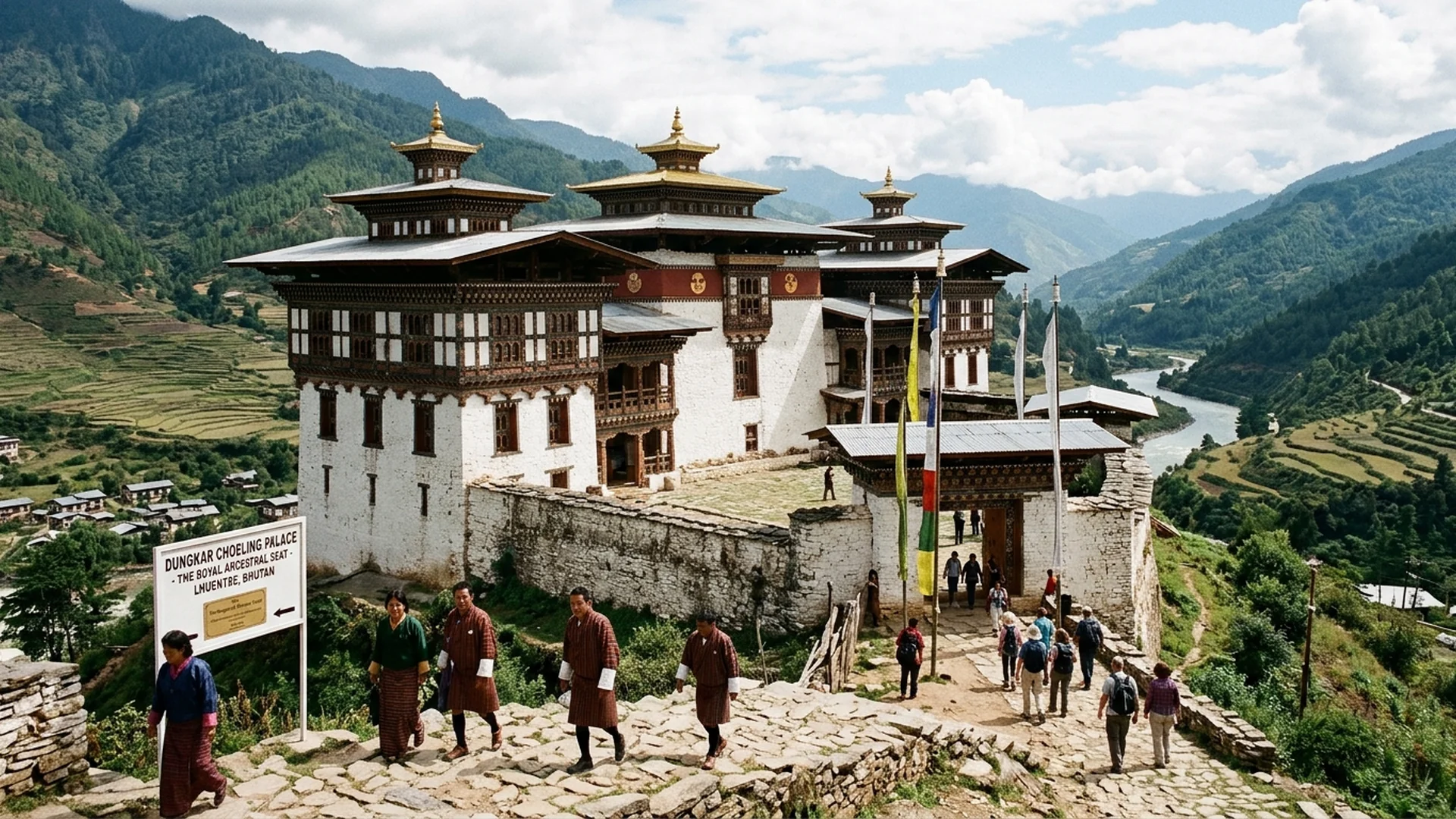
Amidst the secluded, pristine folds of the Lhuentse valley in eastern Bhutan lies an architectural sanctuary deeply intertwined with the genesis of the nation. Dungkar Choeling Palace, historically revered as Dungkar Nagtshang, is far more than a stately noble manor; it is the foundational soil from which the leadership and unification of modern Bhutan took root. In this remote eastern expanse where mountain mists cling to ancient pine forests, the echoes of the past remain palpably alive.
Journeying to this sacred corner of the eastern highlands is akin to turning back the very first page of the Wangchuck Dynasty’s chronicles. Upon first approach, the palace commands the eye with its imposing rammed-earth and timber construction—a timeless testament to the enduring influence of Bhutan’s historic aristocracy. Transformed into an invaluable national heritage museum, every threshold and sun-lit chamber whispers tales of dynastic heritage and the unyielding spiritual ethos of the thunder dragon kingdom.
Ancestral Roots: Decoding History at Dungkar Nagtshang
The name ‘Dungkar,’ translating to ‘White Conch,’ derives from the auspicious conch-shell contour of the ridge rising directly behind the palace. This remarkable site holds monumental significance as the ancestral seat of a powerful noble lineage that eventually produced Jigme Namgyal, the formidable Trongsa Penlop whose legacy paved the way for King Ugyen Wangchuck to ascend the throne as Bhutan’s first hereditary monarch in 1907. To stand in the very chambers where the architects of modern Bhutan once walked offers an intimate, spiritual communion unattainable in the more frequented western valleys.
Aristocratic Architecture and Cultural Relics
Dungkar Choeling Palace has been restored with uncompromising devotion to traditional Bhutanese aesthetics, reflecting the classic typology of a ‘Nagtshang’ or noble manor spanning four grand levels. Its exterior showcases thick, load-bearing rammed-earth walls framed by intricately carved wooden fenestrations. Within, the galleries curate an exquisite collection of 18th-century artifacts, historical manuscripts, and sepia-toned portraits documenting high-altitude aristocratic life. The emotional apex of the interior journey is the serene Guru Tshokey Dorji Shrine, where butter lamps flicker gently against sacred iconography, enveloping visitors in profound meditative quietude.
The Allure of Lhuentse: High Craftsmanship and Untouched Wilderness
A pilgrimage to Dungkar Choeling naturally opens the gateway to the Lhuentse district, widely celebrated as the preeminent heartland of indigenous textile artistry in Bhutan. In nearby enclaves such as Khoma Village, master artisans meticulously weave the legendary Kishuthara silk kiras, each geometric thread a testament to unbroken generational wisdom. Combined with the dramatic gorges of the Kurichu River and the unhurried rhythms of village life, Lhuentse presents an essential horizon for cultured travelers seeking unvarnished authenticity.