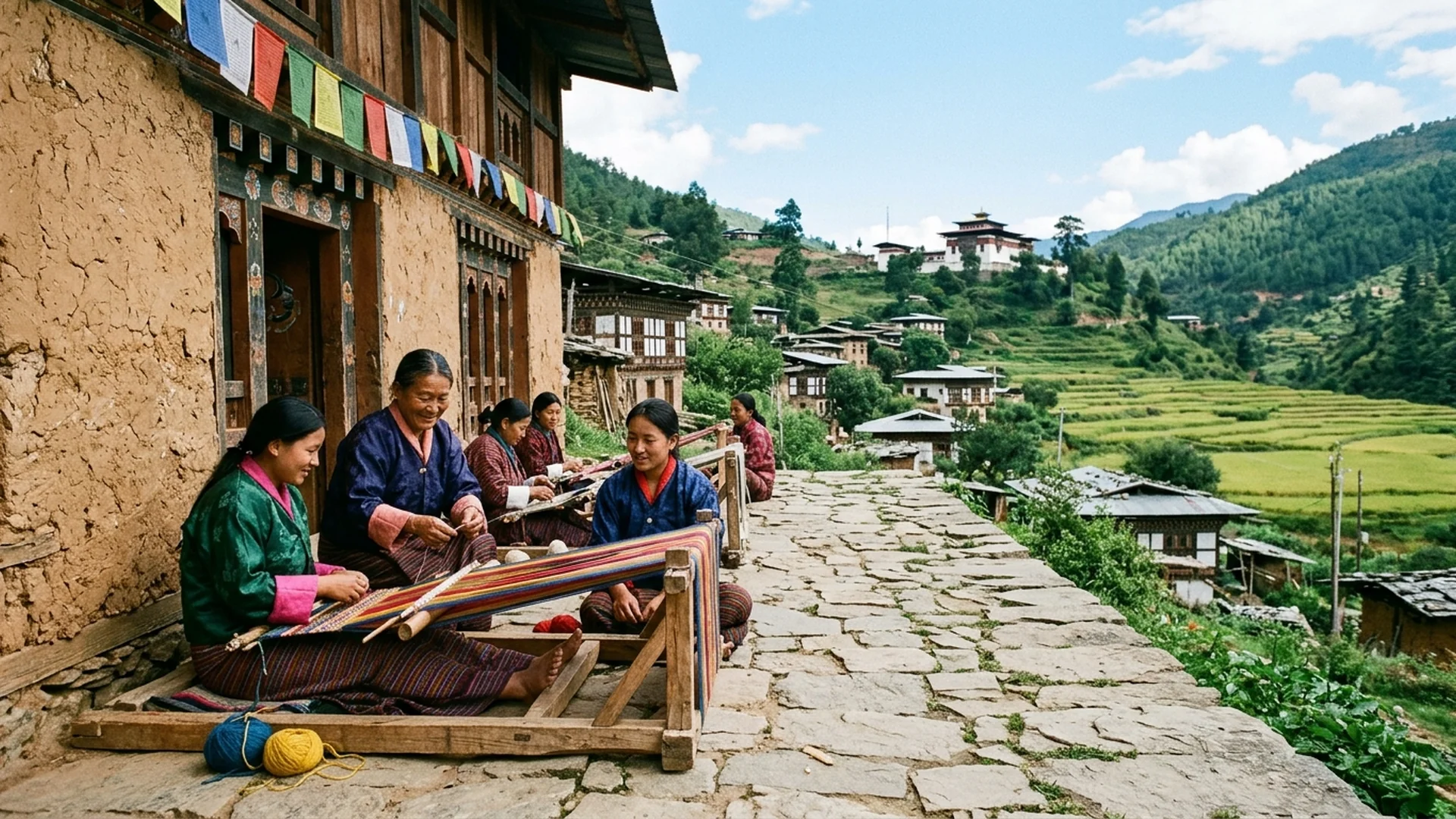
When you cross beyond the familiar tourist corridors of the Gross National Happiness kingdom and venture deep into the rugged eastern reaches of Lhuentse, time appears to decelerate, ceding its dominion to a profound, mountainous silence. Here, nestled amidst undulating mist-veiled valleys, Khamling Village remains an immaculate gem holding fast to the unadulterated purity of traditional rural life. This is far more than a mere scenic stopover; it serves as a grand portal opening directly into the ancestral roots, royal history, and sublime textile artistry of Bhutan. It is a world where every passing moment is underscored by the gentle smiles and heartfelt hospitality of villagers whose lives flow in quiet harmony with the land.
The Breath of Lhuentse: Eastern Roots and Spiritual Heritage
Lhuentse is revered across the kingdom as the ancestral cradle of the Bhutanese royal dynasty. This profound historical resonance vibrates silently through its terraced earth, rushing glacial rivers, and deep-rooted spiritual devotion. As you journey deeper into Khamling Village, an aura of timeless antiquity envelops you—one utterly distinct from the bustling urban centers. Domestic architecture here follows ancient vernacular wisdom, expertly fusing intricate woodwork with rammed-earth walls in an organic dialogue between humanity and the Himalayan environment. The gentle whispering of mountain winds through towering pine groves and terraced fields acts as a natural symphony, calming the restless modern mind and inviting deep introspection.
The Art of Weaving and the Rhythm of Slow Life in Khamling
One of Lhuentse’s most hypnotic charms is its superlative mastery of traditional weaving, particularly the creation of intricate Kishuthara silk textiles and complex wool and cotton garments widely considered the finest in all of Bhutan. Within the rustic compounds of Khamling, visitors bear witness to an unhurried cadence of existence: village women seated at indigenous wooden backstrap looms, their hands deftly guiding iridescent threads through complex geometric motifs. As golden morning light spills across earthen courtyards and timber verandahs, it illuminates a vivid tapestry of natural fibers spun with infinite patience and devotion. Each household sustains itself through agrarian stewardship and quiet communal interdependence, quietly enacting the true philosophy of sustainable well-being.
A New Dimension of Off-the-Beaten-Path Discovery
A pilgrimage to Khamling Village is a definitive exercise in experiential travel—one that prioritizes profound personal learning and emotional resonance over the superficial collection of tourist landmarks. Reaching this eastern sanctuary demands both time and deliberate intention, yet the rewards are immeasurably rich. To wander softly along pristine footpaths traced across forested hillsides, or to sit and exchange quiet smiles and stories with local elders through a knowledgeable guide, is to realize that the world’s most enduring beauty often resides in its quietest corners. Here, time pauses just long enough for us to hear the steady, authentic beat of our own hearts.