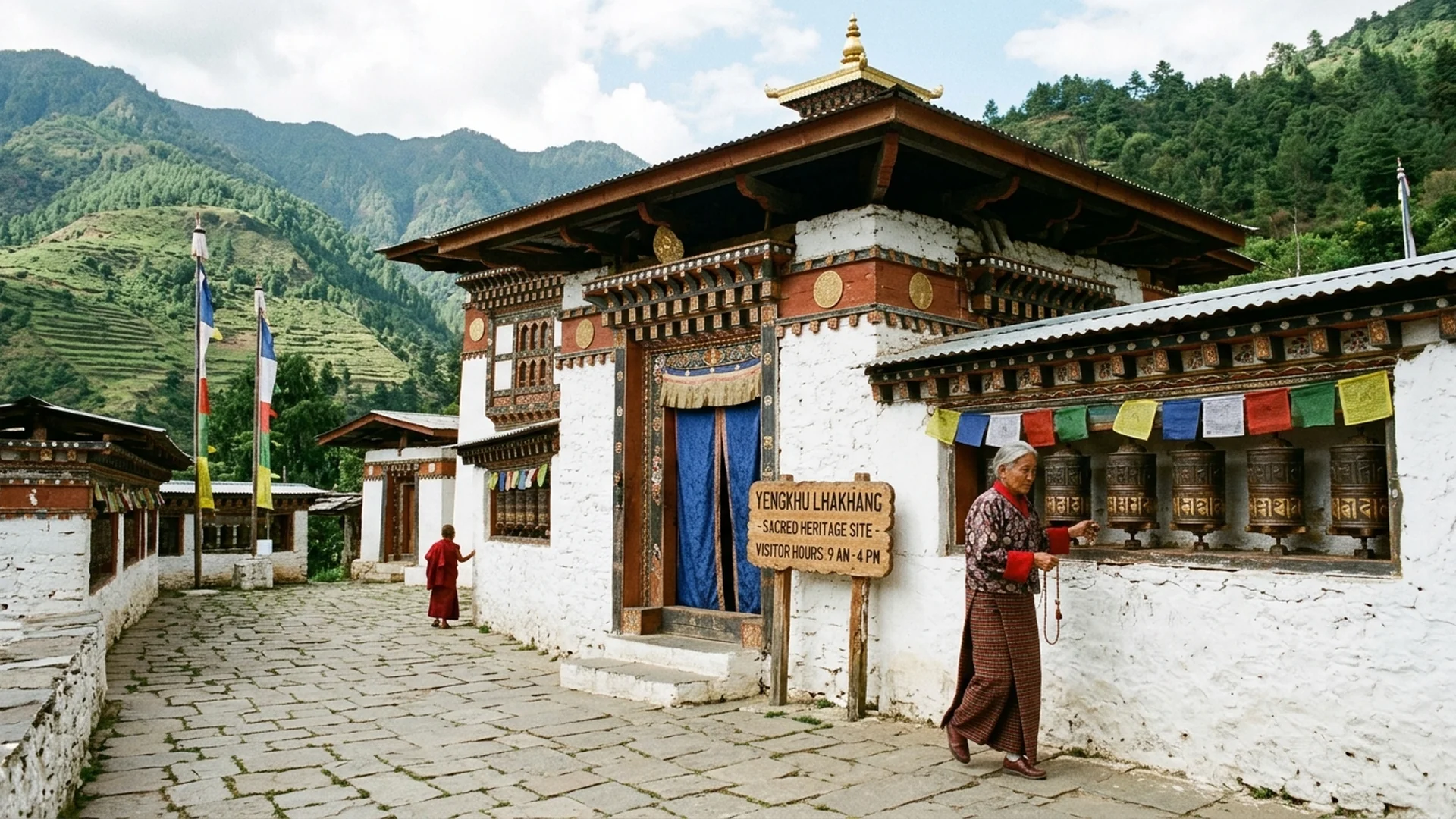
As morning mists gradually lift from the intricate folds of the Mongar valleys, the faint chime of windbells suspended from ancient eaves begins to articulate a profound composition of serenity. This is Yengkhu Lhakhang, an invaluable spiritual gem quietly sequestered in eastern Bhutan, far removed from the bustling itineraries of the western circuits.
Approaching this sacred realm feels akin to turning the pages of an unremembered chronicle, one still resonant with unyielding devotion. Amidst a pristine landscape where time itself appears suspended, this ancient sanctuary transcends mere architecture. It stands as a profound bridge connecting an illustrious past with the enduring, tranquil spirit of a populace fiercely protective of its traditional way of life.
Sixteenth-Century Roots: Living Legends and Historic Foundations
Originating in the sixteenth century, Yengkhu Lhakhang was established amidst a rugged yet spiritually potent landscape. In an era when wandering sages and esteemed masters traversed perilous mountain passes to propagate the Dharma, the deliberate positioning of this sanctuary reflected an innate mastery of sacred geometry and natural topography. Every square inch of its traditional rammed-earth and timber construction harbors narratives passed down across generations. Carefully conserved, the temple resists modern artifice; its thick earthen walls and hand-carved timber columns stand as quiet testaments to ancestral artisans who consecrated their craft entirely to the sacred.
Spiritual Treasures and Eastern Buddhist Artistry
Within the hallowed halls of Yengkhu Lhakhang, the atmosphere carries the subtle, devotional fragrance of clarified yak butter and indigenous herbal incense. Sunlight filtering through diminutive timber windows illuminates the principal Buddha image and exquisite antique bronzes. Encircling wall paintings and thangkas depict guardian deities and bodhisattvas using natural mineral pigments and herbal resins. These intricate details not only demonstrate sublime aesthetic mastery but also function as visual sutras, inviting contemplative minds into silent communion.
The Allure of Mongar: An Undiscovered Dimension of the East
A pilgrimage to Yengkhu Lhakhang opens a gateway to the raw, untamed, and profoundly hospitable culture of the Mongar district. Here, local communities maintain a measured cadence of life intertwined with terraced agrarian fields and temperate orchards. This serene environment provides discerning cultural travelers with rare moments for genuine introspection, stepping away from contemporary acceleration to experience the authentic essence of the Land of the Thunder Dragon from a more contemplative vantage point.