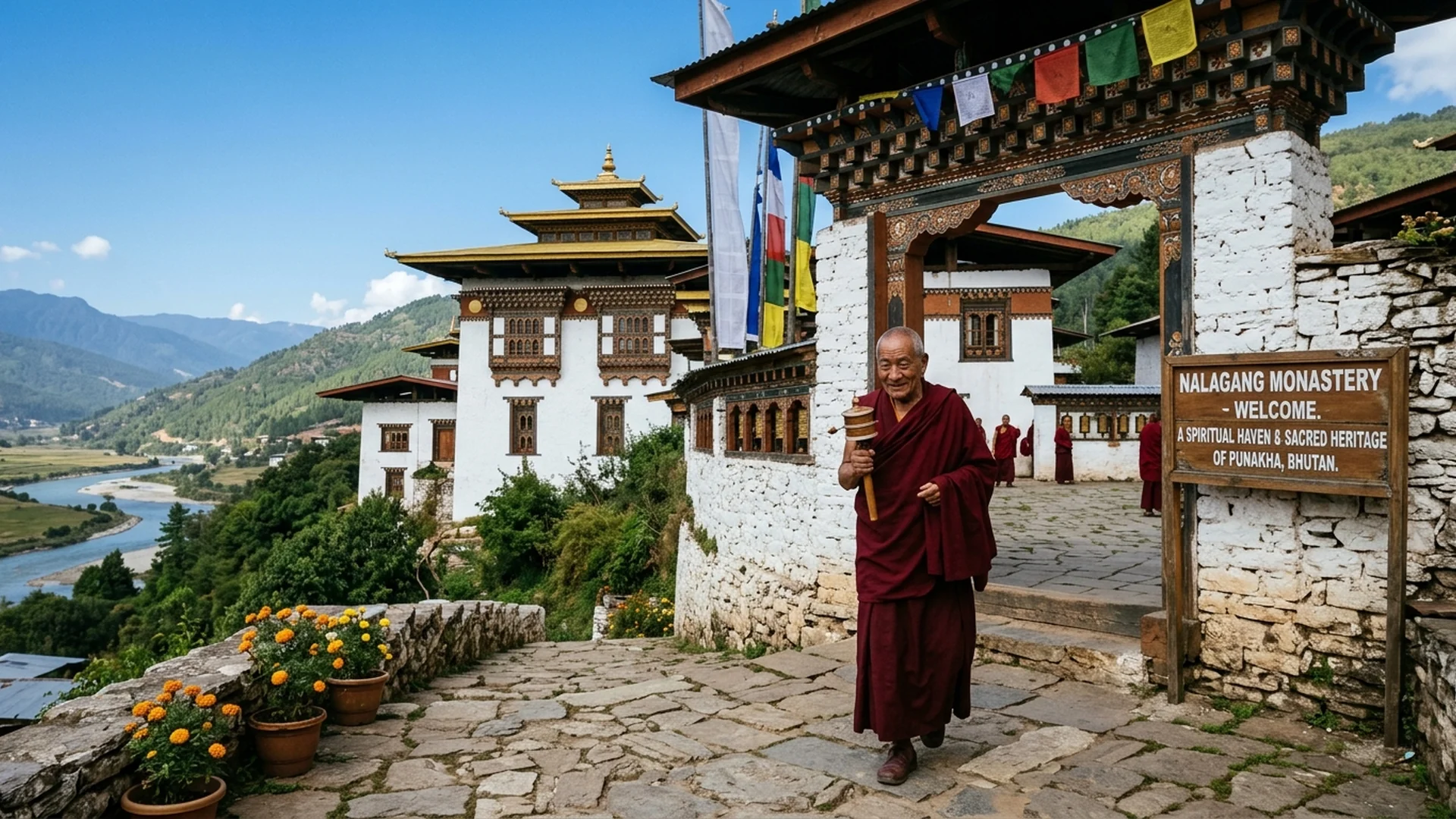
As the morning mist gently rolls across ancient pine forests and terraced rice paddies in the Punakha Valley, the crisp chime of a high-altitude bell serves as a timeless alarm, awakening the earth from its slumber. This is Nalagang Monastery, a sanctuary where time appears to decelerate, inviting the discerning traveler to transcend the role of a mere tourist and become a seeker of profound meaning through profound silence and pure devotion.
Journeying to Nalagang is not simply an excursion to a historical monument; it is an initiation into a worldview governed utterly by the rhythms of Vajrayana Buddhism. Sheltered beneath towering Himalayan peaks, this sacred enclosure functions simultaneously as a contemplative seminary and a living classroom of nature, quietly shaping the spiritual consciousness of the local highlands for centuries. Far from the clamor of the modern world, it offers a realm where every breath resonates with undisturbed tranquility.
Architecture and Spirit Beneath the Shadow of the Himalayas
Nalagang Monastery embodies the ingenious vernacular architecture of the Bhutanese highlands, where intricately carved timber structures merge seamlessly with heavy-pressed rammed earth walls. Every architectural element transcends mere aesthetics; the surrounding mountainscape, the thin mountain air, and the whispering winds are deliberately integrated into the sacred design. Within the main sanctuary, the heavy, comforting scent of incense and sacred butter-lamp offerings hangs in the cool air, while tall windows admit shafts of natural light that illuminate pristine gilded statues, creating an atmosphere that is at once deeply solemn and warmly intimate. The vibrant wall murals, depicting deities and the wheel of life from natural mineral pigments, preserve centuries of unbroken artistic and spiritual legacy.
The Rhythm of Devotion: The Breath of Punakha’s Novices
Beyond the tranquil monastic courtyard, daily life unfolds with disciplined elegance. The evening chanting, harmonized by young novices and senior monks, echoes softly across the Punakha Valley, bearing witness to an unwavering dedication to preserving the Dharma. Sharing a quiet moment of observation or partaking in a gentle philosophical exchange in this secluded sanctuary offers a rare, restorative pause for the weary cosmopolitan mind. The unpretentious grace, profound generosity, and compassionate smiles of the monks at Nalagang serve as a gentle, enduring reminder of a contentment untouched by material excess.