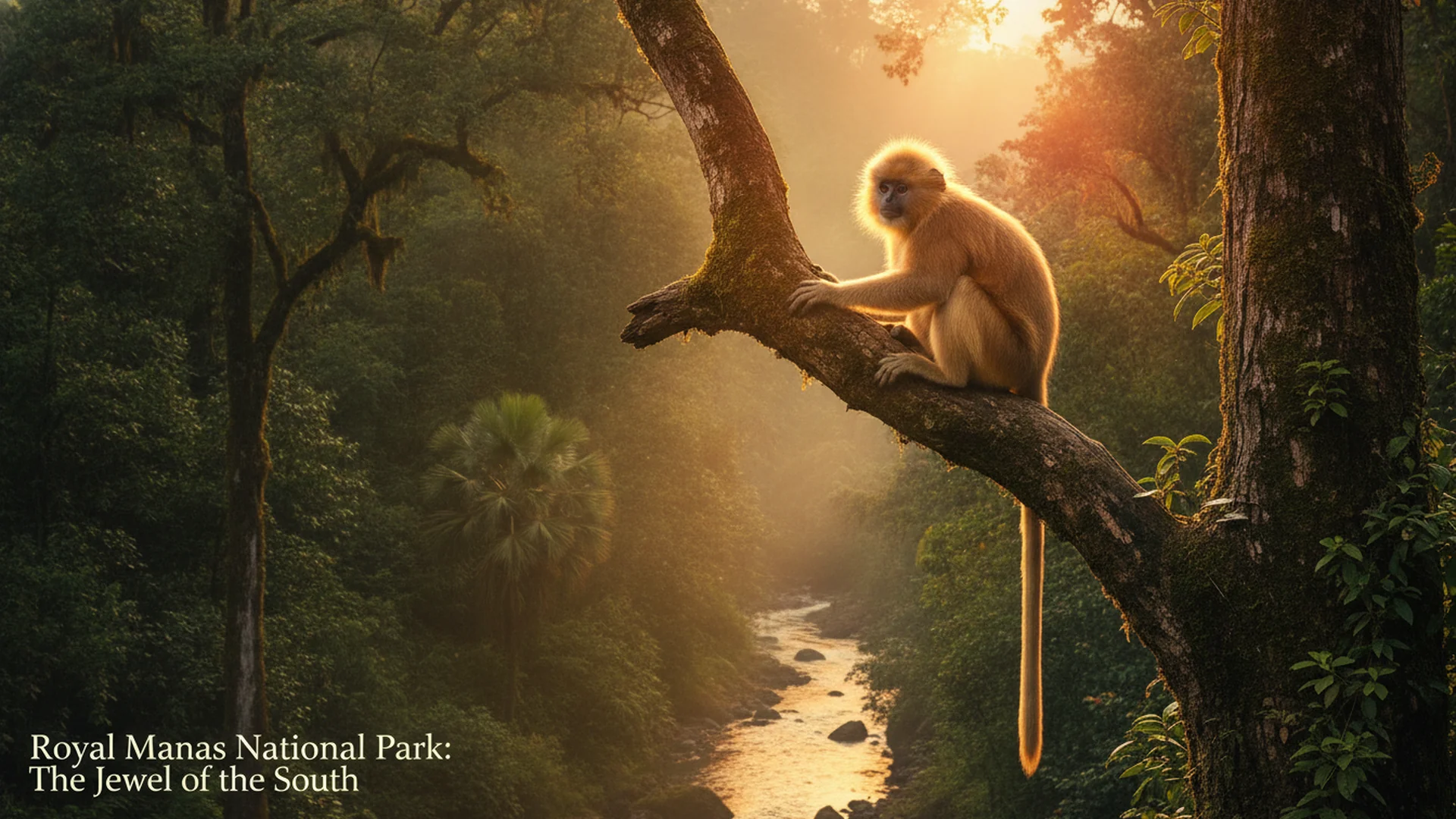
As the morning mist slowly drifts across the towering Himalayan crests, the landscape revealed is not merely raw and untamed; it is the living breath of a pristine ecosystem sustaining countless lives in a kingdom where time itself seems to slow down. This is the Kingdom of Bhutan, a sovereign realm guided not by frantic economic metrics, but by the philosophy of Gross National Happiness (GNH), inextricably woven into the emerald canopy of its ancient forests.
Crossing into Bhutan’s national sanctuaries today is far more than a conventional trek for scenic leisure. It is an inward, contemplative pilgrimage into the vanguard of global sustainability. As the world’s sole carbon-negative nation, Bhutan maintains a fiercely guarded sanctuary where these dense woodlands serve as natural fortresses, habitats for endangered species, and a profound testament that humanity can coexist in absolute harmony with the natural world without subjugating it.
The Green Constitution: A Legacy of Sustainability for a Watching World
The emerald luminescence of Bhutan’s forests is neither an accidental stroke of geography nor a mere abundance of wild terrain. It is the direct result of visionary governance and the supreme law of the land. The Constitution of the Kingdom of Bhutan mandates that forest cover must never fall below 60 percent of the total national territory. Today, Bhutan’s forested expanse exceeds 70 percent, sequestering volumes of carbon dioxide vastly surpassing its modest national emissions.
This unwavering commitment is brought to life through the nation’s foundational ‘High Value, Low Volume’ tourism policy, which deliberately curates visitor numbers to protect fragile ecosystems from the bruising impact of mass travel. Consequently, Bhutan’s wild sanctuaries remain hushed and immaculate, untouched by commercial encroachment. They function as living, open-air academies where the discerning traveler encounters a purity lost to the twenty-first century.
Jigme Dorji National Park: Realm of High Peaks and the Snow Leopard
Sprawling across the northern Himalayan frontier, Jigme Dorji National Park is one of the ecologically most diverse biosphere reserves on earth. This vast expanse encompasses towering, snow-crowned summits that pierce the azure sky, plunging dramatic gorges, and crystalline glacial rivers fed by eternal ice.
This grand sanctuary is the ancestral domain of iconic Himalayan wildlife: the elusive snow leopard traversing the precipitous ridges, the takin—Bhutan’s singular national animal, whose curious morphology resembles a union of goat and bovid—alongside the Himalayan black bear and the blue sheep. Exploring these protected wilds feels akin to trespassing softly upon sacred ground, where nature holds absolute sovereignty and humanity enters only as a respectful guest.
Royal Manas National Park: The Emerald Subtropical South
If Jigme Dorji represents the austere, towering majesty of the high Himalayas, Royal Manas National Park in the south is its lush, vibrant counterpart. Encompassing pristine tropical and subtropical moist broadleaf forests, this park is celebrated as the biological crown jewel of the nation, seamlessly linking with India’s Manas National Park to form a transboundary UNESCO World Heritage ecosystem.
The forest canopy thrives with an astonishing census of flora and fauna, harboring majestic Asian elephants, Bengal tigers, wild water buffalo, and a kaleidoscope of hornbill species. The interior resonates with the timeless symphony of rushing waters over polished river stones and the rich, earthy fragrance of damp loam and fallen leaves, echoing an eternal cycle of renewal.