The moment the aircraft’s wheels touch down upon one of the world’s most intricate and winding runways in the Paro Valley, the heart beats in a rapid cadence of excitement entwined with a profound reverence for the raw, untamed landscape. Deep indigo skies frame razor-sharp mountain crests, while a crisp alpine breeze carries the faint, nostalgic fragrance of burning cedar—an unmistakable signature confirming your arrival across the threshold into the Land of the Thunder Dragon. Paro is far more than a mere aviation transit point for exploring the Himalayan kingdom; it is a beating spiritual pulse and a peerless historical archive where past and present seamlessly dissolve into one another amidst time-honored architecture and a rhythm of life blissfully untouched by relentless globalization.
Experiencing Paro through the lens of mindful luxury invites discerning travelers to absorb an invaluable stillness. It is found in the low hum of ancient chants echoing from consecrated stone walls, and in the unscripted, warm-hearted smiles of locals draped in immaculate traditional attire. Cradled by lush, fiercely protected river valleys, every single footstep here feels like a gentle pilgrimage backward into pure simplicity. True opulence in this sacred realm is never measured by material excess, but by spiritual resonance and the untamed, pristine majesty of nature.
Architectural Mastery: Living History Along the Riverbanks
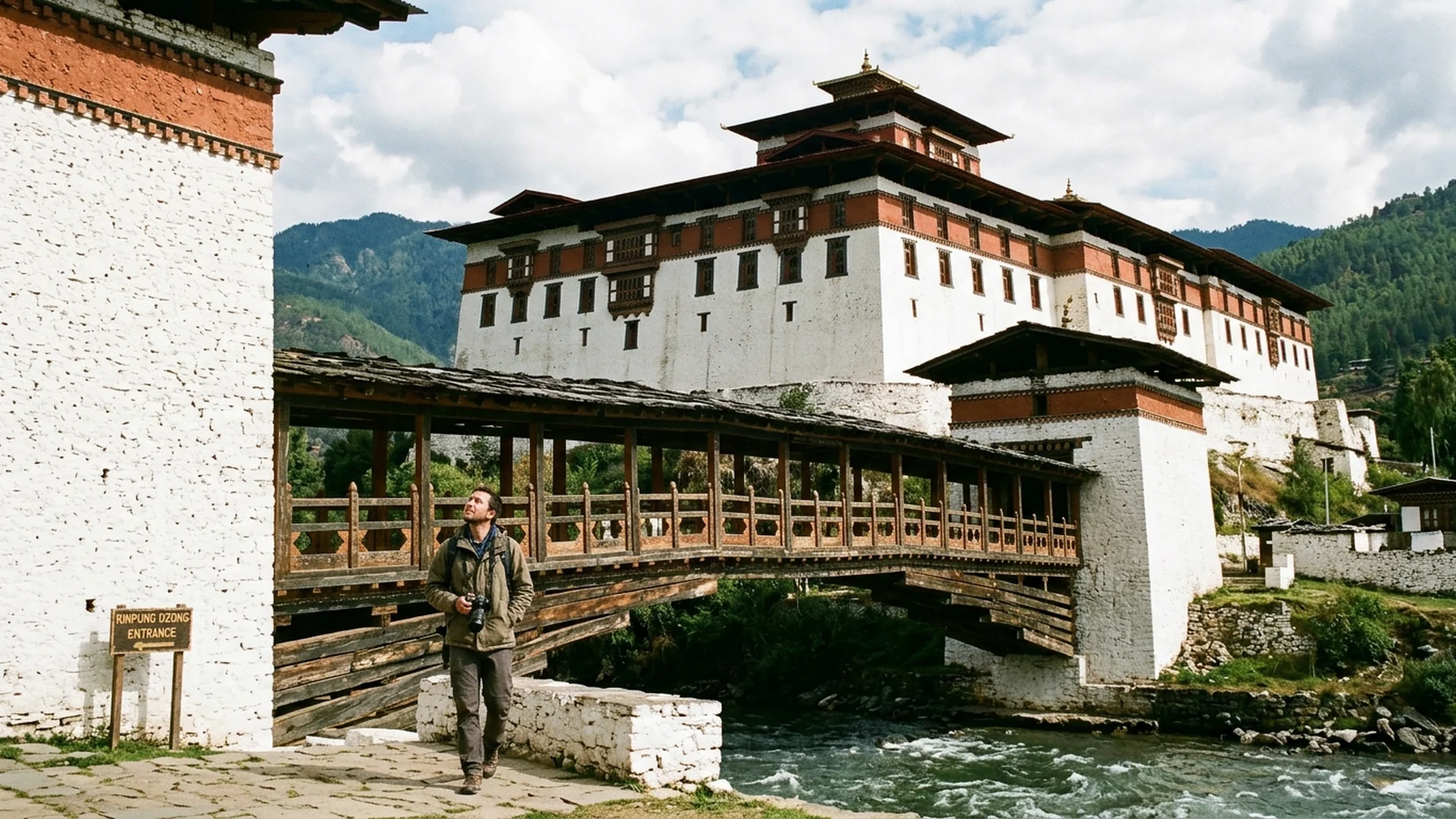
The architectural journey through Paro begins in earnest at Rinpung Dzong, the magnificent fortress-monastery of the Drukpa Kagyu school of Buddhism that rises majestically above the banks of the Paro Chhu. Built entirely without the use of a single iron nail, this masterwork of dzong architecture exemplifies the ingenious engineering of Bhutan’s ancestors. Its soaring, pristine white battered walls stand in striking contrast to intricate, hand-carved woodwork along window frames, silently narrating centuries of defense against external incursions.
Just a short ascent up the hillside rests Ta Dzong, an ancient conch shell-shaped watchtower that has been thoughtfully transformed into the National Museum. Wandering through its dimly lit galleries reveals a curated tapestry of royal artifacts, ancient sacred thangkas, rare coinage, and historic textiles, laying bare the deep cultural roots of the Bhutanese identity. Afterward, a leisurely stroll across Nemi Zam—a traditional cantilever wooden bridge spanning the river—allows travelers to sync their paces with the unhurried, unyielding pulse of local daily life.
Conquering Taktsang (Tiger’s Nest): A Test of Faith and Sky-High Panoramas
No exploration of Paro is truly complete without making the pilgrimage to Taktsang Lhakhang, universally revered as Tiger’s Nest. Clinging precariously to a sheer granite cliff face nearly 900 meters above the valley floor, this sacred sanctuary marks the legendary eighth-century site where Guru Rinpoche arrived upon the back of a flying tigress to subdue malevolent forces and meditate in seclusion.
The winding ascent up the forested mountain is much more than a physical endurance test; it is an introspective journey toward inner tranquility. Setting out before dawn allows climbers to bypass the equatorial sun and the day’s crowds, leaving only the sound of one’s own steady breathing harmonizing with the distant, gentle jingle of packhorse bells. Upon finally reaching the sanctuary’s threshold, the ethereal morning light gilds the whitewashed walls and golden tiered roofs, instantly washing away all physical fatigue and leaving only an ineffable sense of spiritual elation.
The Art of Sanctuary: Global Lodges and Ancient Wellness
Today, the Paro Valley has evolved into an esteemed sanctuary for discerning global travelers, hosting world-class ultra-luxury lodges such as Amankora, COMO Uma Paro, and Six Senses Bhutan. These sanctuaries are sensitively integrated into the surrounding pine forests and terraced paddies, framing uninterrupted natural vistas through expansive, floor-to-ceiling glass.
Following a lengthy trek or an invigorating mountain ascent, nothing restores physical harmony quite like a traditional dotsho (hot stone bath). This time-honored wellness ritual involves river stones heated in an open wood fire until glowing embers, then dropped directly into a fragrant pine timber tub filled with fresh mountain spring water and wild medicinal artemisia leaves. The radiant heat melts away muscular tension while releasing therapeutic mineral compounds, offering a deeply contemplative finale as evening shadows descend across the valley.