As the morning mist gently unfurls across the shoulders of the Eastern Himalayas, the first golden light illuminates the gilded eaves of ancient monasteries clinging impossibly to sheer cliff faces. In the Kingdom of Bhutan, vision is never merely a physical faculty; it is the genesis of visual storytelling. This secluded realm of jagged peaks, intricate timber craftsmanship, and pure Vajrayana Buddhist devotion offers a deeply powerful physical and spiritual dimension.
Documenting Bhutan requires far more than precise camera settings. It demands an attunement to the rhythm of light, the atmospheric density at high altitudes, and a profound reverence for the spirit of place. Every landscape here is steeped in fragility and centuries of history, meaning that capturing masterwork imagery requires both the discerning eye of an artist and an intimate understanding of cultural roots.
This editorial compendium invites discerning global travelers and passionate visual artists into the seven supreme photography coordinates of the kingdom. Discover strategic approaches to the golden hour, architectural framing of majestic dzongs, documentary portraiture, and the ethical standards essential for preserving this immaculate heritage.
Seven Masterpiece Coordinates: From Cliffside Sanctuaries to Waterside Fortresses
A photographic journey through Bhutan is a voyage across dimensions of time and space, anchored by seven extraordinary coordinates that serve as powerful artistic compositions:
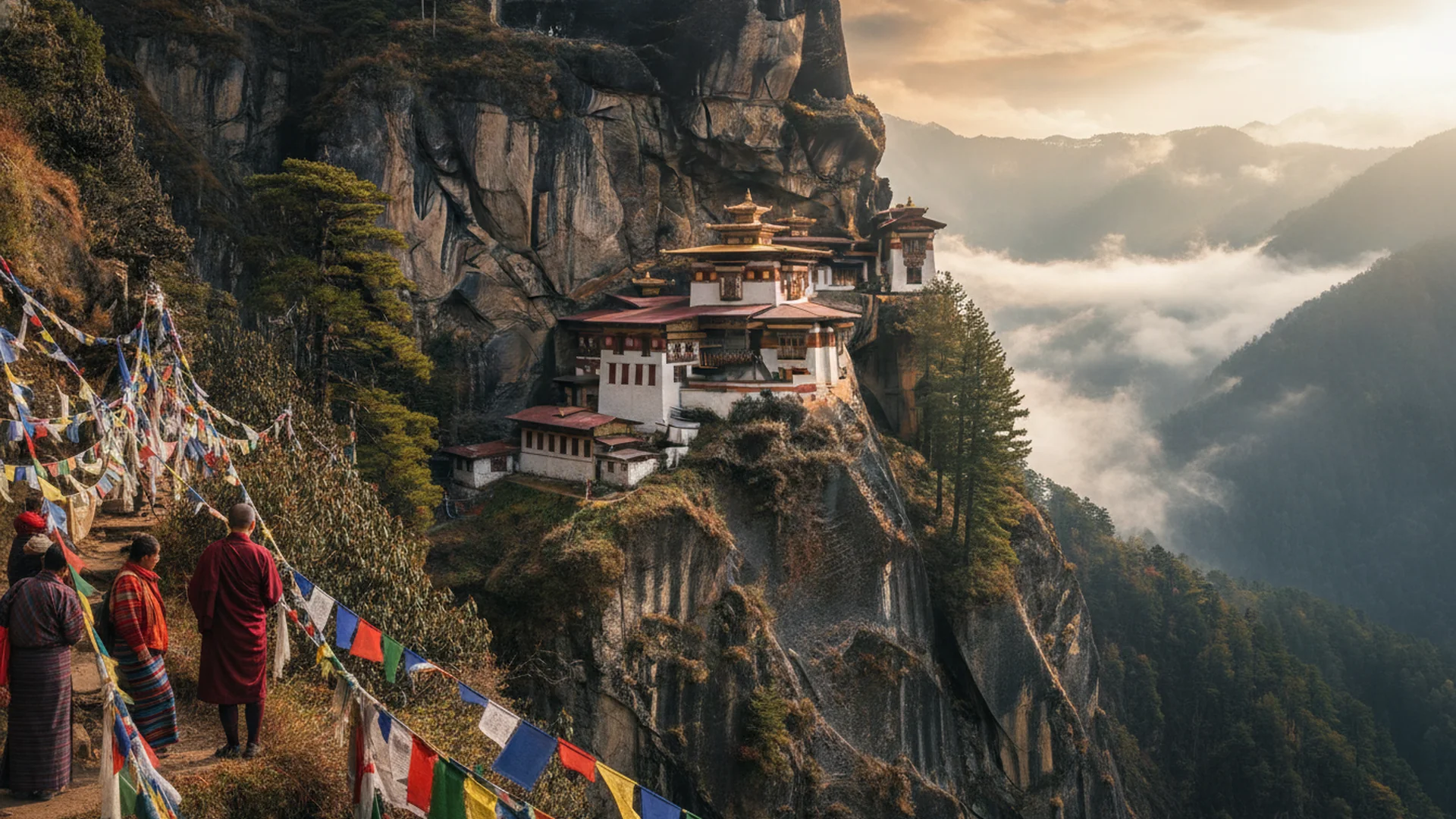
- Paro Taktsang (Tiger’s Nest): The revered sanctuary suspended 900 meters above the Paro Valley floor. Optimal vantage points include the mid-way cafeteria viewpoint and the final curve before descending toward the monastery. Early morning light between 07:30 and 09:00 casts a striking dimensional glow upon the whitewashed masonry against sheer granite cliffs.
- Punakha Dzong: The most majestic fortress-monastery in the kingdom, resting gracefully at the confluence of the Pho Chhu and Mo Chhu rivers. The masterpiece angle involves capturing its reflection from the opposite riverbank. Arriving between April and May frames the dzong in cascading violet jacaranda blossoms.
- Dochula Pass: At an elevation of 3,100 meters, this sacred mountain pass unites 108 memorial chortens (Druk Wangyal Chortens) against a sweeping backdrop of snow-capped Eastern Himalayan peaks. Dawn light accentuates the rhythmic geometry of the stupas amid drifting mountain vapors.
- Buddha Dordenma (Thimphu): A monumental 51.5-meter bronze statue commanding the Kuenselphodrang ridgeline. Sunset is the definitive time to capture the warm radiance washing over the golden deity while overlooking the sweeping expanse of the Thimphu Valley below.
- Rinpung Dzong and Nyamai Zam Bridge: Framing the fortress alongside its traditional covered wooden cantilever bridge creates an arresting composition. The twilight blue hour reveals the dzong illuminated against rippling river reflections.
- Phobjikha Valley (Gangtey): A vast, glacier-carved glacial bowl of profound solitude. During winter (November through February), these golden-brown pastures host rare black-necked cranes, offering minimalist landscapes and wildlife vignettes of rare serenity.
- Chele La Pass: The highest motorable mountain pass in Bhutan at 3,988 meters. Fluttering prayer flags stand defiant against fierce alpine winds, with the majestic Mount Jomolhari rising in the distance—a study in the tension between human devotion and untamed wilderness.
The Science of Himalayan Light, Optics, and Altitude Management
High-altitude photography in Bhutan presents unique physical parameters distinct from low-land environments. Thin, crystalline air elevates ultraviolet indices, frequently introducing atmospheric haze into expansive vistas. A high-grade Circular Polarizer (CPL) filter is indispensable for subduing glare, diminishing haze, and deepening the contrast between sapphire skies and weathered stone.
In terms of optical selection, a minimalist yet comprehensive lens kit remains paramount:
- Ultra-Wide Angle (16-35mm): Essential for capturing the monumental scale of grand dzong architecture within tight courtyards, emphasizing sweeping white perimeter walls and ornate timber corbels.
- Standard Zoom (24-70mm): The ultimate documentary focal length for street storytelling, intricate sacred murals, and capturing human interactions within daily village life.
- Telephoto Zoom (70-200mm): The defining tool for creating Himalayan lens compression, making distant jagged ridges appear monumental and anchoring them directly behind sacred structures.
Managing environmental transitions is equally critical. Between elevations of 2,000 and 4,000 meters, interior and exterior temperatures fluctuate sharply. Moving a camera directly from an air-conditioned vehicle into frigid external air causes condensation on lens elements and sensors. Storing gear within a sealed camera bag to acclimate gradually prevents electronic moisture damage.
Documentary Portraits and Reverence for Cultural Sanctity
The true pulse of Bhutan extends far beyond picturesque panoramas; it resides in the genuine smiles and luminous eyes of its people, reflecting an inner stillness. Approaching portraiture or street photography here demands gentleness and profound respect.
Establishing rapport before releasing the shutter is essential. Begin with a polite local greeting of ‘Kuzu zangpo la’ accompanied by a sincere smile. Direct eye contact and a gentle gesture for permission invite a relaxed, authentic portrait free of tension.
During sacred monastic masked dance festivals, known as Tshechus, held within dzongs nationwide, photographers should position themselves thoughtfully without obstructing the view of local worshippers. Employing a telephoto lens with a wide aperture (such as an 85mm or 135mm) effortlessly isolates masked performers from bustling crowds.
The most vital cultural tenet: Photography is strictly prohibited inside the main sanctums (Lhakhang) of all monasteries and dzongs. When crossing temple thresholds, remove hats and sunglasses as a standard sign of respect. Exterior architectural photography is warmly welcomed provided it never disrupts ongoing monastic prayers.