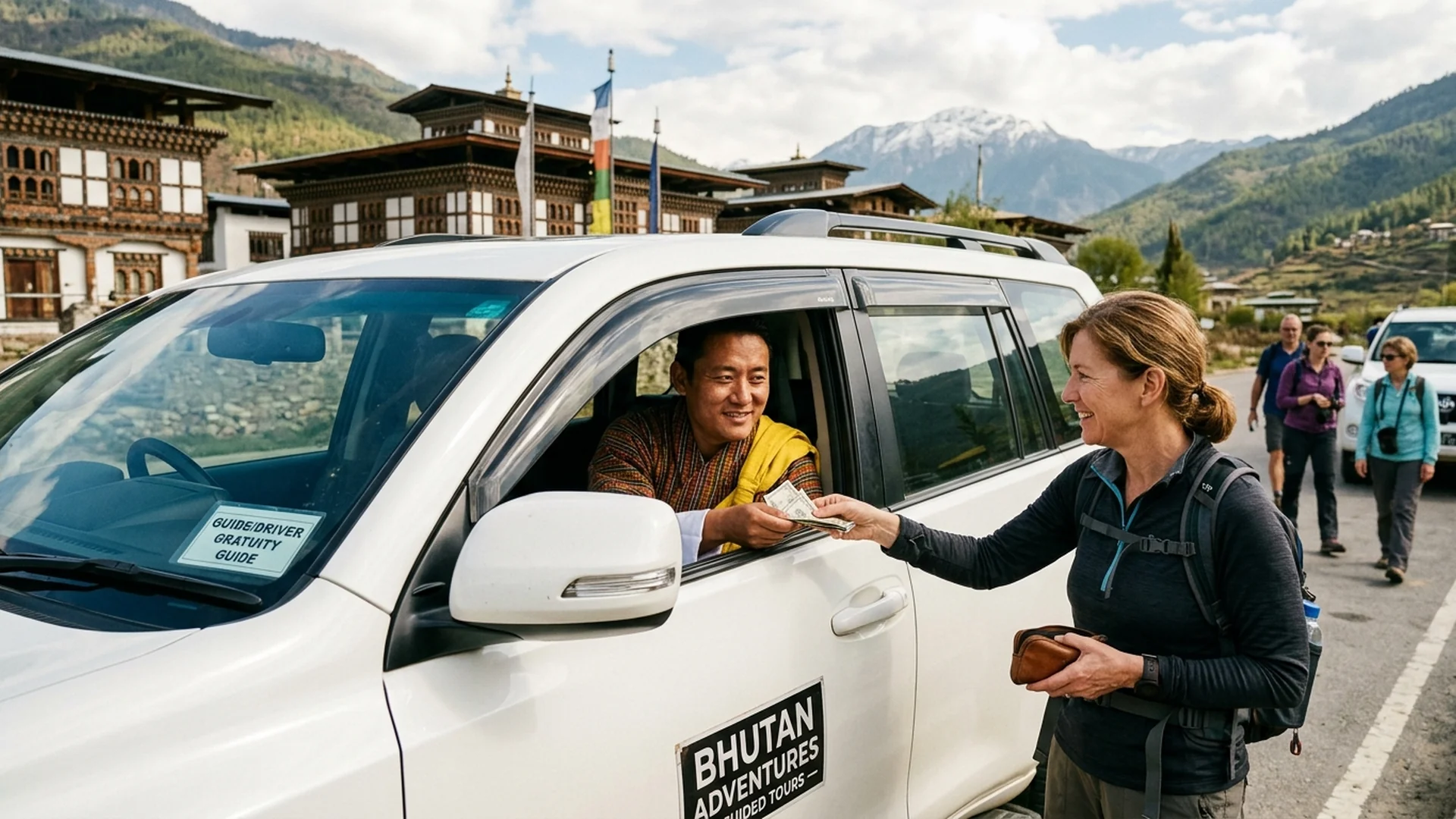
As the morning mist slowly uncurls above the fertile terraces of the Punakha valley, the gentle hum of an all-terrain vehicle navigating the serpentine Himalayan passes comes to rest, accompanied by the warm, unhurried smiles of your dedicated guide and driver. Journeying through the Kingdom of Bhutan—where Gross National Happiness (GNH) serves as the ultimate barometer of progress—invariably leaves an indelible imprint upon the soul. Beyond the soaring snow-capped peaks and ancient architecture, it is the profound human connection forged with those who unlock this secluded sanctuary that resonates most deeply.
Yet, for the discerning international traveler, a delicate question invariably arises: how best to express appreciation through the custom of tipping, ensuring the gesture remains both culturally harmonious and deeply respectful? In this tranquil Himalayan realm, a gratuity transcends mere financial compensation. Instead, it serves as a tactile symbol of mutual respect and an acknowledgment of the shared journey—gracefully woven into the inherently humble and gracious fabric of Bhutanese daily life.
The Economic Landscape and the Deeper Meaning of the Envelope
Embarking upon a journey to Bhutan requires careful fiscal planning, notably the remittance of the Sustainable Development Fee (SDF) directly to the royal government. This essential levy supports vital infrastructure, free public education, and healthcare for local citizens. However, these governmental contributions do not directly subsidize the daily operational income of the front-line personnel—such as private cultural guides and chauffeurs—who ensure your safety, comfort, and intellectual enrichment throughout the expedition.
Within the deeply spiritual milieu of Bhutanese society, your guide and driver function as genuine cultural ambassadors. They are far more than mere logistics coordinators; they are perceptive narrators who interpret the subtle tenets of Vajrayana Buddhism, decode the imposing architecture of ancient dzongs, and illuminate a simpler, more mindful way of being. Offering a gratuity is thus a heartfelt reciprocal gesture honoring their expertise, patience, and the days spent away from their own families to curate your seamless passage.
Premium Standards and Thoughtful Budget Calibration
For luxury and discerning travelers alike, establishing a gratuity budget should mirror the exceptional quality of service and personal resonance experienced along the way. Universally accepted benchmarks for private journeys in Bhutan are thoughtfully structured as follows:
- Cultural Guides: Recommended between 10 and 15 United States Dollars (USD) per day for private itineraries or intimate parties.
- Professional Drivers: Recommended between 5 and 10 United States Dollars (USD) per day, recognizing the extraordinary focus, technical skill, and composure required to navigate high-altitude, precipitous mountain roads.
Should your journey be elevated by unexpected moments of grace—such as a guide who unlocks rare historical insights or a driver who negotiates challenging weather with consummate smoothness—modestly increasing these figures is a wonderful way to honor their dedication and invite a radiant smile.
The Etiquette and Grace of Presentation
Beyond the monetary figure itself, the manner of presentation remains paramount in reflecting the traveler’s refinement. Across Asian and Bhutanese traditions, handing over money or objects with bare hands can appear overly casual. Procuring clean, crisp envelopes specifically designated for this purpose is an essential initial consideration.
Always maintain separate envelopes for your guide and your driver, discreetly inscribed with their names, and present them privately toward the conclusion of your voyage—frequently during the farewell dinner or upon your departure at Paro International Airport. When offering the envelope, extend it using both hands with a slight, respectful bow of the head, accompanied by the traditional Dzongkha expression of gratitude: ‘Kadrinchey la’ (thank you). This simple, elegant gesture completes the travel narrative with a profound sense of closure and mutual warmth.