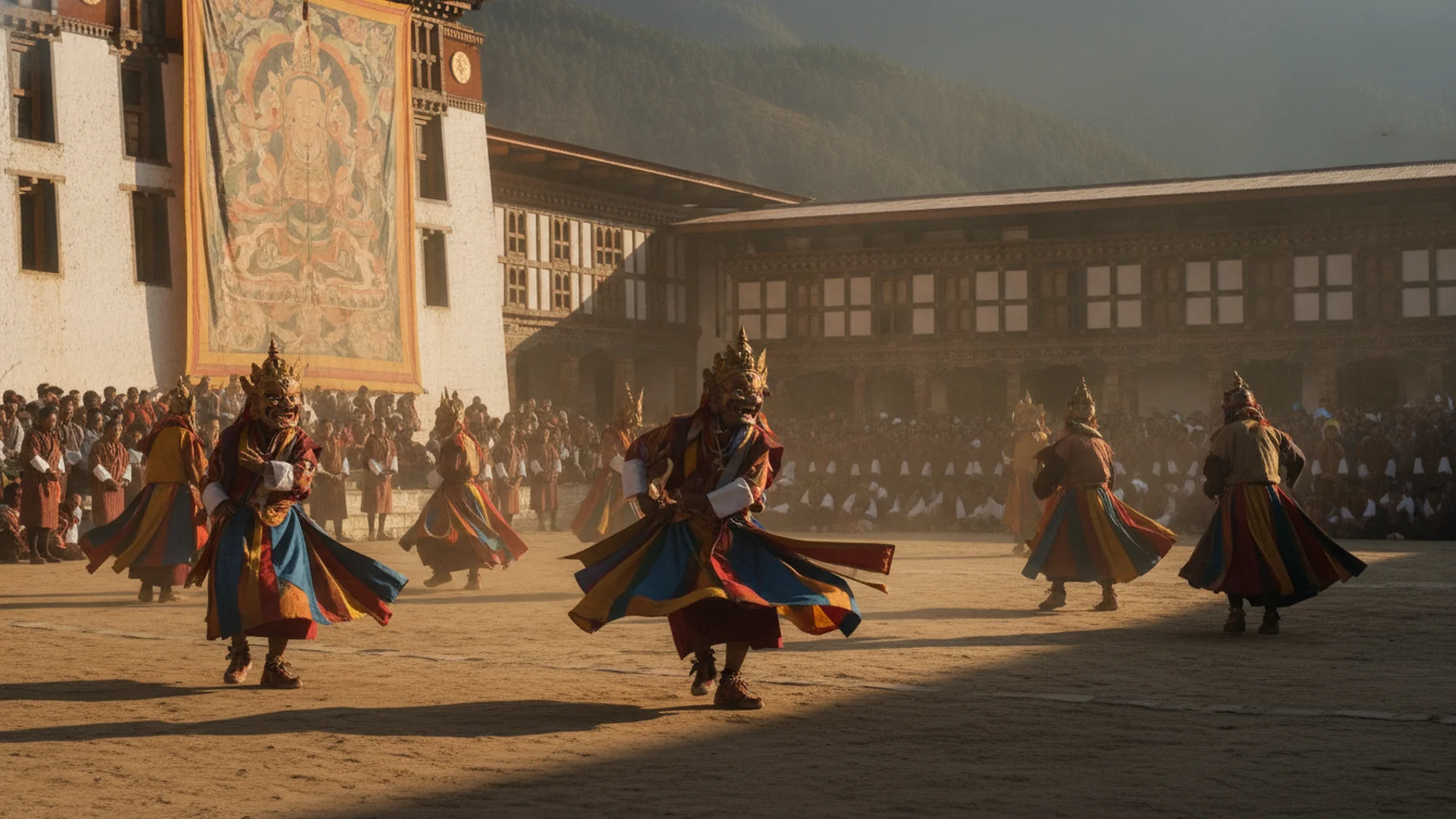
When the first morning light washes over the ancient granite cliffs cradling the majestic Rinpung Dzong in Paro, Bhutan, the reverberating drone of long brass horns known as dungchen echoes across the valley. This harmonic summons draws a quiet, reverent procession of locals adorned in vibrant traditional textiles toward the fortress courtyard. At this exact juncture, the veil of time gently parts, inviting discerning travelers into an ethereal convergence of the mortal realm and sacred sanctuaries during the Paro Tshechu—the Kingdom of Bhutan’s most culturally profound and resplendent celebration.
Amidst drifting spirals of ceremonial incense and the deep, resonant chanting of resident monks, journeying to the Dragon Kingdom during this vibrant spring epoch transcends conventional sightseeing. It becomes an authentic spiritual pilgrimage, anchored in the profound philosophy of Gross National Happiness (GNH) mirrored in every genuine smile and steadfast devotion of the Bhutanese people. This rarefied experience is seamlessly elevated by world-class hospitality, marrying centuries-old Vajrayana Buddhist traditions with the refined, understated comforts of ultra-luxury mountain resorts.
The Philosophy Behind Sacred Masks and Rhythmic Devotion
Throughout the festival days within the ancient courtyards of the dzong, the Cham mask dances unfold to the hypnotic cadence of resonant drums and clashing cymbals. The intricately carved wooden masks—depicting benevolent deities, fierce protectors, and mythical beasts—are far more than masterworks of sacred craftsmanship; they serve as living embodiments of elemental forces and inner consciousness. Monks and trained lay practitioners transform into sacred archetypes, executing symbolic choreography designed to subjugate malevolent spirits and herald prosperity across the realm. Observing these mesmerizing motions against the crisp Himalayan air offers a direct portal into the profound dimensions of Vajrayana Buddhism.
Pre-Dawn Illumination: The Moment of Encounter with the Thongdrel
The crescendo of the Paro Tshechu arrives in the stillness before sunrise on the final morning of the festival. A monumental applique silk thangka known as the Thongdrel, depicting Guru Rinpoche, is solemnly unfurled down the towering whitewashed walls of the fortress. The breathtaking intricacy of ancient silk embroidery catching the amber rays of dawn creates an unforgettable spectacle. According to sacred tradition, merely gazing upon the Thongdrel without touching it cleanses the soul of lifetimes of accumulated obscurations, leaving an indelible imprint on every traveler fortunate enough to witness it.
The Aesthetics of Repose: Ultra-Luxury Sanctuaries in the Paro Valley
Balancing the profound intensity of this legendary festival is effortless when retreating to the ultra-luxury sanctuaries nestled quietly within the pine-clad folds of the Paro Valley. Properties like Amankora blend harmoniously into the surrounding alpine landscape and local villages, while Six Senses Bhutan frames panoramic vistas of ancient fortresses from private cantilevered terraces. After long days spent immersed in the vibrant pageant of the courtyard, returning to intuitive holistic spa treatments and traditional Bhutanese hot stone baths—where river stones heated over blazing fires are dropped into wooden tubs—restores physical and spiritual equilibrium with exquisite grace.