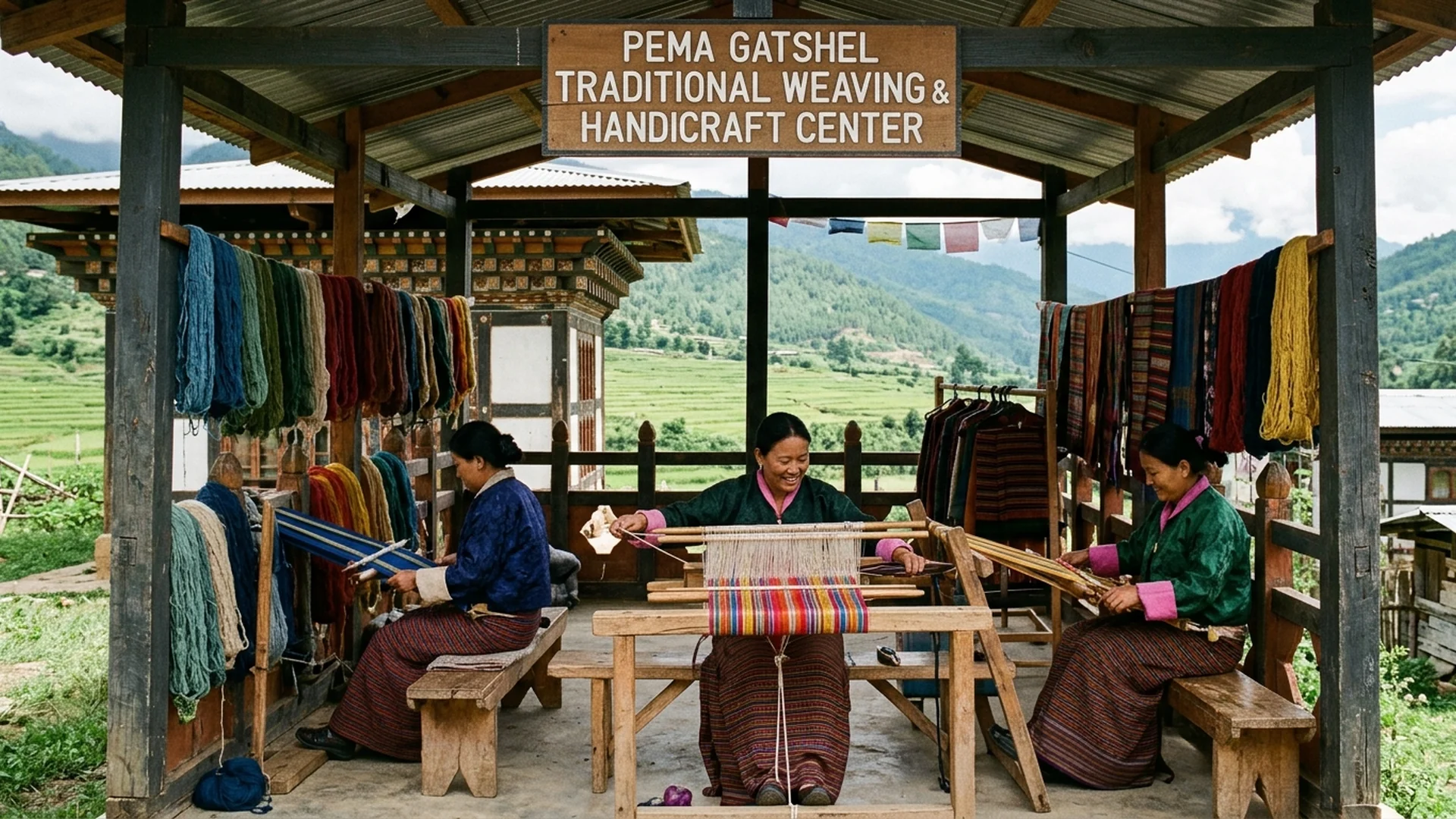
When crossing the threshold beyond the familiar western arteries of the Druk Kingdom, the topography shifts dramatically into a labyrinth of mist-draped ridges and primeval broadleaf forests. Here lies Pema Gatshel, a lyrical moniker translating directly to ‘The Blissful Valley of Lotuses’—a sanctum cradled by unwavering devotion and untouched wilderness.
For the discerning traveler seeking resonance far beyond conventional itineraries, Pema Gatshel remains an exquisite hidden gem. Untouched by the frenetic pace of modernity, this eastern bastion preserves the steady heartbeat of ancestral traditions, where morning prayers echo across high-altitude monastic sanctuaries and the hospitality of eastern Bhutanese villagers is as genuine as the mountain air.
Yongla Goemba and Druk Migyur Dechen Dzong: The Spiritual Pillars of the Ridge
The lofty ridges of Pema Gatshel serve as ethereal bridges between the earthly realm and celestial heavens. Atop these elevations stands Yongla Goemba, one of the most revered and ancient monasteries in Eastern Bhutan. Established in the 18th century and deeply intertwined with the spiritual legacies of Jigme Singye and esteemed lineage masters, the interior is perpetually fragrant with burning juniper and flickering butter lamps that cast a golden glow across centuries-old murals.
Not far away rests the Druk Migyur Dechen Dzong, the regional fortress that anchors contemporary administrative and spiritual life with timeless architectural grace. More than a seat of governance, this fortress functions as the communal heart where monks and villagers converge for sacred holy days, illustrating an unbroken harmony between daily existence and spiritual devotion.
An Enduring Heritage: Bura Silk Weavers and Sacred Instrument Makers
What truly distinguishes Pema Gatshel from its western counterparts is its status as a reservoir of master artisans. Local communities are internationally celebrated for their production of ‘Bura,’ the indigenous raw silk of Bhutan, characterized by complex geometric motifs and harmonious natural dyes. Each woven textile represents weeks of contemplative patience and generational artistry.
Additionally, Pema Gatshel stands as a primary sanctuary for crafting traditional Buddhist ritual instruments, including the ‘Jaling’ (traditional Tibetan oboe) and the ‘Dhung’ (sacred long horn). The resonant, haunting tones of these instruments—heard during annual tshechu festivals—originate directly from the workshops of devout local craftsmen. Visiting these studios offers an exceptionally moving glimpse into living heritage.