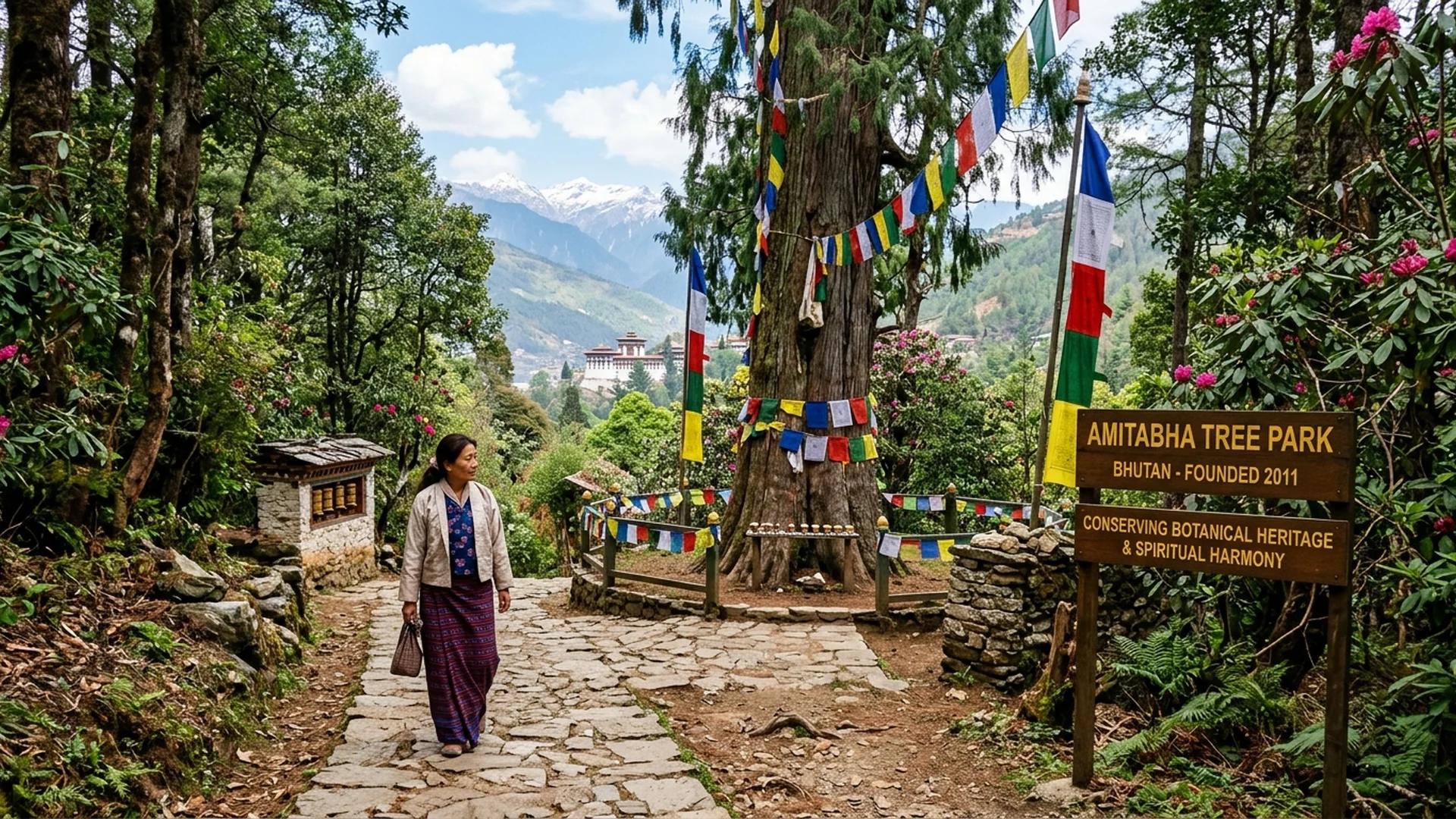
As the morning mist slowly lifts from the fertile valleys of Thimphu, the soft whisper of the wind moving through towering Himalayan pines and changing foliage sounds remarkably like an ancient chant blessing this sacred landscape. Bhutan is rarely experienced merely as a holiday destination; rather, it serves as an expansive living classroom where ecology and spirituality are inextricably entwined. Within the serene expanse of Amitabha Tree Park, this union finds exquisite expression. The verdant sanctuary does not merely curate precious indigenous flora; it acts as a physical manifestation of Sukhavati, the Pure Land of Buddha Amitabha, where peace, beauty, and wisdom blossom in tandem with every mindful footstep of the traveler.
Nestled high in the Eastern Himalayas, the park offers an unhurried immersion into a realm governed by Gross National Happiness, a philosophy asserting that spiritual and ecological well-being form the most enduring foundation for human life. Here, away from the frantic pace of the modern world, the traveler is invited into a profound stillness, surrounded by ancient forests that have stood as silent sentinels for centuries. It is an invitation to pause, breathe, and attune oneself to the quiet majesty of the roof of the world.
Buddhist Philosophy Behind the Botanical Haven: The Roots of Tranquility
In Mahayana Buddhist scripture, Buddha Amitabha presides over Sukhavati, the Western Pure Land—a realm of supreme bliss characterized by lush foliage, celestial blossoms, and the soothing symphonies of nature that refine the minds of all who perceive them. The creation of Amitabha Tree Park in Bhutan transcends conventional landscape architecture; it is an intentional terrestrial mirroring of this heavenly sanctuary. Every indigenous tree, carefully placed boulder, and meandering pathway has been selected and tended with a deep reverence for sentient life. This dedication echoes the national ethos of Gross National Happiness, which posits that ecological integrity and spiritual enrichment are inseparable components of a harmonious society.
Himalayan Biodiversity: A Living Classroom in the Valley
Beyond its profound spiritual dimensions, the botanical park functions as an essential natural history repository for the Kingdom. The crisp, high-altitude alpine climate of Thimphu fosters the growth of delicate endemic species rarely witnessed elsewhere. Travelers encounter stately Himalayan blue pines, seasonal flowering shrubs, and ancient ferns thriving beneath damp, mossy canopies. Wandering along the park’s tranquil nature trails offers a rare opportunity to observe shifting micro-ecosystems, listen to native alpine avifauna, and absorb the grounding, therapeutic scent of rich earth and pine needles—a sensory antidote to urban fatigue.
The Aesthetics of Silence: The Art of Slow Travel and Mindfulness
Unlocking the true depth of Amitabha Tree Park demands the adoption of slow travel. By relinquishing urgency and engaging all five senses in unison, visitors align themselves with the rhythm of the mountains. The park’s layout deliberately incorporates secluded alcoves designated for contemplative stillness or moments of quiet appreciation as sunlight filters through the upper canopy onto the forest floor. Breathing in the pristine mountain air amidst such profound silence represents the pinnacle of modern luxury travel: a journey that genuinely rejuvenates the spirit and restores lasting equilibrium to body and mind.