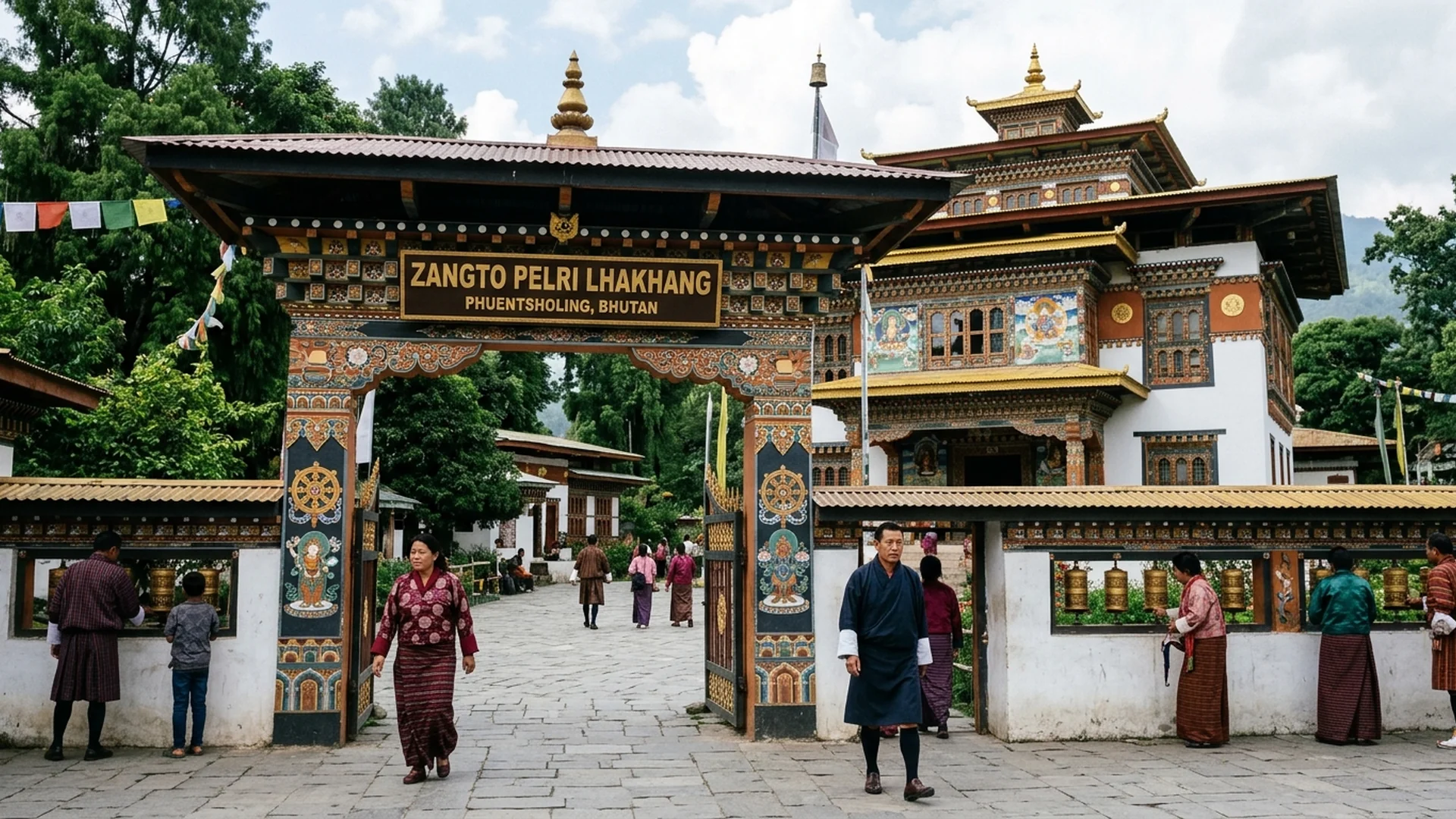
Crossing the threshold from the bustling lowlands into the sovereign kingdom of the Thunder Dragon, travelers often treat Phuentsholing merely as an administrative portal on their way onward to Thimphu or Paro. Yet, nestled at the quiet heart of this border town lies a profound spiritual sanctuary: Zangto Pelri Lhakhang. More than a mere house of worship, this exquisite temple is an architectural embodiment of Zangdok Palri—Guru Rinpoche’s glorious copper-colored mountain paradise—meticulously brought to life in the human realm.
To visit this sanctuary is far more than an exercise in sightseeing; it is an invitation to pause time and attune oneself to an ancient cadence of faith. Surrounded by manicured botanical gardens and the gentle, rhythmic turning of prayer wheels, every step here serves as a contemplative initiation. It offers discerning travelers a tranquil entry into the Kingdom of Gross National Happiness, clearing the mind to fully absorb the wondrous mysteries of Bhutan.
The Three-Tiered Sanctuary: Decoding the Architecture of Zangdok Palri
The striking structural silhouette of Zangto Pelri Lhakhang in Phuentsholing is meticulously crafted in accordance with Vajrayana Buddhist cosmology, mirroring the mythical glorious copper mountain where Guru Rinpoche presides. Its three distinct tiers correspond to ascending realms of spiritual realization.
The ground floor represents the Nirmanakaya, the emanation body. Here, vibrant murals hand-painted in classical Bhutanese royal artistic traditions vividly recount the life of the historical Buddha alongside the epic journeys of Guru Rinpoche as he established the Dharma across Himalayan terrain. Every brushstroke reveals an uncompromising dedication to sacred detail.
Ascending to the second tier, which signifies the Sambhogakaya or enjoyment body, one encounters serene representations of Amitabha Buddha and principal bodhisattvas. The atmosphere here grows noticeably hushed and intimate, gracefully inviting silent contemplation and focused meditation. The uppermost third tier embodies the Dharmakaya, representing the absolute truth, boundless space, and the purity of primordial wisdom. Ascending through these levels mirrors the practitioner’s inner journey, gently lifting the consciousness away from worldly noise.
Sacred Art and Iconography: The Heartbeat of Devotion in Phuentsholing
The sacred halls of the temple are permanently steeped in the comforting aromas of traditional herbal incense and consecrated yak butter lamps. Among its most precious treasures are masterfully sculpted representations of Guru Rinpoche in his eight principal manifestations (Guru Tshengye), each depicting a vital chapter of his enlightened activity to subdue ignorance and liberate sentient beings with boundless compassion.
These expressions of sacred art are far from mere museum artifacts; they remain the beating heart of local devotion. Morning and evening, townsfolk gather here to offer prostrations and quiet prayers. The ambient hum of low-pitched chanting, interwoven with the soft chiming of bells and the revolving revolutions of copper prayer wheels outside, creates an acoustic tapestry that effortlessly quiets the restless modern mind.
Botanical Serenity: An Urban Oasis of Calm at the Border
Beyond the hallowed walls of the main sanctuary, the temple grounds are embraced by impeccably manicured botanical gardens. Mature shade trees, immaculate stone walkways, and seasonal floral beds transform this enclave into a peaceful sanctuary amidst the urban border town.
Discerning travelers often favor the late afternoon hours for a leisurely kora (circumambulation) around the temple, spinning each brass prayer wheel with mindful intention. This graceful, unhurried ritual not only accumulates merit according to Bhutanese tradition but also provides a precious opportunity for introspection, allowing visitors to slow their inner pulse and absorb a profound stillness rarely found in contemporary global travel.