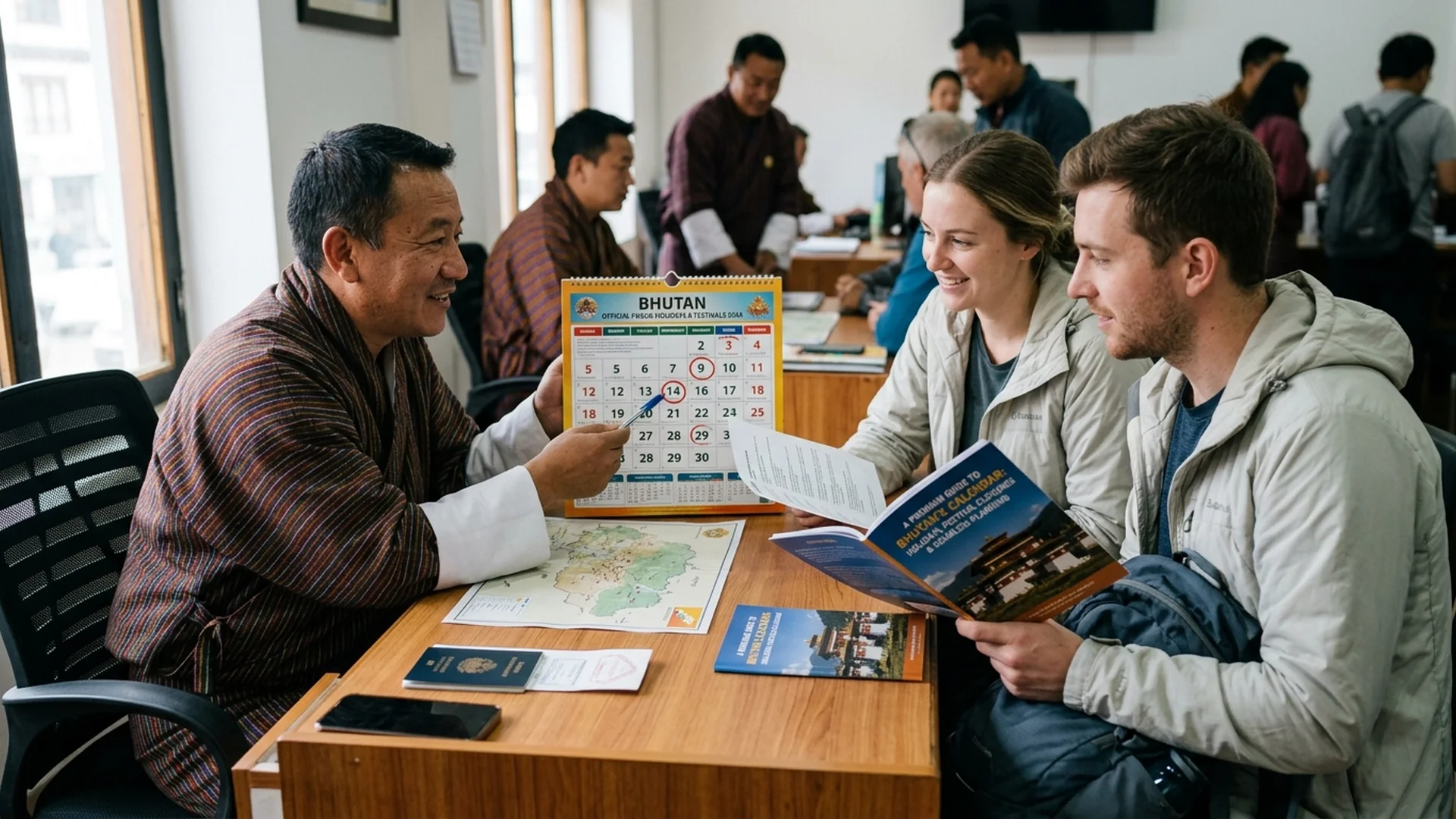
A journey to the Kingdom of Bhutan, the legendary land of the Thunder Dragon, arrives coupled with quiet expectations of stillness, high-altitude mysticism, and monumental fortress architecture. Yet for the discerning traveler attentive to the minutiae of schedules, comprehending the temporal pulse of this culturally singular nation remains paramount. It is the vital key that transforms a dream expedition into an impeccably smooth voyage. Bhutan’s calendar does not march solely to the universal solar drum; rather, it is intricately woven with ancient lunar cycles that shift sacred observances and public holidays from year to year. Stepping unawares into a major national holiday might reveal locked museum doors, dormant banking institutions, or arterial mountain roads temporarily redirected for royal processions.
Yet, from the perspective of the high-net-worth traveler, these holidays and festivals are rarely inconveniences to be sidestepped. Instead, they present golden opportunities to access the authentic spiritual core of Bhutanese life. This editorial explores the architecture of Bhutan’s holiday calendar, distinguishing between closures that disrupt itineraries and world-class cultural celebrations such as the sacred Tshechu. We offer insider protocols designed to ensure your sophisticated sojourn unfolds with flawless grace.
Decoding the Bhutanese Lunar Calendar: Why Holidays Shift
While the Western world anchors itself to the Gregorian grid, Bhutan preserves an enduring intimacy with the celestial phases of the moon. Major religious observances—such as Lhabab Duechen, commemorating the Buddha’s descent from heaven—are calculated according to ancient astrological texts. Consequently, these dates shift by roughly ten to eleven days each solar year.
For the discerning voyager, acknowledging this fluidity forms the absolute first line of strategic planning. To construct an itinerary without consulting the lunar register risks arriving at the imposing timber doors of an ancient Dzong—a fortified monastery-fortress—only to find it closed to the public for internal monastic rites. Cultivating intellectual flexibility and collaborating with local specialists who possess precise command over time and tradition remains an indispensable professional strategy.
The Delicate Balance: Navigating Obstacles Versus Tshechu Opportunities
Public holidays in Bhutan fall into two distinct categories: civil commemorations honoring the monarchy and the state, and sacred religious festivals. National milestones such as the Birth Anniversaries of the Kings or National Day on December 17th blanket the country in profound patriotism, marked by grand parades and civil celebrations that may occasionally restrict inter-valley transit.
Conversely, sacred mask dance festivals, known as Tshechus—such as the renowned Thimphu Tshechu or Paro Tshechu—offer peerless windows into cultural anthropology. The vision of monks and laymen draped in superlative hand-woven silks, wearing intricately carved wooden masks representing deities and protective wrathful figures, moving in cadence to archaic drums and long horns, embodies Gross National Happiness made visible. Standing quietly amidst these ancient pageants yields intellectual depth far surpassing conventional sightseeing.
Mastering Closures: An Insider’s Guide to Seamless Travel
When national holidays or auspicious religious days arrive, Bhutan descends into a profound, contemplative quiet. Local boutiques, financial institutions, and administrative offices close their doors in unison. For the refined traveler, early preparation is essential.
Securing an adequate reserve of the local Ngultrum or US dollars prior to extended holidays is an absolute necessity, as exchange services halt entirely. Furthermore, structuring holiday itineraries around pristine nature walks, meditative alpine hikes, or secluded wellness resorts rather than bureaucratic monuments or state museums ensures that your journey maintains its tranquil, unhurried cadence.