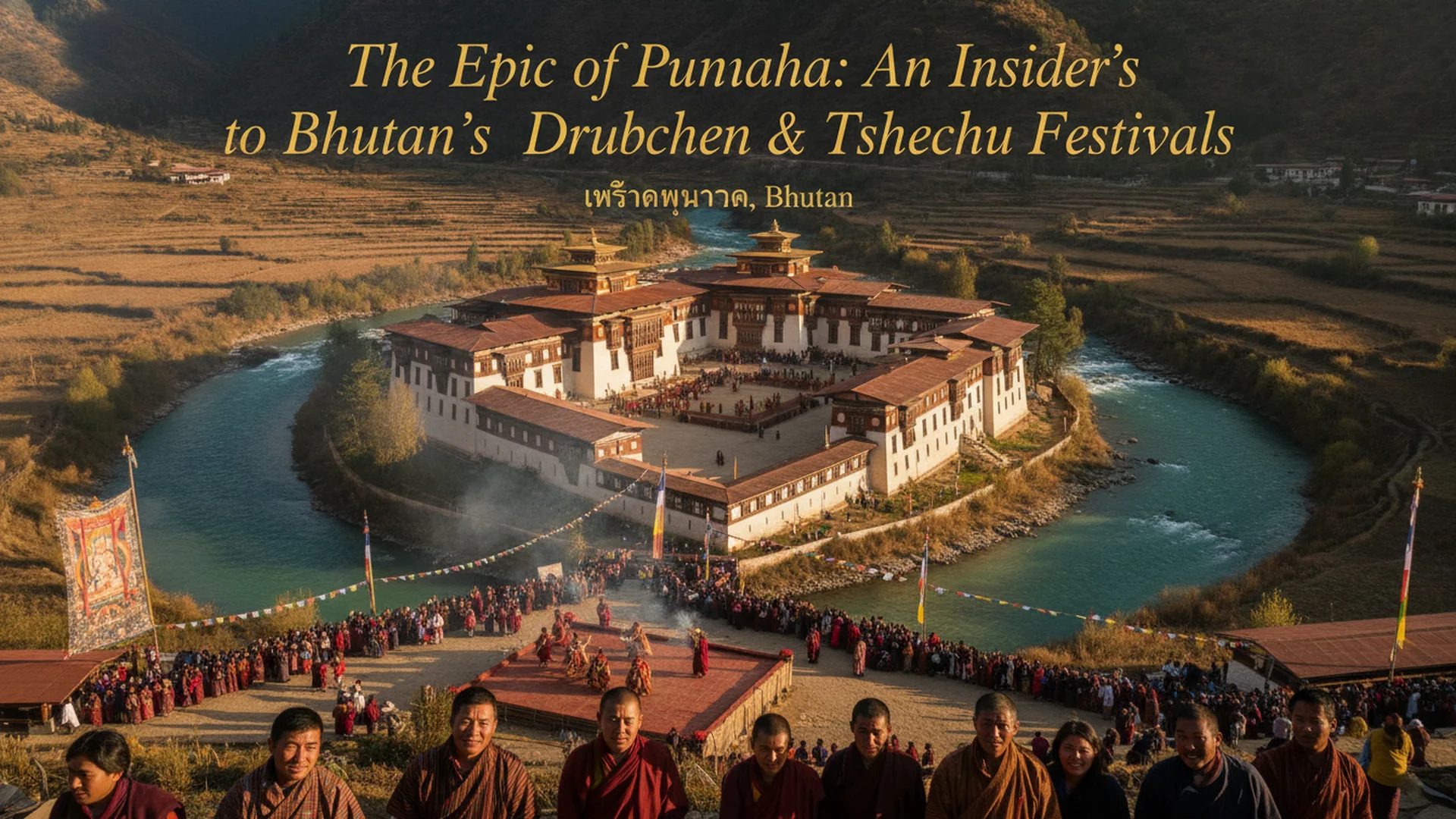
Where the glacial waters of the Pho Chhu and Mo Chhu rivers converge beneath the immaculate white ramparts and crimson-and-gold woodwork of an ancient fortress, Punakha Dzong stands as a masterwork of 17th-century Himalayan architecture. Yet, beyond its physical majesty, it serves as the grand outdoor stage for the kingdom’s most spellbinding spiritual pageantry.
Stepping beyond conventional itineraries brings the discerning traveler into a living tapestry where history and profound faith entwine. As spring unfurls across the valley, the crisp air echoes with the sonorous resonance of ancient horns, the steady beat of ceremonial drums, and the rhythmic march of the Pazaps—the historic warrior vanguard who once defended the sovereign valleys. Here, the breath of antiquity remains vibrantly alive, offering an encounter that resonates deeply with the global traveler seeking authentic cultural resonance.
Warrior Legacy and Sacred Rites: Deconstructing Drubchen and Tshechu
The grand festival cycle of Punakha is not merely a seasonal celebration, but a profound dual expression of temporal defense and spiritual transcendence. It commences with Punakha Drubchen, a living reenactment of the 17th-century victory over foreign invaders. The emotional heart of the Drubchen is the ceremonial procession of the Pazaps—local militia arrayed in archaic military regalia, bearing simulated weaponry and victory banners. Their determined cadence honors the valor and self-sacrifice of Bhutanese forebears who safeguarded this sanctuary.
This historical martial tribute seamlessly yields to Punakha Tshechu, a jubilation of faith defined by sacred Cham mask dances. Performed by ordained monks and ritual specialists attired in intricate garments representing deities, benevolent spirits, and mythic guardians, these kinetic meditations symbolize the subjugation of inner defilements and the bestowal of divine protection upon the realm.
Architecture of the Confluence: The Timeless Grace of Punakha Dzong
Known formally as Pungthang Dechen Phodrang Dzong—the Palace of Great Happiness—Punakha Dzong was established in 1637 by Zhabdrung Ngawang Namgyel, the visionary unifier of Bhutan. Sited with deliberate geomantic precision at the confluence of the Pho Chhu (Father River) and Mo Chhu (Mother River), the fortress commands the valley with serene authority.
During the festival season, the towering whitewashed perimeter walls and expansive courtyards bloom with vibrant monastic banners and the luminous textiles of attendees in formal national dress. Morning sunlight catches the golden crowning finials of the Utse (central tower), casting gilded reflections upon the crystalline waters below—a masterclass in the integration of monumental architecture with pristine natural geography.
The Art of Refined Travel: Harmonizing Nature and Sanctity
Engaging with the Punakha festivals from a luxury perspective invites an unhurried awakening of the senses. Beyond the sacred precincts of the dzong, the valley unfurls in emerald rice terraces, pine forests, and quiet agrarian hamlets. Sophisticated travelers often spend afternoons traversing one of the kingdom’s longest suspension bridges or visiting Chimi Lhakhang, the revered temple of fertility nestled amid pastoral fields.
This aesthetic journey finds its residential counterpart in elite sanctuaries such as COMO Uma Punakha. Perched dramatically on a forested ridge overlooking the curving Mo Chhu river and terraced slopes below, such properties offer profound seclusion, bespoke hospitality, and an uncompromising harmony with the sublime Himalayan environment.