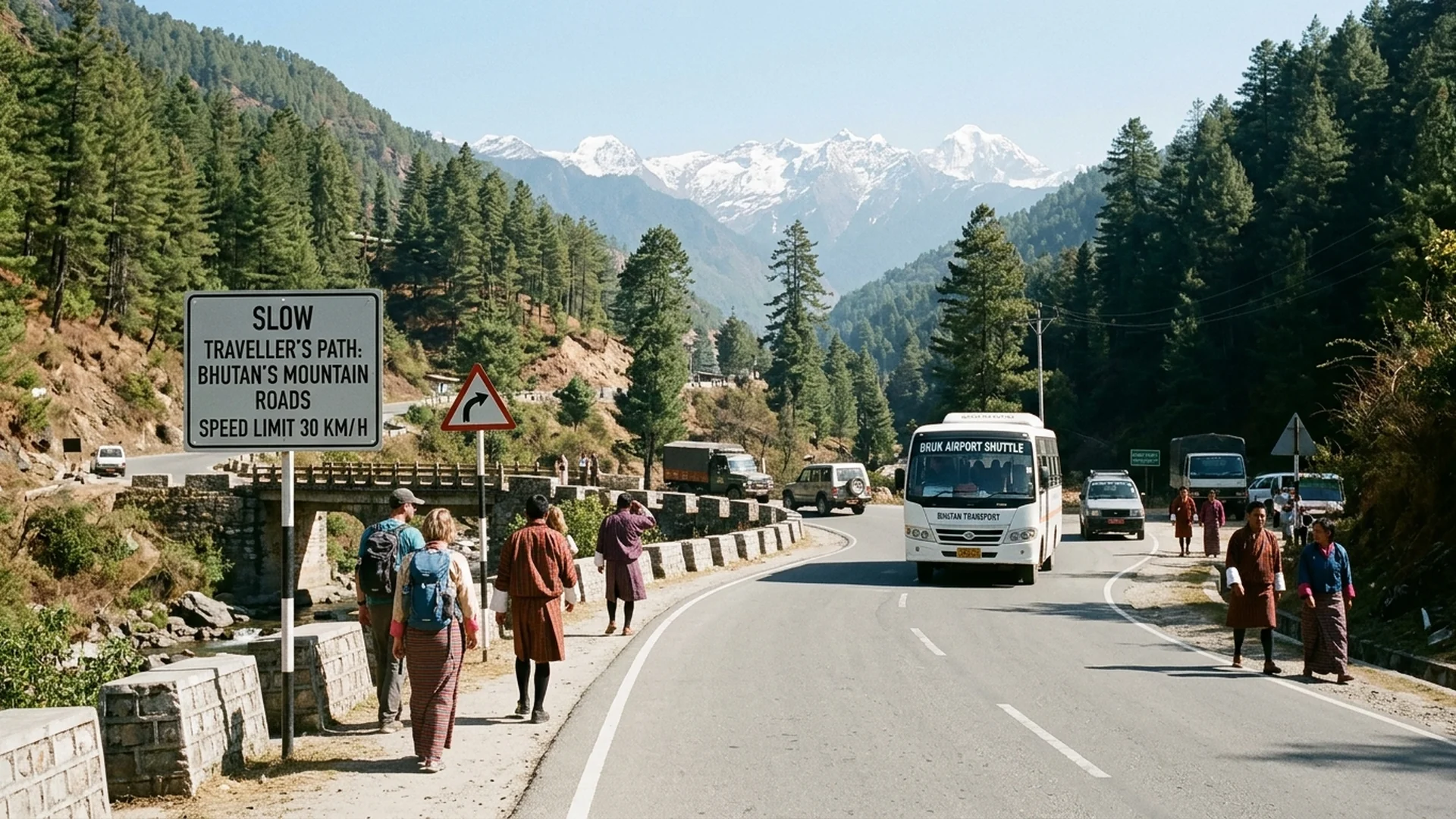
As the wheels of your vehicle navigate the final mountain curve into the heart of Thimphu, the capital of the Kingdom of Bhutan, the first detail that commands attention is not towering billboards nor blinking neon lights. Instead, it is an orderly, resonant tranquility—a realm where time itself moves at a gentler, more deliberate cadence. Here, not a single red, yellow, or green traffic light exists. Yet, circulation flows with mesmerizing grace, guided entirely by the fluid, dance-like gestures of traffic officers stationed at the intersections. This phenomenon is far from a mere geographical curiosity; it serves as a profound reflection of the Gross National Happiness philosophy seamlessly woven into daily street life.
For the discerning traveler traversing Bhutan, moving from one verdant valley to the next is never merely a mechanical relocation from point A to point B. It is an inward, meditative pilgrimage across the monumental topography of the Himalayas. Along winding cliffside routes and soaring mountain passes, understanding local driving etiquette, strict safety regulations, and the necessity of elite private vehicles with veteran local chauffeurs is paramount. It is the definitive key to transforming anxiety over alpine terrain into an exceptionally refined, peaceful, and secure voyage.
The Charm of Stillness: Why Thimphu Remains a Capital Without Traffic Lights
Years ago, an attempt was made to install conventional electric traffic signals in Thimphu to accommodate a growing number of automobiles. Within days, however, the lights were removed and replaced once more by ornate, traditional pagoda-style police booths. The consensus among the Bhutanese was unequivocal: the harsh glow and mechanical signals disrupted the spiritual serenity and pristine aesthetic of the city.
The absence of traffic lights breeds no chaos. On the contrary, the officers directing traffic from the center of intersections act as artistic practitioners, relying on intuition, compassion, and an innate understanding of real-time movement to harmonize vehicles and pedestrians. Their elegant gestures and welcoming smiles embody a culture of mutual care—the very cornerstone of Bhutanese society. From the moment of arrival, visitors are enveloped in a palpable sense of safety and genuine hospitality.
Conquering Himalayan Curves: Premium Vehicle Standards and Local Expertise
Bhutan’s topography is an intricate labyrinth of majestic Himalayan peaks. Every route—whether linking Paro International Airport to the capital of Thimphu or winding toward the fertile valley of Punakha—features sharp hairpin turns, steep gradients, and segments hugging sheer precipices. Consequently, vehicle selection is a critical consideration for a high-end itinerary.
The golden standard for secure exploration involves high-performance luxury SUVs or meticulously maintained VIP luxury coaches equipped with robust powertrains suited for steep ascents. Furthermore, strict national regulations mandate that travelers must be accompanied exclusively by certified Bhutanese tourism drivers. These professionals are far more than chauffeurs; they are alpine specialists intimately familiar with local microclimates, seasonal road conditions, and the delicate art of smooth mountain navigation, ensuring passengers remain entirely at ease through every switchback.
Decoding Speed and Regulations: Prioritizing Absolute Safety
While Bhutan is a sanctuary of relaxation, the government enforces rigorous standards regarding road safety. Speed limits across intercity highways are kept intentionally conservative—typically ranging between 20 and 50 kilometers per hour—both to navigate the challenging terrain safely and to protect wandering livestock and sudden mountain mists.
Additionally, mandatory seatbelt laws apply universally to all passengers, front and rear alike. Driving under the influence of alcohol is treated with absolute zero tolerance, carrying severe legal penalties and profound social disapproval. These uncompromising safety protocols allow international guests to lean back peacefully, absorbing unobstructed views of fragrant pine forests and crystalline mountain streams without a shred of highway anxiety.