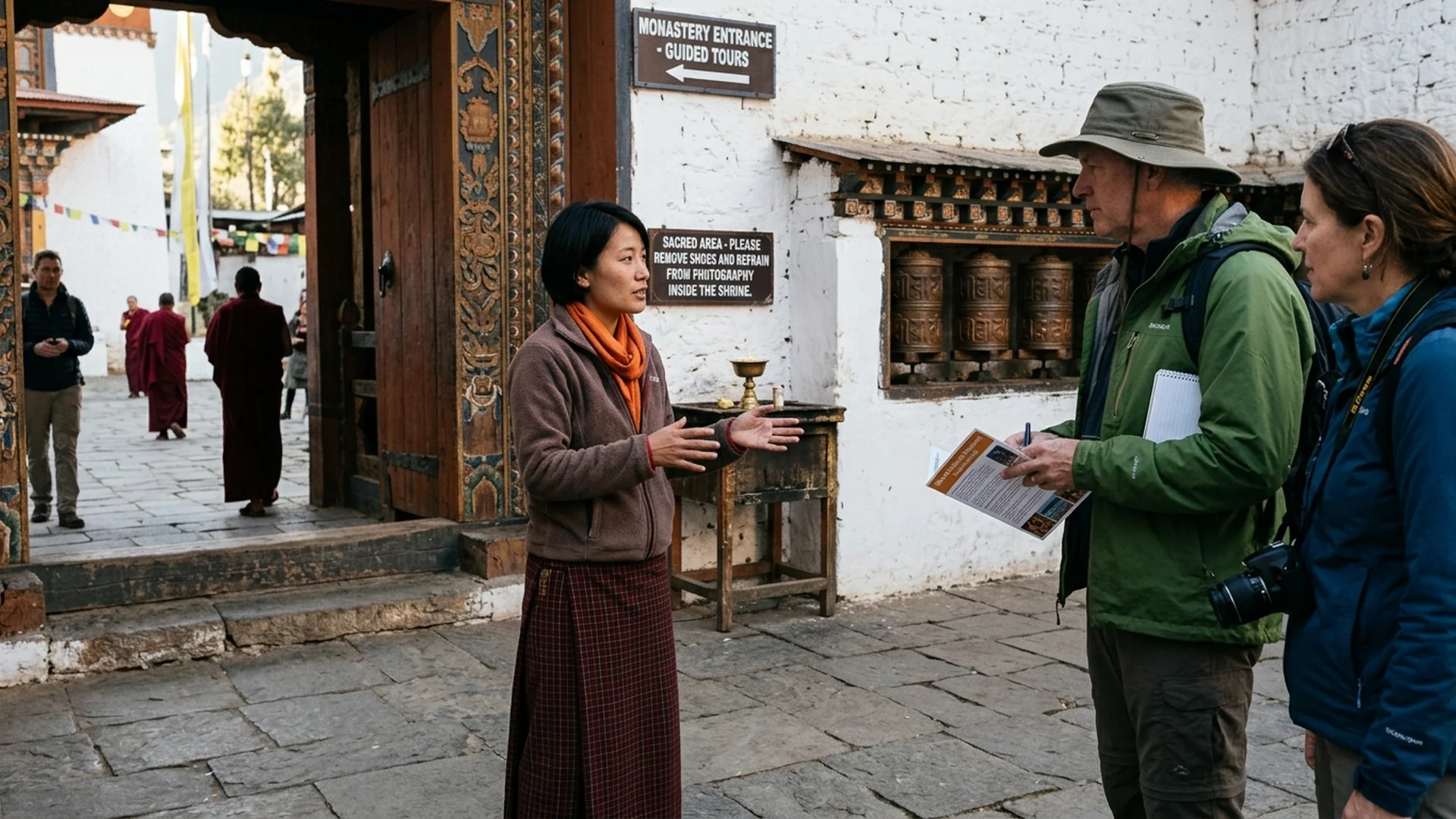
When stepping across the intricately carved wooden threshold of an ancient fortress-monastery, known locally as a Dzong, the discerning traveler encounters far more than sublime Himalayan architecture. One is instantly met with a palpable current of living faith, carried on breezes whispering past sacred thangkas and the resonant hum of monastic chanting echoing from inner shrines. Bhutan is not merely a scenic destination; it is the world’s last remaining Vajrayana Buddhist kingdom, where every square inch vibrates with a profound spiritual reverence for nature and the cosmos.
Journeying through this sovereign kingdom thus transcends conventional tourism, inviting travelers into the delicate art of harmonious coexistence. Adhering to local customs and temple etiquette is far from a rigid bureaucratic obligation—it is the vital key that unlocks the warm, genuine hospitality of the Bhutanese people, who readily share their smiles and the philosophy of Gross National Happiness with those who approach their homeland with true understanding and respect.
Architecture of Faith: Decoding the Symbolism of Dzongs and Monasteries
In Bhutan, a Dzong has historically served not only as a military fortress or administrative hub, but as the beating heart of the community, the residence of monastic bodies, and a sacred bridge connecting the mortal realm to the divine. Entering these hallowed grounds demands absolute composure of body, speech, and mind.
Dress standards serve as the initial outward reflection of this internal respect. Both gentlemen and ladies must wear garments that thoroughly cover the shoulders and legs. Shorts, tank tops, and skirts above the knee are considered entirely inappropriate within sacred precincts. Furthermore, stepping into inner halls or sanctums requires removing footwear and headwear entirely. Such practices are effortless gestures, acting as a universal language of humility before the sacred.
The Art of Movement: Core Protocols Around Sacred Sites
Every footstep within this mountain kingdom carries spiritual resonance. One golden rule upheld across generations is the practice of moving in a clockwise direction when circumambulating stupas, chortens, carved stone mani walls, or prayer wheels. This tradition mirrors the apparent trajectory of the sun and the auspicious circulation of positive cosmic energy.
In terms of interacting with sacred objects, pointing fingers or directly touching wall murals, sacred relics, or ancient texts within shrines is strictly forbidden. If one needs to gesture toward an artifact, the proper form is to extend the palm upward in the open air. Additionally, smoking is strictly prohibited in public areas and around religious zones, reflecting Bhutan’s rigorous legislative commitment to maintaining environmental purity and public wellbeing.
Photography Etiquette and Authentic Human Connections
The true splendor of Bhutan reveals itself not merely in snow-capped peaks or architectural marvels, but in the luminous eyes and welcoming smiles of its people. Seeking permission through a warm smile and a slight nod before capturing a portrait is an essential courtesy that should never be bypassed.
While Bhutan is wonderfully permissive regarding photography in the sweeping open courtyards of Dzongs or during vibrant monastic festivals known as Tshechus, rules within inner sanctums and ritual spaces remain exceptionally strict. Photography is universally barred inside altars and shrines to preserve meditative tranquility and honor the sanctity of active worship. Honoring these private spiritual zones invariably fosters deeper connections and invites warmer welcomes from the local community.