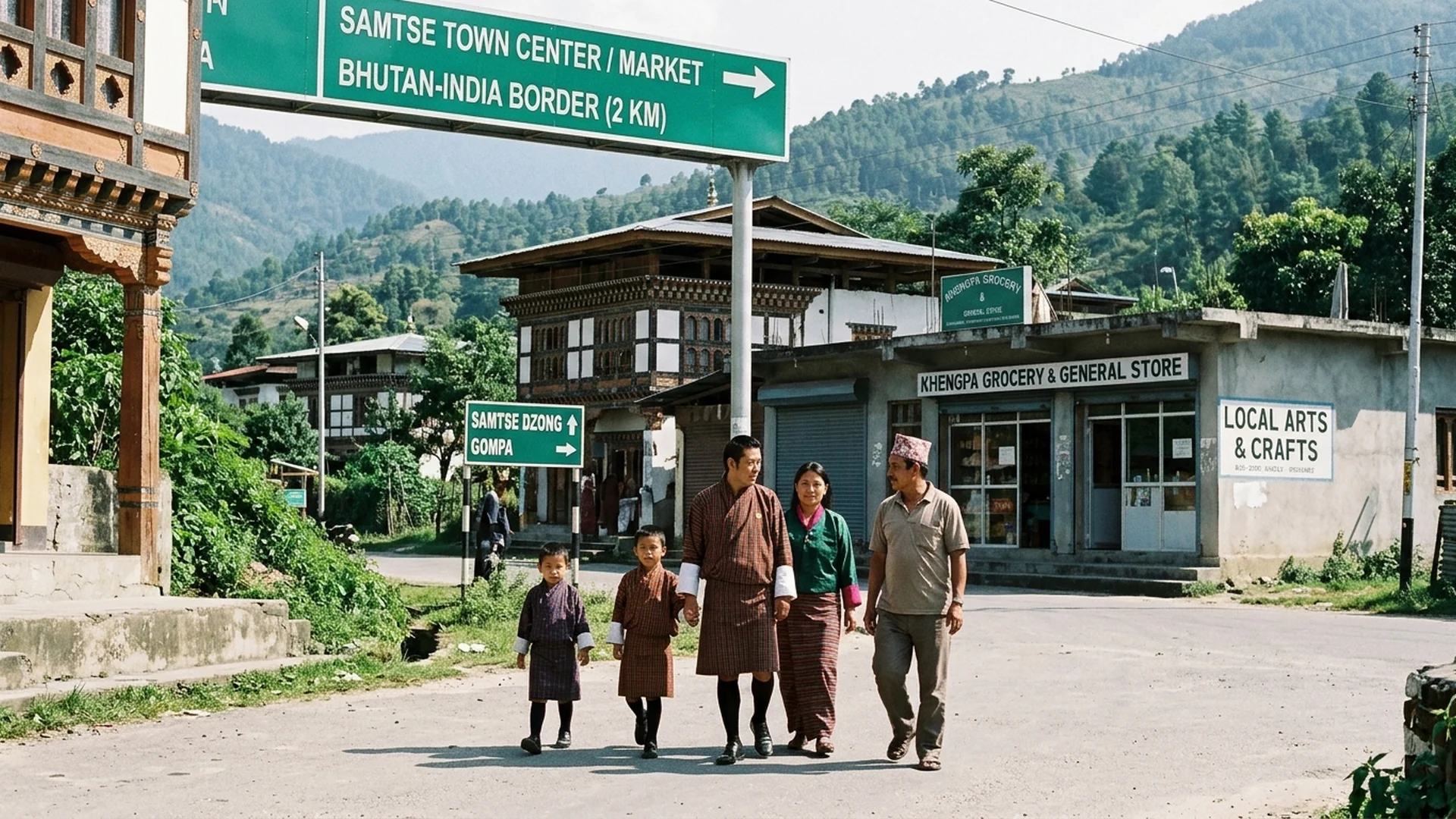
When you leave behind the frigid mountain passes and well-trodden switchbacks of mainstream Bhutan, the landscape undergoes a dramatic metamorphosis into the lush, verdant embrace of the subtropics. Whispering mists drift low across the rolling southern foothills, unveiling Samtse—a frontier enclave that serves as a magnificent bridge between two distinct worlds. Here, the resonant chanting of Vajrayana monks blends effortlessly with the ancestral folkways of the Lhotshampa community, weaving a rare and exquisite cultural tapestry found nowhere else in the Land of the Thunder Dragon.
Visiting Samtse is far more than a mere geographical detour; it is an invitation to step through a hidden portal into another dimension of Bhutan. In this realm, diverse ethnicities and faiths coalesce harmoniously under the guiding philosophy of Gross National Happiness. Amidst sprawling plantations of giant cardamom, fragrant citrus groves, and sanctuaries of profound devotion, Samtse awaits the discerning traveler seeking deep stillness and untold narratives at the southernmost heart of the kingdom.
A Symphony of Two Worlds: Drukpa Buddhism and Lhotshampa Hindu Heritage in Samtse
The most enchanting quality of Samtse is the peaceful, elegant coexistence of two distinct cultural roots. The local community comprises indigenous Bhutanese and Lhotshampas—citizens of Nepali ancestry who have rooted their lives here across generations. This rich synthesis reveals itself through daily rhythms, traditional crafts, and architectural nuances that lend this border town a vibrancy entirely distinct from the alpine valleys above. The crystalline chime of Buddhist wind bells echoes in gentle counterpoint to the devotional chants rising from Hindu shrines, creating a unique auditory tapestry of harmony. Engaging with the Lhotshampa heritage in Samtse offers a profound lens through which to appreciate cultural pluralism within the framework of Gross National Happiness (GNH).
Anchors of Devotion: Sacred Sanctuaries in the Southern Valley
No exploration of Samtse is complete without paying homage to its most treasured spiritual sites. The journey begins at Shivalaya Mandir, an exquisite Hindu sanctuary crafted with intricate architectural detailing, enveloped by a tranquil ambiance perfectly suited for meditation and quiet contemplation of ancient epics. From there, the path leads to Samtse Dzong—the formidable fortress-monastery that commands the town, symbolizing both administrative authority and unwavering spiritual resolve. Nearby stands Sidhok Khorlo Chorten, a sacred stupa where villagers gather at dawn and dusk to spin the prayer wheels. The delicate scent of sacred incense swirling through the morning mist induces an immediate, profound stillness within every traveler.
Botanical Embrace: Subtropical Wilderness and the Suspension Bridge of Daina
Beyond its rich cultural dimensions, Samtse’s natural topography is remarkably lush and distinct from the nation’s higher-altitude destinations. Resting at a lower elevation, the climate here remains invitingly warm and humid, nurturing dense subtropical forests teeming with diverse flora. The surrounding countryside is famously fragrant, blanketed in cardamom fields and tangerine orchards that perfume the air during harvest season. Furthermore, adventurous travelers can tread lightly across the Daina Suspension Bridge, a span stretching gracefully over rushing river currents, offering unobstructed panoramic views of the valley floor below, disturbed only by the whispering wind and the calls of native forest birds.